Tolkien Gleanings #369
* The Tolkien Society appears to have set the dates for its big gathering in 2027. The TolkienGuide’s Events page has ‘Tolkien 2027’ as set for 18th – 22nd August 2027 at the Hilton Birmingham Metropole, the hotel for the UK’s National Exhibition Centre (NEC). The NEC is far out in the countryside between Birmingham and Coventry, conveniently adjacent to Birmingham International Airport and also well-served by inter-city trains.
* A new article has been added to the new rolling edition of Journal of Tolkien Research, “Belliphonic Tolkien: Listening to the Wars in Middle-earth”. Freely available online. The article focuses on the described soundscape of war and battle in Middle-earth, and draws on a recent cluster of wider research on ‘belliphonics’. Freely available online.
“Tolkien’s immersion in classical, Anglo-Saxon, and Norse literature, combined with his experience of World War I, enabled him to create richly layered battle sounds in which horns, cries, silence, and environmental acoustics carry narrative and psychological weight.”
* Zackery Arbela’s blog muses on Tolkien and Nostalgia and Robert E. Howard and Nostalgia. R.E. Howard’s…
“heroes do not embark on great adventures to save the world, there are no humble hobbits or noble rangers in [his] Hyborian Age. Conan and Kull are men out for themselves. [This was likely a natural outgrowth of the author growing up in Texas towns] at a time when the Frontier had only just closed, in] cowtowns and boomtowns steeped in tales of gunfights, outlaws and Indian raids. The Texas oil boom of the early 20th century was at its height [and Howard was in the thick of it in his early manhood], bringing with it a massive increase in crime, vice and bare-knuckle violence. Indeed, it is this fatalistic view of human existence that differentiates Howard’s nostalgia from Tolkien’s. The Lord of the Rings saw the restoration of an older, civilized order to its rightful place, leaving the darkness behind to live in the light. But to Howard such an order was unnatural and could not last. Civilizations were doomed to fail; no matter how high they climbed”.
A starting comparison for a basic understanding, but he might want to delve into the complexity of Tolkien’s position on ‘the long defeat’ and the place of hopeful struggle and restoration within it. Howard’s position is also equally complex (e.g. see the two volumes of his 1930s letters to H.P. Lovecraft, where the barbarism vs. civilisation position is argued out with subtlety and at great length). Had the authors not had such complex and well thought-out positions on such things, it’s arguable that their works would have had far less long-term impact.
* The new academic book The Exceptional North: Past and Present Perspectives on Nordicness (2025) has a chapter on “Danish Literature in British Nineteenth-Century Periodicals”.
* The latest edition of the open-access journal Ethnologia Fennica (December 2025) has a review in English of the Finnish-language book Pyhat Puut (2025), as “Sacred Trees of the Finns in the Past and Today”.
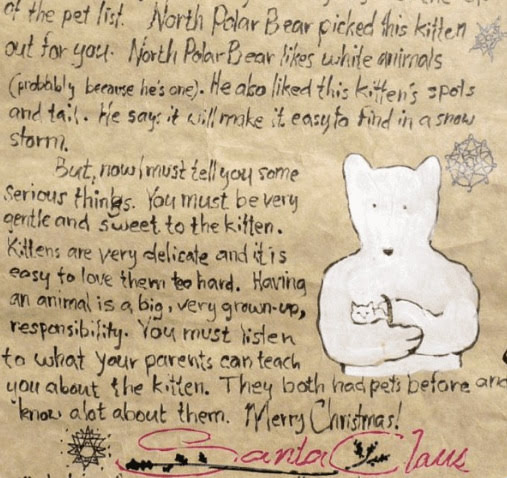
* And finally, Tolkien and cats. An obscure little topic, but one I’m casually interested in. Perhaps it will eventually amount to a small counter to the “Tolkien hated…” brigade. He knew cats as a boy, since he and his brother would play with them in the corridors at the Birmingham Oratory. But he also knew cats later in his family life. Since his children evidently had a white kitten for Christmas, as his Father Christmas letters show…