Tolkien Gleanings #370

Tolkien Gleanings #370

Happy New Year!

* Alas, Not Me on “The Digital Tolkien Project – How it Helps My Work”.

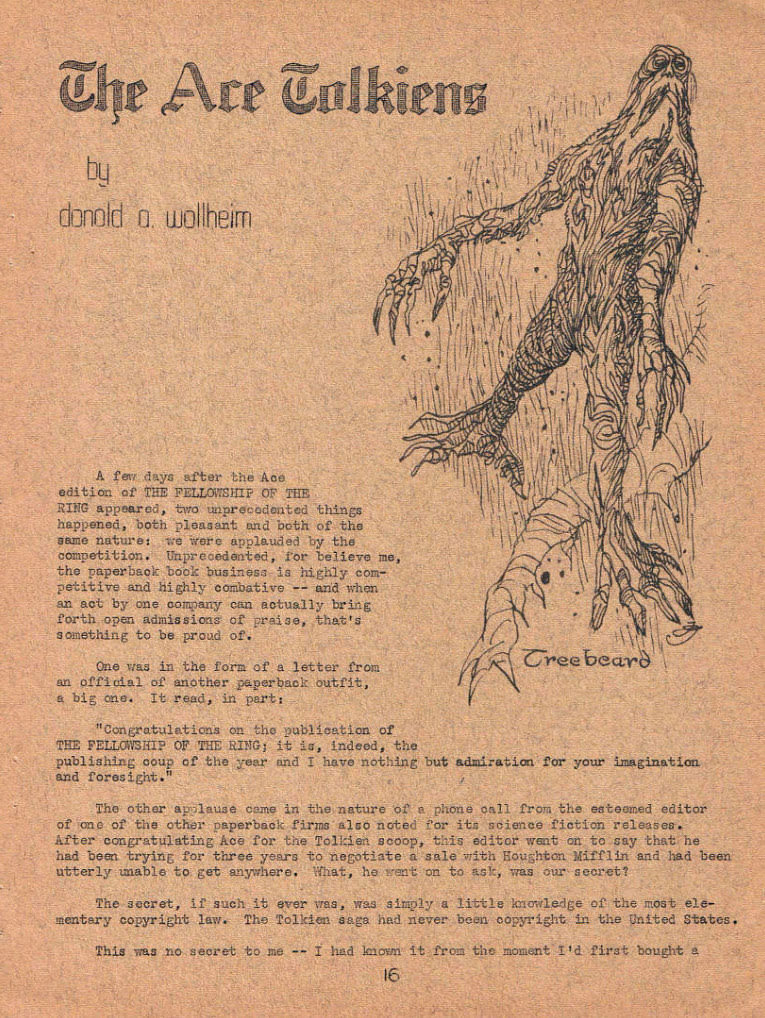
* A repository collection of 101 very early Tolkien fanzines, all scanned and online. Freely available. Lighthouse 13 (August 1965)…

* Literary Hub has an official free excerpt-article from Michael Drout’s new book, “Michael D.C. Drout Remembers the Impact of The Lord of the Rings and The Hobbit on His Childhood”.

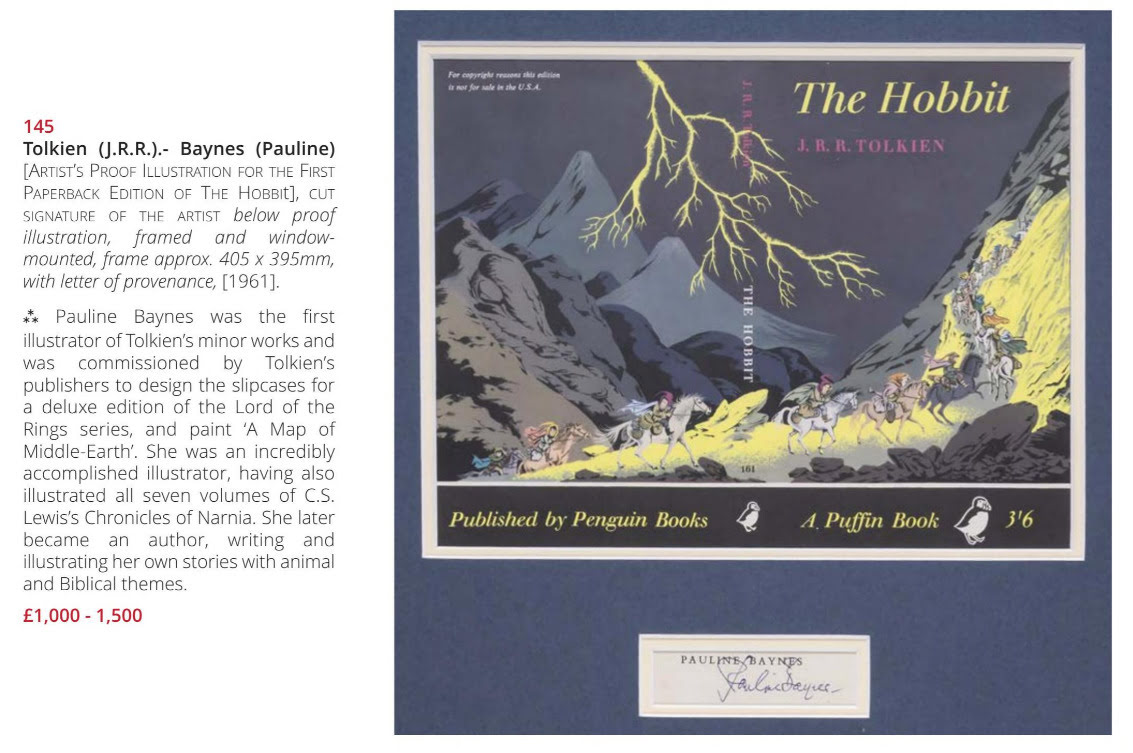
* In the latest Forum Auctions catalogue (November 2025), a proof for the cover of the 1961 British children’s paperback of The Hobbit

* A curious self-published pamphlet in Italian, newly published on Amazon, Tolkien vs Lovecraft: Confronto sul concetto di Morte (‘Tolkien vs Lovecraft: A comparison of their concepts of death’) (2025).

* Clas Merdin looks back on the year in his “Matters Arthurian in 2025”. He notes that the 40th volume (XL) of the journal Arthurian Literature had an article on “fairies and cosmic providence in Sir Gawain and the Green Knight”.

* And finally, Wormwoodiana’s Second-Hand Bookshops in Britain: 2025 Report. Includes the interesting detail that…

“… another development is the spread of a small selection of second-hand books in a variety of places. For example, almost every historic church visited on a book-hunting holiday this year had second-hand books for sale, usually several hundred each.”

A little more on local Roman roads

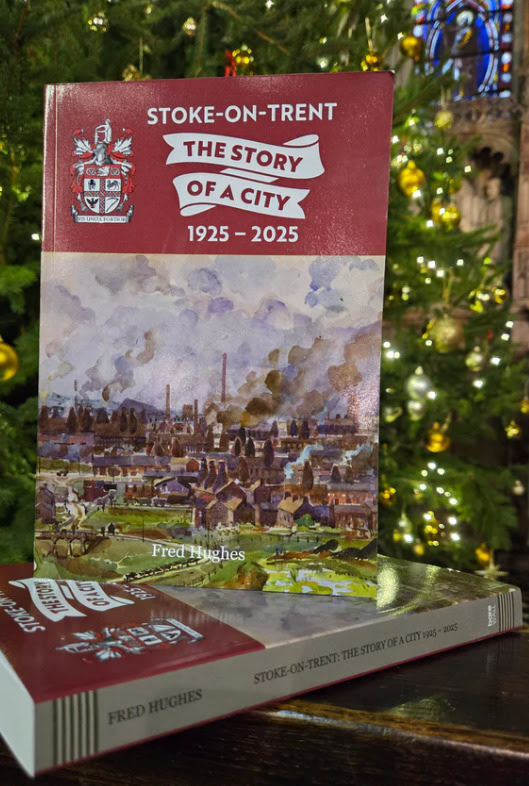
A little more on local Ancient Roman roads in North Staffordshire, following my previous posts on the topic. Below is an extract from the final part of: Rev. T.W. Daltry, “Chesterton” [Roman Camp], Journal of the British Archaeological Association, 1896.

One [final] word as to certain place-names in the neighbourhood of Chesterton. We have, one and a half miles to the north, a small village called Red Street, which is distinctly visible from the [Chesterton] Camp. This Red Street is evidently the Roman Road that went northwards by Windy Harbour and the village of Talk [Talke], and probably on to Condate and Mancunium [Manchester].

To the south-west, about two and a half miles from Chesterton, there is a short length of Roman road called Pepper Street, which now terminates at its junction with the Newcastle and Nantwich road, close to what was Keele Toll Gate. Originally it must have gone straight on. About half a mile further there are two farmhouses, called respectively ‘Honey wall’ and the ‘Highway’, and these names seem to indicate the proximity of a Roman road; and a little further on we have two farmhouses close together, which are called ‘Stonylow’, and this may perhaps be another indication of the same road. Then, still in a straight line, the pavement of an ancient road has been found beneath the soil in a field on Nethersethay Farm, not far from the London and North-Western Railway, about one and a quarter miles south of Madeley Station.

According to Mr. Watkin, in his ‘Roman Cheshire’, another road came from Condate or Kinderton to a little south of Betley, and this must have continued by or near to another Windy Harbour, half a mile to the north of Madeley Village, and to have joined the above-mentioned road from Chesterton somewhere about the spot where the ancient pavement was disturbed by the plough. The united roads must have led to Bury Walls near Hawkstone, which is said to have been the Rutunium of the Second Iter, and thence to Uriconium.

About midway between these two lines, about three miles from Chesterton, and one and a half miles north of Madeley, in a field near to the colliery at Leycett, two earthen jars filled with Roman copper coins were ploughed up in the year 1817. The jars were broken, and I have seen one or two fragments. The coins were about two thousand in number, and were chiefly of the reigns of Constantine the Great, and his son Crispus. Mr. Ward [the local Stoke historian] says there were also “many coins of Licinius and of the associate Emperors Diocletian and Maximian, and some of the usurpers Posthumus, Tetricus and Victorinus.”

Tolkien Gleanings #369

Tolkien Gleanings #369

* The Tolkien Society appears to have set the dates for its big gathering in 2027. The TolkienGuide’s Events page has ‘Tolkien 2027’ as set for 18th – 22nd August 2027 at the Hilton Birmingham Metropole, the hotel for the UK’s National Exhibition Centre (NEC). The NEC is far out in the countryside between Birmingham and Coventry, conveniently adjacent to Birmingham International Airport and also well-served by inter-city trains.

* A new article has been added to the new rolling edition of Journal of Tolkien Research, “Belliphonic Tolkien: Listening to the Wars in Middle-earth”. Freely available online. The article focuses on the described soundscape of war and battle in Middle-earth, and draws on a recent cluster of wider research on ‘belliphonics’. Freely available online.

“Tolkien’s immersion in classical, Anglo-Saxon, and Norse literature, combined with his experience of World War I, enabled him to create richly layered battle sounds in which horns, cries, silence, and environmental acoustics carry narrative and psychological weight.”

* Zackery Arbela’s blog muses on Tolkien and Nostalgia and Robert E. Howard and Nostalgia. R.E. Howard’s…

“heroes do not embark on great adventures to save the world, there are no humble hobbits or noble rangers in [his] Hyborian Age. Conan and Kull are men out for themselves. [This was likely a natural outgrowth of the author growing up in Texas towns] at a time when the Frontier had only just closed, in] cowtowns and boomtowns steeped in tales of gunfights, outlaws and Indian raids. The Texas oil boom of the early 20th century was at its height [and Howard was in the thick of it in his early manhood], bringing with it a massive increase in crime, vice and bare-knuckle violence. Indeed, it is this fatalistic view of human existence that differentiates Howard’s nostalgia from Tolkien’s. The Lord of the Rings saw the restoration of an older, civilized order to its rightful place, leaving the darkness behind to live in the light. But to Howard such an order was unnatural and could not last. Civilizations were doomed to fail; no matter how high they climbed”.

A starting comparison for a basic understanding, but he might want to delve into the complexity of Tolkien’s position on ‘the long defeat’ and the place of hopeful struggle and restoration within it. Howard’s position is also equally complex (e.g. see the two volumes of his 1930s letters to H.P. Lovecraft, where the barbarism vs. civilisation position is argued out with subtlety and at great length). Had the authors not had such complex and well thought-out positions on such things, it’s arguable that their works would have had far less long-term impact.

* The new academic book The Exceptional North: Past and Present Perspectives on Nordicness (2025) has a chapter on “Danish Literature in British Nineteenth-Century Periodicals”.

* The latest edition of the open-access journal Ethnologia Fennica (December 2025) has a review in English of the Finnish-language book Pyhat Puut (2025), as “Sacred Trees of the Finns in the Past and Today”.

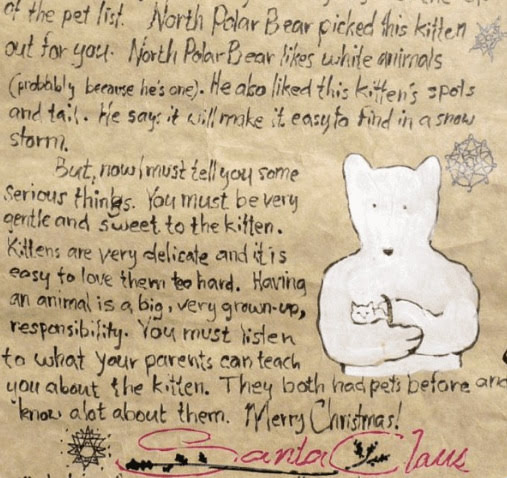
* And finally, Tolkien and cats. An obscure little topic, but one I’m casually interested in. Perhaps it will eventually amount to a small counter to the “Tolkien hated…” brigade. He knew cats as a boy, since he and his brother would play with them in the corridors at the Birmingham Oratory. But he also knew cats later in his family life. Since his children evidently had a white kitten for Christmas, as his Father Christmas letters show…

Tolkien Gleanings #368

Tolkien Gleanings #368

* The 3rd edition of Dragon de Brume’s A Bibliography of Tolkien studies in French and English (Winter 2025) is now freely available online. This edition tops 4,500 references. It’s open access, under permissive licenses.

* New in Spanish, Un Cuento de Arboles (October 2025), on forests in Tolkien. At a guess, possibly a (partial?) translation of the same editor’s Representations of Nature in Middle-earth (2015)?

* From Italy, the society journal Minas Tirith: Rivista della Societa Tolkieniana Italiana, Vol. 28. March 2025 edition, seemingly published September 2025 according to Amazon. Includes articles in Italian such as “On the origin of the name ‘hobbit'”, among others.

* The February 2026 edition of National Review magazine reviews The War for Middle-earth: J.R.R. Tolkien and C.S. Lewis Confront the Gathering Storm, 1933–1945 ($ paywall, but should become free in time).

* Tolkien scholar Michael D.C. Drout on “Why Tolkien’s The Lord of the Rings Endures” ($ paywall). He also offers some technical comments on the deep structures and surface patinas of The Lord of the Rings. The book…

“seems battered by time and change […] Its chapters group in a complex hierarchy with three large groupings and several outliers, a pattern of clustering not typical for a modern novel. It is closer in form to multiauthor composite texts from the Middle Ages. Not only do the clusters not match the point-of-view characters; they don’t seem to be related to volume, book, setting, type of action or pacing. […] Subtle variations in Tolkien’s writing style across its 62 chapters generate the impression that The Lord of the Rings is a compilation of other texts. This pattern is largely invisible even to careful readers, but new methods of computer-assisted analysis throw it into sharp relief.”

* The latest edition of Law & Liberty reviews Tolkien and the Mystery of Literary Creation (2025). Freely available online.

* The Culturist on “How to Live Through a Great Decline” with Tolkien. ($ partial paywall).

* Word on Fire on the “O Antiphons, Advent, and Tolkien”. Freely available online.

* Out now and available to sample on Spotify, Joy Shannon’s “Tolkien-inspired” new album In the Forest Singing Sorrowless (2025). A positive review suggests Celtic ‘dark folk’, paired with Tolkien’s poetry.

* The latest issue of the open-access journal The Incredible Nineteenth Century: Science Fiction, Fantasy, and Fairy Tale reviews the book Nordic Sagas as Children’s Literature: Victorian and Edwardian Retellings in Words and Pictures (2022). Freely available online.

* And finally, please consider becoming one of my regular Patreon patrons. I don’t like asking, you don’t like reading appeals. But Gleanings is not yet produced by an untiring AI autobot. It’s just me rattling away on a 20 year-old workstation, working many hours per week to bring you each hand-crafted edition of the Gleanings. Your Patreon support is welcomed.

Tolkien Gleanings #367

Tolkien Gleanings #367

* David Bratman has announced his retirement as co-editor of the journal Tolkien Studies. The new co-editor is Kristine Larsen, who many will know via her excellent articles on aspects of astronomy in Tolkien’s work. Tolkien Studies No. 22 is set for release in the spring of 2026.

* A new Journal of Tolkien Research issue has begun, with reviews of Tolkien among the Theologians (2025) and The High Hallow: Tolkien’s Liturgical Imagination (2025). Also, arriving at the last minute in the previous issue, you may have missed Kristine Larsen’s article “Tracing the Caves of Cheddar Gorge Throughout Tolkien’s Legendarium (and Beyond)”. Freely available online.

* Miriam Ellis muses on “The Three Remarkable Daughters of the Old Took”. One might add that Tolkien was the son of one of the ‘three remarkable daughters’ of John Suffield.

* The latest Oxford Centre for Fantasy podcast considers the audiobook biographies currently available for Tolkien, Lewis, and the Inklings.

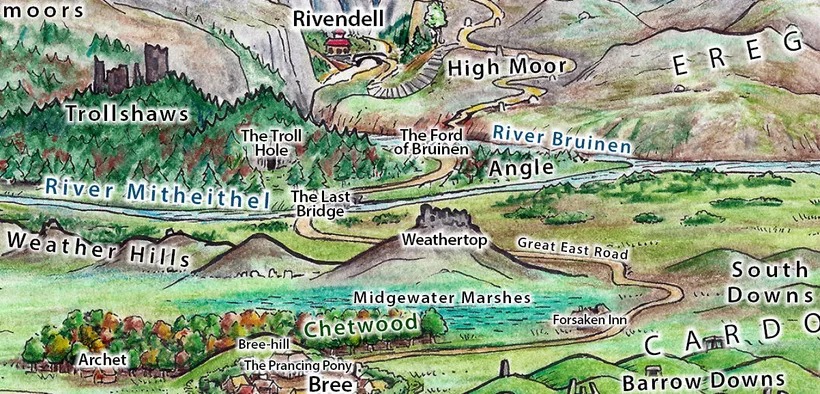
* Matej Cadil takes his readers on an unusually-mapped journey from Bree to the Lonely Mountain.

* The short book Tolkien and the Kalevala (2024) is set for release as a paperback edition at the end of January 2026.

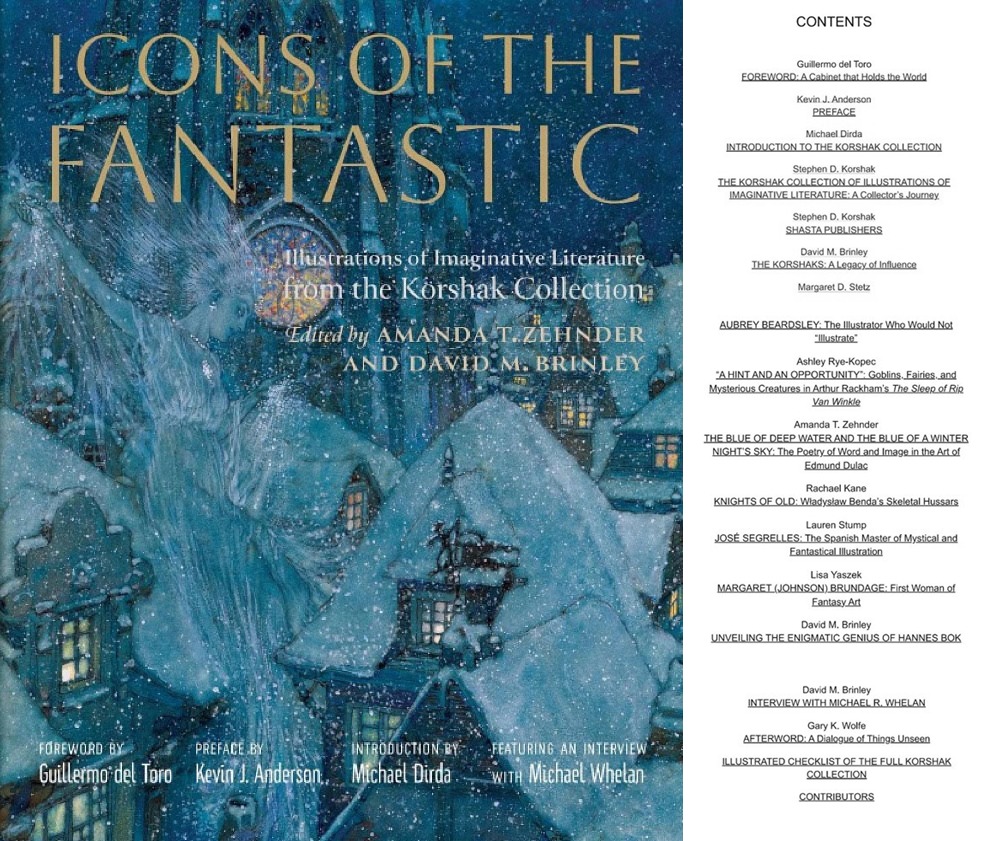
* The contents-list and cover for the new Icons of the Fantastic exhibition catalogue.

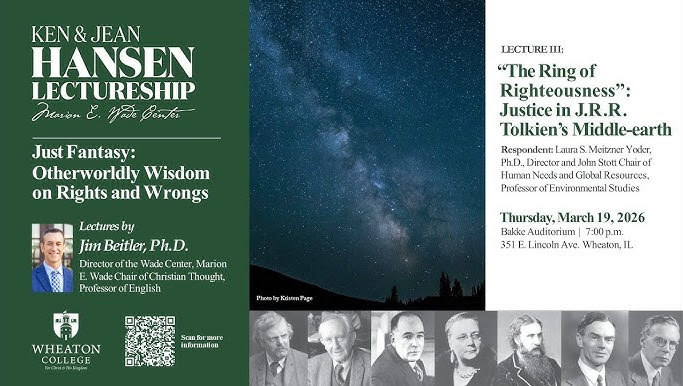
* Scheduled for January/February/March 2026 at at the Marion E. Wade Center, three talks on ‘Otherworldly Wisdom on Rights and Wrongs, with the third being “The Ring of Righteousness: Justice in J.R.R. Tolkien’s Middle-earth”. The talks will be recorded and freely available on YouTube.

* Grognadria reconsiders the much-debated 1985 article “The Influence of J.R.R. Tolkien on the D&D and AD&D Games”. Why did Gygax constantly disavow Tolkien’s influence? I suspect part of the answer may be: ‘The Tolkien Estate would have sued him, while the other fellows he mentioned as influences were either dead or were fannish enough that they wouldn’t have sued’.

* The Los Angeles Review of Books reviews The Bovadium Fragments at length. Freely available online, at least when using a U.S. node in a VPN…

“much of this is rather funny — who else has ever referred to gasoline as a “costly essence”? But that humor masks a genuine seriousness. Indeed, it was for that reason Kilby deemed the work “unpublishable”: he believed that “a reader’s eye would focus on its playfulness rather than its serious implications.” For example, in one passage, Tolkien writes that “on the days formerly set aside for prayers and rites in the temples many would now wheel their Motores out upon a platform before their houses and there tend them and worship them, prostrate upon the ground.” It’s an amusing way of describing the Sunday car wash, but it also reveals a change in culture that would have aggrieved Tolkien, a devout Catholic: the search for spiritual salvation replaced by the worship of material possessions.”

* And finally, a Lord of the Rings Marathon Screening of the ‘extended cut’ movies, at Magdalen College, Oxford. In 4k, all on 7th February 2026, and with sustaining meals fit for hobbitses to eat. Booking now.

Tolkien Gleanings #366

Tolkien Gleanings #366

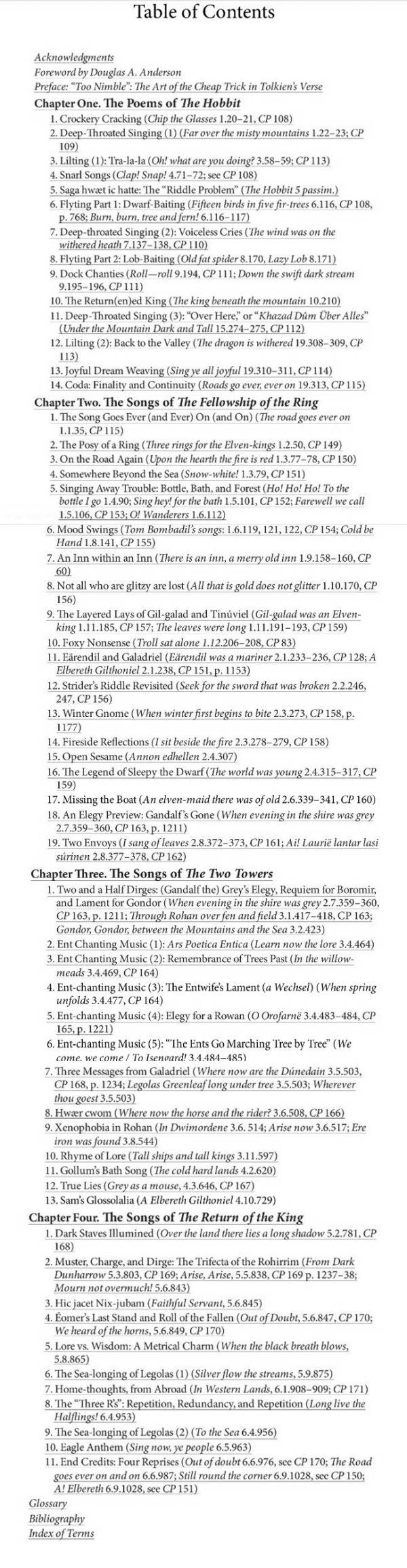
* Now available, the table-of-contents for the new book Tolkien’s Glee: A Reading of the Songs in The Hobbit and The Lord of the Rings (2025).

* The Wall Street Journal reviews The Tower and the Ruin by Michael Drout ($ paywall).

* Mythmoot XIII, set for 25th-28th June 2026 in Virginia, USA. The theme is to be ‘unexpected company’ in fantasy and science-fiction, and the main guest of honour is Michael D.C. Drout. The call for papers closes on 28th February 2026.

* Signum University online short-courses for February 2026. Including among others “Adaptations of Middle-earth: From Deitch and Bakshi to Jackson” and “Exploring Tolkien’s Letter to Milton Waldman”.

* In the new Anthology of Computers and the Humanities, Volume 3 (2025), “Happily Ever After: Comparing Sentiment Arcs in Emotionally-Inflected Fanfiction Genres Across Fandoms”. Freely available online. The authors find that…

“each fandom has its own emotional ‘bandwidth’, with stories in The Lord of the Rings fandom consistently displaying the most positive sentiments”

* From the same field is a new paper from Italy, “Quantifying Emotional Tone in Tolkien’s The Hobbit: Dialogue Sentiment Analysis with RegEx, NRC-VAD, and Python” (2025). Freely available online. The study finds that…

“… the results show that the dialogue maintains a generally positive (high valence) and calm (low arousal) tone, with a gradually increasing sense of agency (dominance) as the story progresses. These patterns reflect the novel’s emotional rhythm: moments of danger and excitement are regularly balanced by humor, camaraderie, and relief. Visualizations — including emotional trajectory graphs and word clouds — highlight how Tolkien’s language cycles between tension and comfort.”

* The I Might Believe in Faeries podcast has “The Medieval Mind of C. S. Lewis”, talking with…

“medieval scholar and author, Jason Baxter. Dr. Baxter is the Director of the Center for Beauty and Culture at Benedictine College and the author of many books, including a new translation of Dante and ‘The Medieval Mind of C.S. Lewis’.”

* Talking of the medieval, the ‘chained library’ of Google Books is set to discard its trusty interface. Your curated “Bookshelves” will go into the skip with it, if you’re not quick.

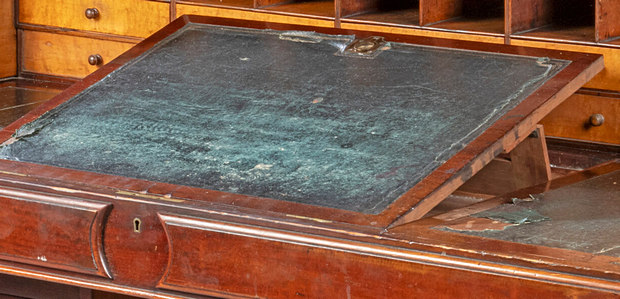
* And finally, Tolkien’s desk (the ‘Merton desk’) has sold at auction for £330,200.

Tolkien Gleanings #365

Tolkien Gleanings #365

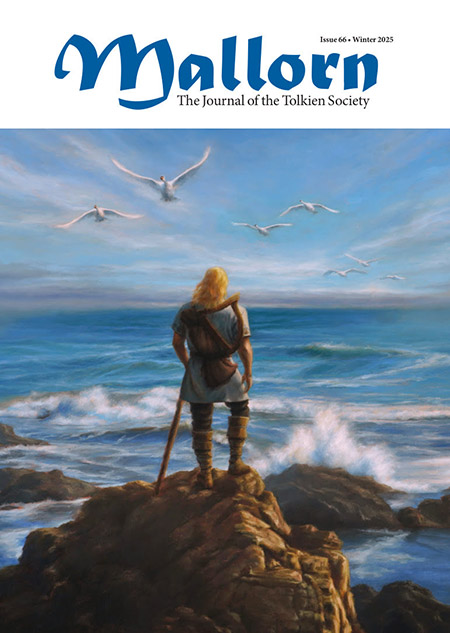
* Members of the Tolkien Society can now download the new Winter 2025 edition of the annual journal Mallorn as a PDF. The lead article offers some historical context for Tolkien’s reactions to well-known folklorists of his time (Frazer, Lang) and their theories.
* Tolkien Studies Volume 21 (2024) is now available, apparently published in November 2025. Currently available on Project Muse ($ paywall) in digital form, but not yet on Amazon UK in paper. Includes, among other items, “The Wanderer’s Return: New Findings on Tolkien in Oxford 1918–19”, and “The Year’s Work in Tolkien Studies 2021”. Though note that this year the latter does not have the usual sections ‘General Criticism: The Lord of the Rings and Tolkien’s Work as a Whole’ and ‘General Criticism: Other Works’.

* The Year’s Work in English Studies (Oxford University Press, 2025) notes Tolkien’s The Battle of Maldon, together with The Homecoming of Beorhtnoth (2023). A short review is found in the section “Chapter II. Old English: 4. Other Secular Heroic Poems”…

“Tolkien’s translation of The Battle of Maldon, like Shippey’s translation of Beowulf (reviewed above), is lucid, exact, and accessible. His notes contain a good deal of linguistic and literary appreciation of the poem, and they show that Tolkien was both a thorough philologist and sensitive literary critic. In his essay on versification, Tolkien characterizes The Battle of Maldon as a poem composed in the popular (as opposed to the classical) style. This means that the metrical idiosyncrasies of Maldon are not to be understood as defective deviations from the Beowulfian norm (as they have all too often been seen), but as distinctive features of an alternative of mode of composition that was seldom recorded in writing. [The book] is useful from a pedagogical point of view and could easily be used in the classroom.”

* From Spain in English, the December 2025 issue of the journal Revista de Filologica has “Wonder and Its Vocabulary in Sir Gawain and the Green Knight”. Freely available online.

* New from the University of Potsdam, “Die Funktion der Atlantis: Rezeption in J.R.R. Tolkiens Numenor zwischen Empirie und Phantasie” (2025) (‘The Function of Atlantis: Reception in J.R.R. Tolkien’s Numenor, between empiricism and fantasy’). Being a Masters dissertation, in German. This has an extended English abstract available (only) at the repository record-page, hidden but fully revealed via the “More” button. Freely available online.

* A new academic podcast from a U.S. Catholic college, Christendom Conversations, last week discussed “Tolkien, Truth, and the Art of Story”. Freely available on YouTube.

* Vincent Ferre’s French Dictionnaire Tolkien appears to have had a new single-volume edition in late summer 2024. Also, the latest edition of Mallorn reveals a forthcoming Oxford Handbook of J.R.R. Tolkien.

* Now booking, a 2026 residential summer-school in Oxford with John Garth, Tolkien: The Great War and the Beginnings of Middle-earth. 19th to 25th July 2026, at Brasenose College. Also… “includes a walking tour of Exeter College, offering a chance to explore Tolkien’s undergraduate environment between 1911 and 1915.”

* And finally, new on YouTube is Paolo Nardi discussing “Ungoliant and Cosmic Horror”, ‘cosmic horror’ usually being the term reserved for Lovecraft’s work and thought. In Italian, but YouTube can now auto-dub into English.
Tolkien Gleanings #364

Tolkien Gleanings #364

* New and available now for members of the Tolkien Society, Amon Hen (326, December 2025). Among other items, there’s a lengthy essay surveying ropes and rope-making in the works of Tolkien. I’d imagine that Tolkien had learned a thing or two about rope and rope-knots during his time in the Boy Scouts (see Lembas Extra 2015), the King Edwards Horse cadets, and the British Army.

* New on YouTube, Malcolm Guite discusses “Wardrobes and Rings, my new book about the Inklings”.

* At the Brompton Oratory in London, “a book launch, live podcast & drinks reception, exploring Tolkien’s theology and philosophy”. The book in question is Fr. Michael Halsall’s A Light from the Shadows: The Spiritual Heart of JRR Tolkien, which seems otherwise unknown to Google Search or Amazon. Set for 30th January 2026, and booking now.

* The University of York PhD thesis The Making of Modern Fantasy in the Visual Arts of England, c. 1850-1920 (2021, online 2022). Now freely available online, after what looks like a three-year embargo. “Visual Arts” here means fine-art painting, not the nation’s blossoming popular print and illustration culture.

* Due in early 2026, The Music of Harry Potter and The Lord of the Rings: Sounds of Home in the Fantasy Franchise. A £43 academic book in Routledge’s ‘Ashgate Screen Music’ series.

* Also due in early 2026, Forest Ecology and Fantasy Fiction: Morris, Tolkien, Le Guin, a £90 academic book in Bloomsbury Academic’s ‘Explorations in Science and Literature’ series.

* Bradley N. Birzer has a new article on “My Life With Tolkien”.

* New at the Oxford Tolkien Network YouTube channel, a recording of the talk “Middle-earth in Brazil and Beyond: Tolkien’s Reception in Portuguese”.

* On Substack, Dimitra Fimi compares Lud-in-the-Mist (1926) with The Hobbit (1937). This prompted me to take a quick look for the best audiobook of Lud, which appears be the one narrated by Eleanor Bron and with an introduction by Gaiman.

* And finally, the Oxford Mail local newspaper reports “J.R.R Tolkien auction cancelled”, allegedly due to disquiet about the authenticity of many of the lots. This refers to the Bristol auction, not the Tolkien desk coming up at Sotheby’s.