Tolkien Gleanings #338

Tolkien Gleanings #338

* First Things magazine has a new long audio interview with Douglas Estes on his recent books, these being Theology and Tolkien: Practical Theology and Theology and Tolkien: Constructive Theology.

* From Germany, a call for papers for a conference on “Enmonsterisations in the Fantastic”. The text of the call refers to Tolkien a lot. Not surprising, since on reading further it turns out the event will be the 2026 conference of the German Inklings Society. Deadline for proposals: 10th January 2026.

* A short documentary film on YouTube, about a Marquette University project “Preserving 6,000 Fan Voices” (2025). A project in which… “each person has an open mic for three minutes, to share their thoughts on Tolkien”.

* Talking of Marquette, I see their repository has “The Inherent Goodness of Gardens and their Stewards” as depicted in Tolkien’s work. Freely available online.

* Free in open-access, the latest January 2024 edition of the venerable journal The Lion and the Unicorn. This is usually a paywalled journal, dedicated to scholarly discussion of literature for children. I’m unable to discover if this means all issues going forward will be open-access. However, the journal is supposed to have three issues a year, and yet there are none at all in the rest of 2024 or 2025. Which perhaps suggests it has ceased, and that only the final issue was made open-access? It doesn’t seem as if the editors have moved it away from the publisher and made it open-access there. Anyway, the latest (last?) issue is free.

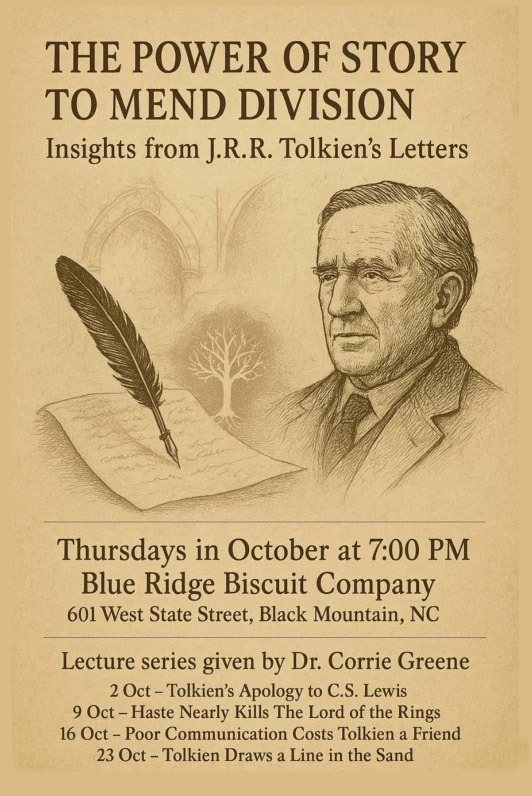
* A local weekly public lecture series in North Carolina, “The Power of Story to Mend Division: Insights from J.R.R. Tolkien’s Letters”. Interesting theme, and also a pleasing poster. Every week through 23rd October 2025.
* And finally, John Garth on “The day Tolkien became an air raid warden” during the Second World War ($ paywall). He has pinned down the date…

“The day Tolkien enrolled as a Second World War air raid warden has been revealed in a previously unseen image from Oxford’s city archives. It was on Friday 19th September 1941 — much later than has been suggested.”

I recall Tolkien was also a volunteer as a member of the Fire-watching Service? Which in the darkness of ‘the blackout’ must have been a fine opportunity for star-watching on clear nights. The paywall means I don’t know if Garth has spotted the connection, but I might add that Tolkien was on ‘the blackout’ streets of Oxford just as Sauron’s Great Darkness was gathering in Middle-earth…

“I sat up ‘on duty’ till 1.30 this morn…. At this point [in the tale] I require to know how much later the moon gets up each night when nearing full, and how to stew a rabbit!” (Tolkien, ‘Letters’ 74, April 1944).

This must mean he was writing Sam stewing the brace of coneys, which in ‘Middle-earth time’ was three days before Sauron’s Great Darkness covered the lands.
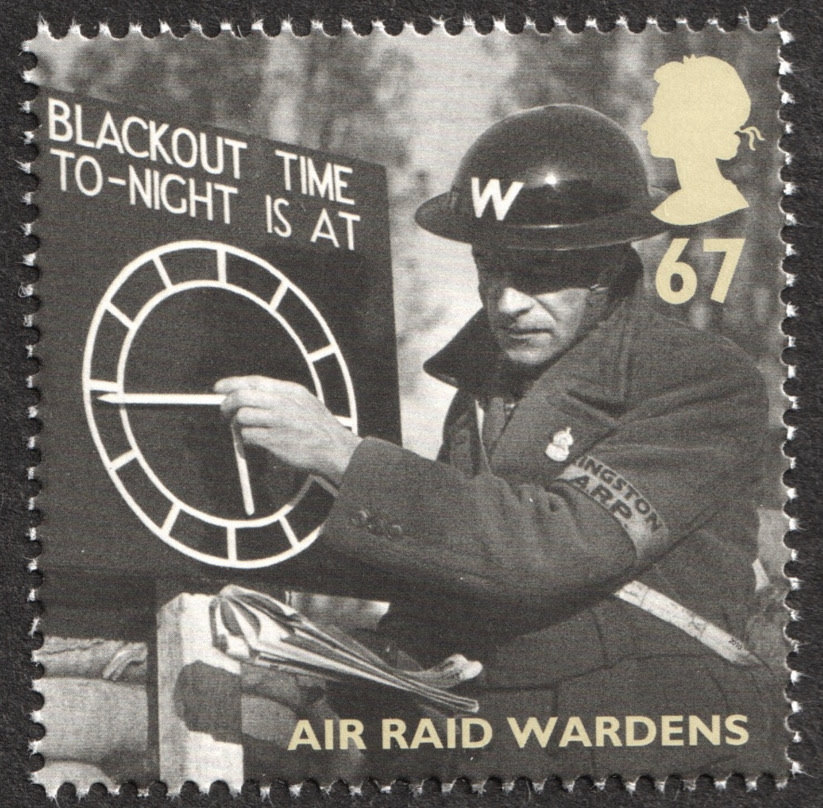
Picture: Royal Mail postage stamp celebrating the role of the Air Raid Wardens on the Home Front during the Second World War. We see the “W” hat of a warden, and his sling-case which would have had a gas-mask, gas/fire rattle, whistle, binoculars, street-maps, notepads and more. It seems that volunteers wore civilian clothes and hat/badge/armband, while the leaders of each very-local warden’s hut/shelter wore Army uniform. Apparently pipe-smoking was allowed.
Tolkien Gleanings #337

Tolkien Gleanings #337

* The new Indiana University Press book Beasts of the Sky: Strange Sightings in the Stratosphere (2025) has a Tolkien chapter, “Fell Beasts and fell beasts: The Making of a Monster in J.R.R. Tolkien’s The Lord of the Rings“. These “fell beasts” being the winged mounts of the Nazgul. I can get a snippet of the book’s Introduction, which suggests the Nazgul chapter discusses (among other things) the ways their form is made uncertain or alluded to, until the final unveiling.

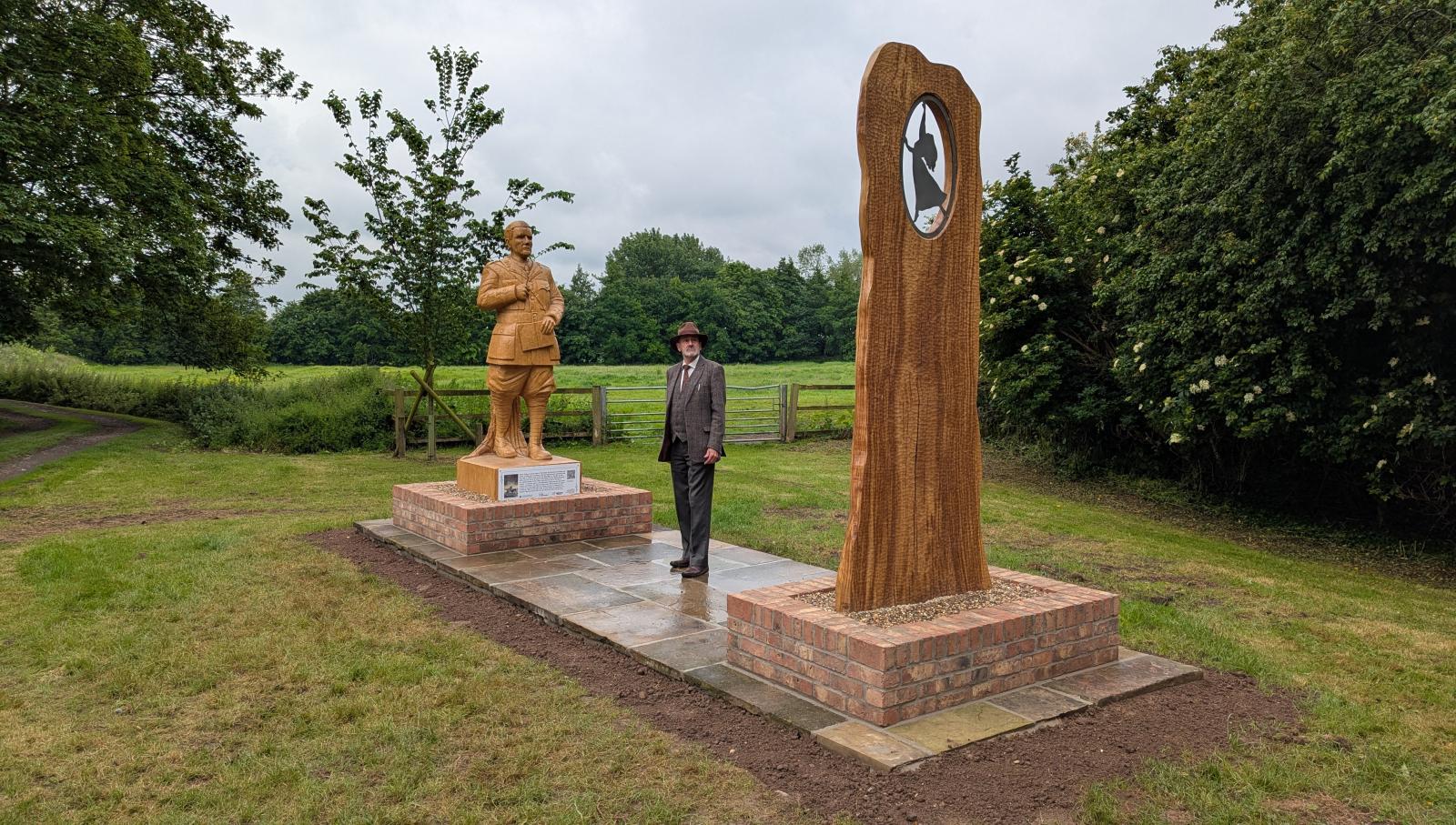
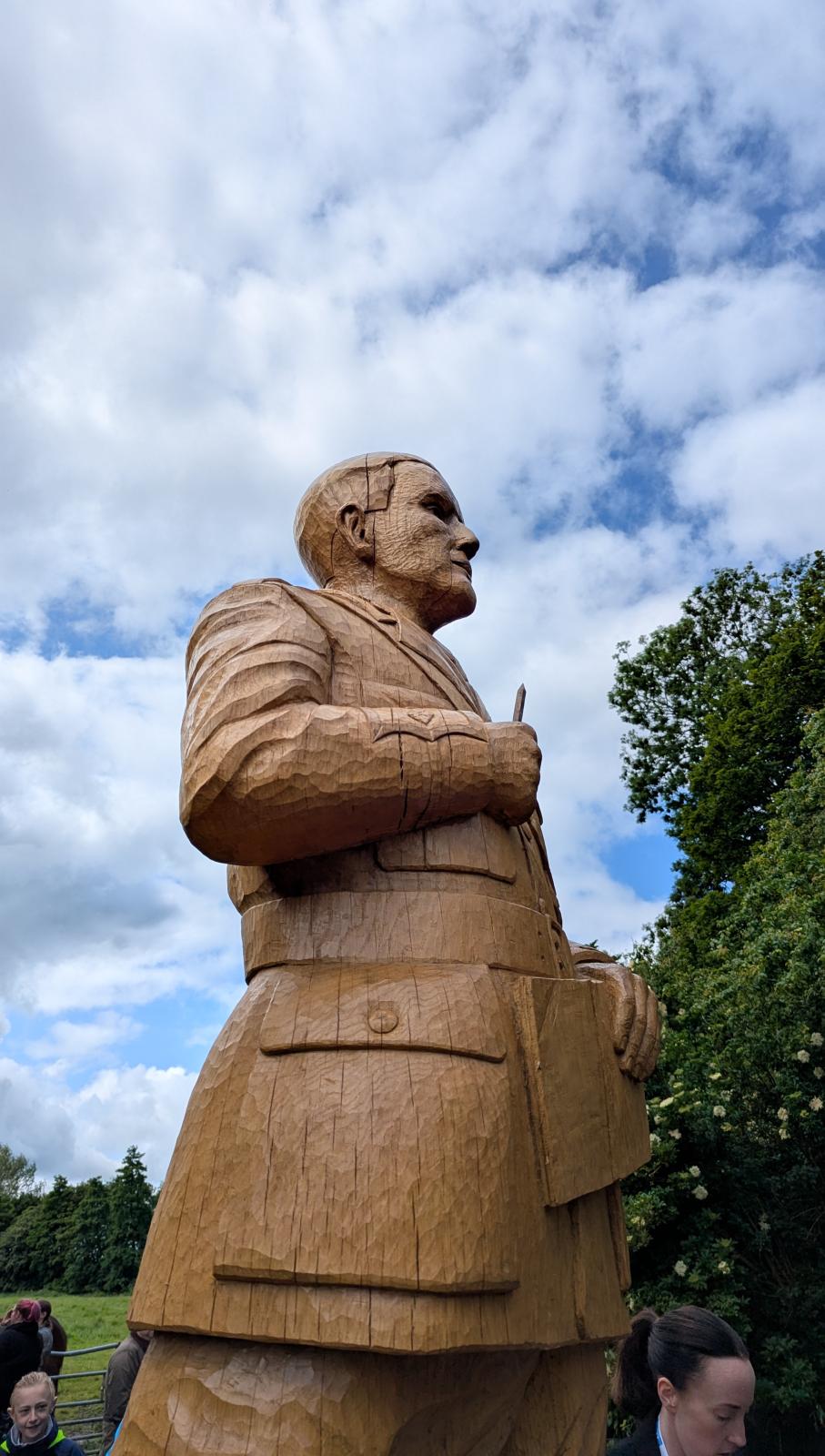
* The Spanish Tolkien Society blogs in Spanish on the new carved sculpture of Tolkien now sited at Roos on the Yorkshire coast, and shows two fine photos I’d not seen before. Large versions of the photos: 1 and 2.

* I had overlooked that the latest issue of SELIM: Journal of the Spanish Society for Medieval English Language and Literature has a Tolkien article, “Imitative Translations of Beowulf: Tolkien, Lehmann, and McCully”. I’d previously only noted the issue’s review of the Spanish translation of Tolkien’s Sir Gawain and the Green Knight. Freely available online.

* In the quarterly Louisiana journal Joie de Vivre, and online since July 2025, an essay on “J.R.R. Tolkien as Model Christian Artist”. Freely available online.

* The second Tolkien Conference Switzerland is set for March 2026…

The 2026 topic is: ‘Leadership in Tolkien’s Middle-earth’. We have already confirmed several international high-profile speakers. Organized by the University of Zurich, the University of Lausanne and Friedrich Schiller University Jena, and once again to be held at the University of Zurich as a hybrid conference.

* A talk on “Tolkien and Technology” at Hope College in Minnesota, set for March 2026. No speaker named as yet, but it’s part of the advanced events programme of the Saint Benedict Institute of Catholic scholars at the College.

* In Germany, there’s to be a new edition of the German-language book Das Grobe Elbisch-buch. This being… “the standard German work on the Elvish languages, now revised and supplemented by the latest discoveries in Tolkien research”. Due for release on 31st October 2025.

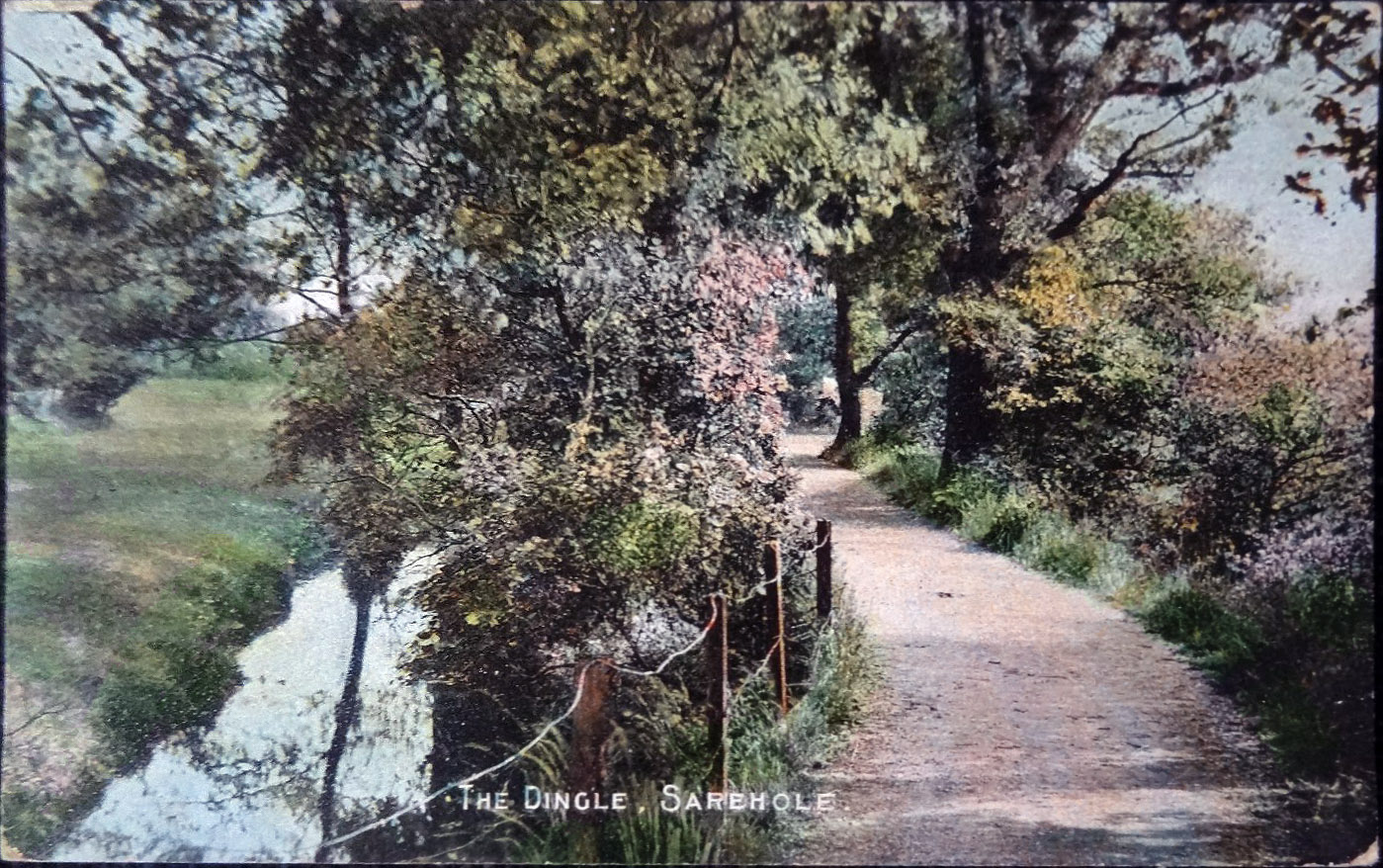
* And finally, newly posted on eBay is a postcard of “The Dingle, Sarehole”. A local memoir from 2023 recalls… “the Dingle on Wake Green Road, one of my childhood haunts next to the River Cole near Sarehole Mill”. A chapter in the eco-history book The Greening of the Cities (1987) reveals it became part of what is now known as Moseley Bog.

Tolkien Gleanings #336

Tolkien Gleanings #336

* The Tolkien Society currently requires a Secretary and Trustee; Education Secretary and Trustee; Officers Without Portfolio and Trustee; Bookings Officers; and a Smials Co-ordinator. Deadlines in mid October 2025.

* A long Reddit report on “My impressions from the current Tolkien exhibition in Trieste, Italy”. A useful detailed overview, with photos.

* Socrates in the City has a new long Socrates Dialogues podcast, in which Louis Markos interviews Holly Ordway on Tolkien and Lewis: Myth as a Vehicle for Truth. Freely available on YouTube.

* In the latest issue of the Brazilian journal Revista Gilgamesh, a long interview in English with Adrian Maldonado of the National Museums of Scotland. He makes… “surprising connections between learning about archaeology and pop culture, in a trajectory that involves the analysis of emblematic works such as The Lord of the Rings by J.R.R. Tolkien”. Freely available online.

* From Italy in Italian, Wu Ming 4 has a new article whose title translates roughly as “The dilemmas of Tolkienian leftists and the political unconscious of Middle-earth”. Freely available online.

* From Turkey, The Daily Sabah on how “Tolkien was perfectly right” about allegory and especially its over-use. In English, freely available…

“Allegory does not belong everywhere. It belongs in literature, where it can be chosen, embraced or rejected. Outside of fiction, life should be allowed to remain literal, unburdened by symbolic agendas. Those who love allegory can find it in writers who wield it openly, like C.S. Lewis. Those who don’t should be free of it.”

* The latest issue of the open-access student journal UR: Das Journal: Studentische Forschung an der Universitat Wien is a special issue on fan-fiction. Includes (in German) an article whose titles roughly translates as ‘In defence of fanfiction: on the reputation of fan-fiction today, with some consideration of its literary history’.

* From Russia in Russian, a 2025 article disussing in detail one of Tolkien’s key journey-songs, “”Farewell We Call to Hearth and Home …”: At the intersection of cultures and traditions”. Freely available online under CC-BY, with an English abstract at the back… “the poem reveals a remarkable dissimilitude between these two journeys [Hobbit/LoTR], foreshadowing further events and even becoming prophetic.”

* Wisconsin’s What’s On Tap local/online radio show discusses Tolkien Fandom Oral History Documentary and MCHS’s Oral History Programs… “In hour two Sandy is joined by Marquette University manuscript archivist Bill Fliss and documentary filmmaker Andrew Coons to discuss their 10-minute documentary about Tolkien”.

* And finally, The Akron Beacon local newspaper reports Costume-designer crafts Smaug the dragon for the forthcoming Ohio Shakespeare festival… “The 26-foot-long dragon puppet is operated by three puppeteers”. (Article is free to me, using a U.S. VPN, but the top of the article has a “For Subscribers” flash. Thus I suspect it may only be a ‘first article free’ freebie, and only for U.S. visitors?)

Tolkien Gleanings #335

Tolkien Gleanings #335

* More marvelous paintings of ents and hobbits by Miriam Ellis, and blog musings on the same.

* In Polish but easily auto-translated, Tolkniety has two new blog posts on Tolkien as a man of the northbut looking towards Rome.

* The latest issue of the Italian journal History of Education & Children’s Literature has an Italian-language article examining the portrayal of Gollum in The Hobbit: A Graphic Novel. The whole issue is under Creative Commons Attribution ShareAlike, and freely available online.

* Just published, the academic book The Germanic Heroic Tradition in Video Games (2025). It’s unusual in that it’s a single-author book by a tenured philologist, rather than a multi-author book from the Game Studies crowd.

   Introduction: The Contemporary Middle Ages.
   The Medieval Legacy: From the Renaissance to Globalization.
   Half a Century of Evolution: The Shaping of Germanic Heroic Narratives in Mass Popular Culture.
   Video Games as Playable Explorations of the Past.
   Playing the Hero: The Germanic Archetype in the Digital World.
   Into the Virtual Lair: Defeating Evil and Claiming the Prize.
   Final Remarks: Germanic Heroism in the Digital Age.

* Tolkien scholar Dr. Lynn Forest-Hill announces… “my newly revised translation of the 14th century The Romance of Sir Bevis of Hampton has just been published by Witan Publishing, and is at last generally available in paperback from Amazon.”

* Fellowship & Fairydust has the moving new article “More Than a Thesis: Researching the Romance of Joy Davidman and C.S. Lewis”.

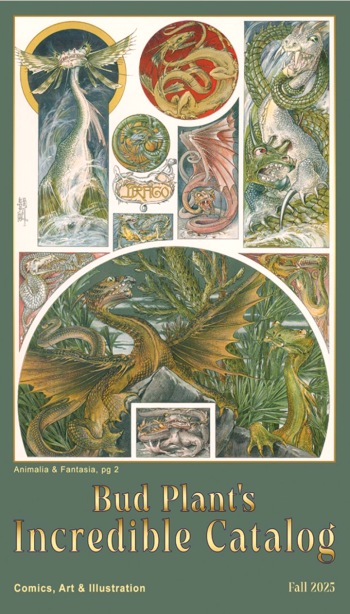
* Bud Plant is ‘calling it a day’ and retiring. The Comics Journal has a profile and a long interview with the well-known book dealer. For four decades he has been curating a catalogue of quality one-volume comic collections and fantasy artbooks. The CJ article is freely available online, as are the catalogues.

* The new journal The Incredible Nineteenth Century: Science Fiction, Fantasy, and Fairy Tale has produced a third issue. No Tolkien, but it may now be of interest to readers as a potential publication venue. The “Nineteenth Century” is here considered to be the ‘long’ one, from 1789-1919.

* Stand Up for Southport previews the touring ‘Magic of Middle-earth’ exhibition, about to open in the coastal town of Southport (near Liverpool).

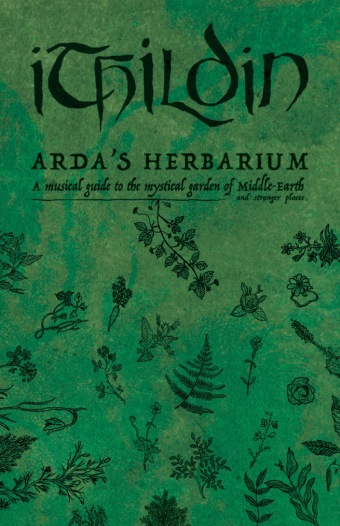
* An unusual new item from Denmark, Arda’s Herbarium: A Musical Guide to the Mystical Garden of Middle-earth and Stranger Places, being a collection of short synth-based musical pieces evoking the plants of Middle-earth.

“This fearless project was started in Spring 2022 to meticulously cover all known plants in Tolkien’s lore with a musical interpretation of each species in alphabetical order. The result is a growing versatile collection of archaic and atmospheric music covering somber synth tones and idyllic tunes as well as darker misty electronics, black metal and beyond.”

* And finally, Reddit asks (and of course, answers) “Is this The Full List of Gandalf’s Explicit Magic?” in The Hobbit and LoTR.

Tolkien Gleanings #334

Tolkien Gleanings #334

* From Italy, “Una Compagnia all’interno della Compagnia: Frodo, Sam e lo spirito del comitatus” (2025) (‘A company within the company: Frodo, Sam and the spirit of the comitatus’). In Italian, with a very lengthy English summary at the back. Freely available online. Examines…

“the concept of comitatus – the bond of loyalty and protection between a leader and his followers, central to ancient Germanic society – and tries to trace its transformations through literary and historical tradition up to its modern reworking by J.R.R. Tolkien in The Lord of the Rings.”

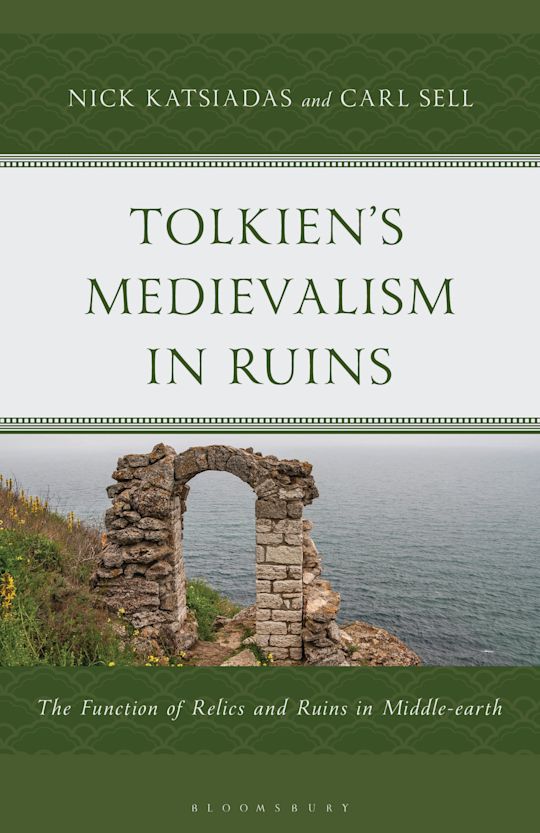
* Now listing on Amazon, the scholarly collection Tolkien’s Medievalism in Ruins: The Function of Relics and Ruins in Middle-earth. Shipping just before Christmas 2025, at a ruinous £90 (hardback only, as currently listed). Although the publisher’s page pegs the release at 16th October, and anticipates that a slightly cheaper ebook version will also be available.

* VII: Journal of the Marion E. Wade Center (2024) has “The Historical Perspective: Gleanings from C.S. Lewis’s Personal Library”, plus reviews of What Barfield Thought, The Battle of Maldon Together with The Homecoming of Beorhtnoth, Tolkien’s Faith, and book notes for “Something Has Gone Crack”: New Perspectives on J.R.R. Tolkien in the Great War, and The Fall of Numenor. Freely available online.

* A Vintage Dutchman goes “Exploring Geoffrey Bache Smith’s Impact on Tolkien”.

* A Masters disseration from the University of Iceland, “Puck’s Medieval Ancestry: The Puck Figure in Medieval Evidence and Late Collected Folklore of North Atlantic Europe” (2024). Freely available online.

* Some readers may also be interested in the chapter “From Homer to John Eugenicus: The Long Journey of Riddles through Greek and Byzantine Literatures” (2024), freely available online…

“Another mysterious poet who is credited with the composition of seven riddles is a certain Theodorus Aulicalamus. […] The first riddle in [his] small collection still baffles the scholars, who are not sure about its real solution:

  Even if am not alive, I have two heads;
  my nature belongs both to the sea and to the land.
  If you cut my head, made up of a double sign,
  you change neither my name, nor my nature.

I’d suggest “the tide” fits well as an answer, if the Greek symbol of the tide(s) was Neptune’s trident. If one made a horizontal cut across the top of the head of a simple trident, it would still be a trident.

* And finally, “How to practice leisure like a hobbit”. To which one might add: invent activity-songs (for bath, walking, etc) and the occasional riddle.

More new local evidence on local Roman roads

More newly published evidence on local Roman roads, and also an item of possible relevance to the route that the Gawain-poet knew and had his Sir Gawain take into North Staffordshire. In the form of “The Roman Road in East Cheshire: Unfinished Business”, Journal of the British Archaeological Association, 2025. Sadly this academic journal item is paywalled at a ridiculous £56, but there is at least an abstract…

This short notice considers the possibility that a medieval reference of 1405 provides a missing clue to the existence of a Roman road in east Cheshire. This road, which later marked the western boundary of the Macclesfield Forest, continued southwards via the Staffordshire Way on Congleton Edge to the village of Six Ashes near Wolverhampton, and very probably thence to the Malvern hills and the Severn estuary. Northwards it continued as Staley Street west of the Tame valley on the Lancashire-Yorkshire border, and probably further. It is suggested that in the AD 50s and 60s, the Romans connected the Severn and Humber estuaries by a road to facilitate the swift lateral movement of forces across their front. After the conquest of the Midlands the road had no enduring military value but may subsequently have been exploited as a trade route.

“The Staffordshire Way” here is presumably a reference to the modern long-distance footpath. On “the western boundary” of the forest, the History of Macclesfield states…

The Forest of Macclesfield […] western boundary was approximately the present London Road from the Rising Sun Inn to Prestbury, from thence along the Macclesfield township boundary to Gawsworth, where it avoided the precincts of the church and continued south to the Dane.

But it’s then a huge jump by the new article’s author between the Congleton Edge and all the way down to Wolverhampton. Actually not Wolverhampton at all, except by modern postcode. It turns out that Six Ashes is far west of Dudley and near Bridgenorth.

So it’s an interesting claim that touches on local topography. But the paywall means one can’t find out more. One wonders what evidence the author has for claiming the long Congleton Edge -> Six Ashes run, if any? Since the abstract suggests the (new?) “1405” evidence relates only to “a Roman road in east Cheshire”, and not down through Staffordshire. If it also referenced Staffordshire, then surely the abstract would say so?

And if there was once an early road along the Congleton Edge, then where would it go after that?

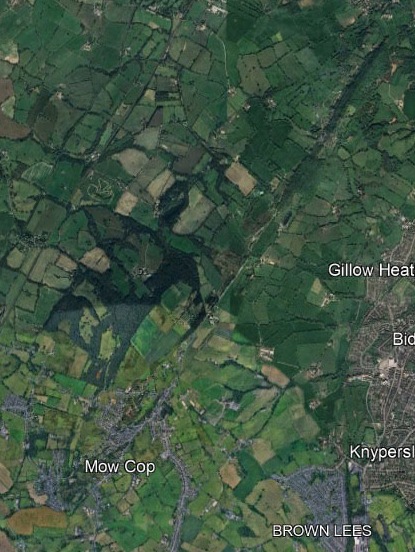
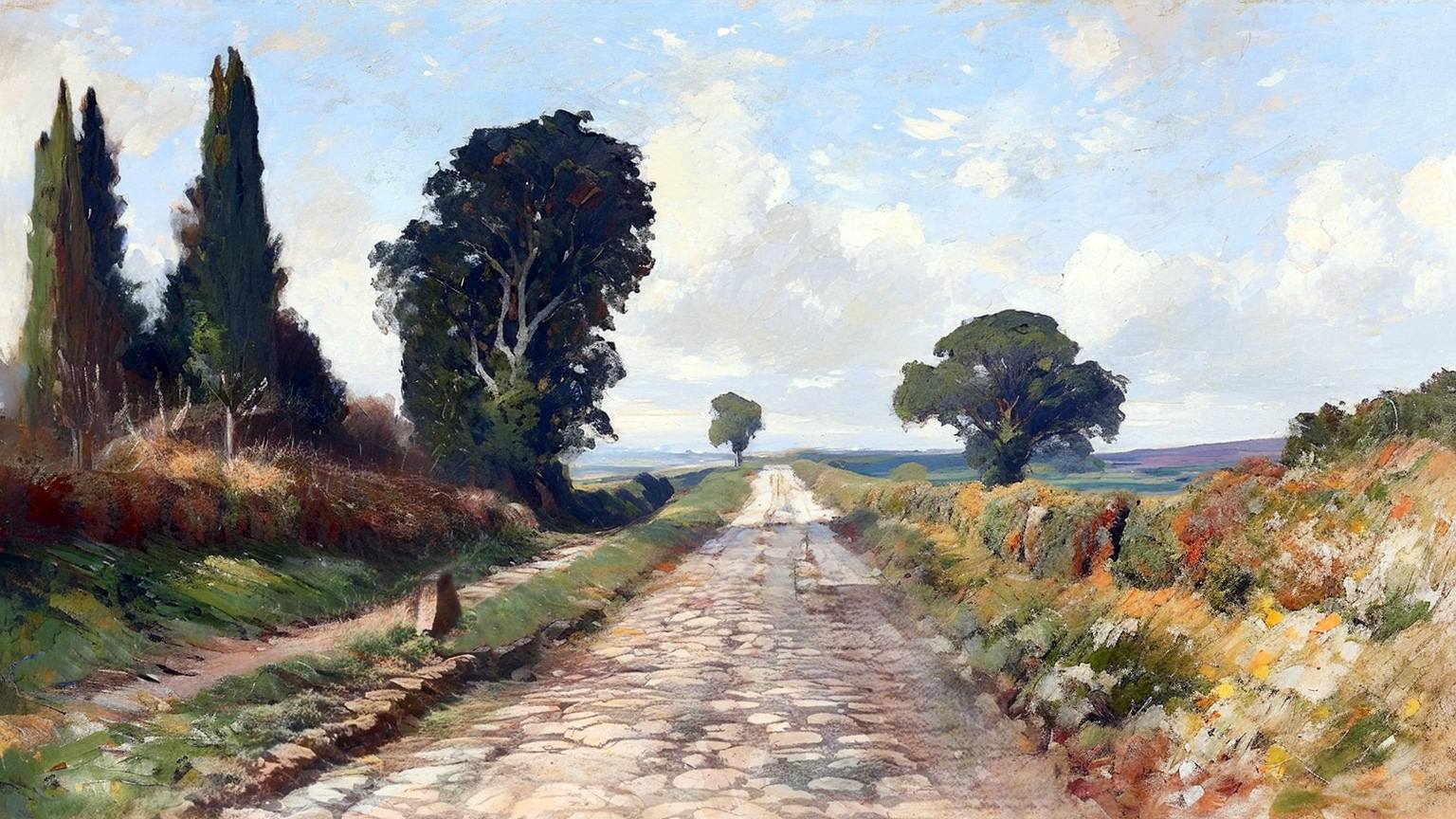
Roman roads were largely straight and the straight Congleton Edge line points directly at Mow Cop. Which was quarrying some of the best millstones in Europe, and thus would logically need sturdy roads to haul the finished millstones out.

One then has to suppose the hypothetical road would go on from Mow Cop, to somewhere around Talke and hook up with our known early Roman road going to Chesterton… and then to what would become Stoke. That said, some of our Roman roads do appear to go nowhere/somewhere and then stop. There’s one which was unearthed for a long length in 1961 at Hanchurch during motorway work, and seemed to go nowhere. Also the Roman road from Buxton towards Leek, which I would guess didn’t need to go further… because it only needed to access the sheep country of the Moorlands rivers via the trackway along the Morridge edge?

Tolkien Gleanings #333

Tolkien Gleanings #333

* Seemingly a new podcast on YouTube, There and Back Again: Interviews Podcast. Now with two long episodes available, Revolutionizing Tolkien Research: Interview with James Tauber from Digital Tolkien Project and Tolkien and Technology, Did We All Get It Wrong?: Interview with Dr. Holly Ordway.

* John Garth on the recent plausible claim about the connection between the view from Gedling church tower and key artwork in The Hobbit, “Tolkien’s hidden gift to his favourite aunt” ($ paywall).

* A call for papers for the Tolkien Studies Area of the Popular Culture Association meeting, to be held in Atlanta in April 2026. Deadline for proposals: 30th November 2025.

* The Daily Cardinal helps with the local promotion of the new Karen Wynn Fonstad exhibition, in the paper’s article “Middle-earth in Madison?” Freely available online.

* The Tolkien & Illustration blog has “A Princess Illustrates The Lord of the Rings: Ingahild Grathmer, Eric Fraser and the Folio Society”. This is newly online (without the pictures) at July 2025, a version of a 2022 conference paper… “In 2022, I presented this paper at the Tolkien’s Society convention Oxonmoot [but it] was neither published nor recorded”.

* Two public talks of interest on members of the Inklings, at the University of Oxford before Christmas. C.S. Lewis and the Atmospherics of Fantasy, and Fantasy & the Occult: Charles Williams, Dion Fortune and the Order of the Golden Dawn. Booking now.

* Rise Up Comus has committed to ‘keying’ one hex per day for the recent free hex-map of the whole of Middle-earth, with his facts kept straight via reference to the Atlas of Middle-earth. The ‘keying’ means writing a role-playing gamer’s text to accompany the map, in which he notes environment and plants, likely characters present in each hex, and also invents basic quests (‘hobbit fallen into bog, in need of rescue’, etc) to save the game master from inventing one every time.

* A new Masters dissertation from Oklahoma, “Chasing Chivalry Revival and Reinvention of Chivalric Knights Throughout Twentieth and Twenty-First Century America”. Freely available online.

* Frank Frazetta has just dinged the highest-ever bell for the sale of a fantasy artwork, reaching $13.5 million at an auction sale for one of his paintings. The painting depicts R.E. Howard’s Conan character battling a ‘man ape’, and it illustrated the tale “Rogues in the House” (1934).

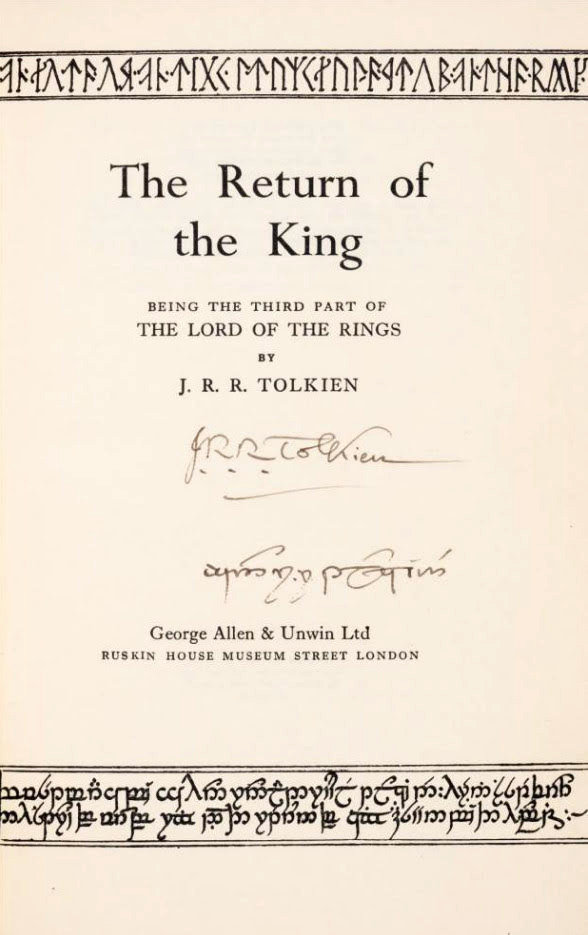
* And finally, Rare Tolkien book signed in Elvish to auction for around £15,000. Though probably likely to fetch more.

On Alderley Edge

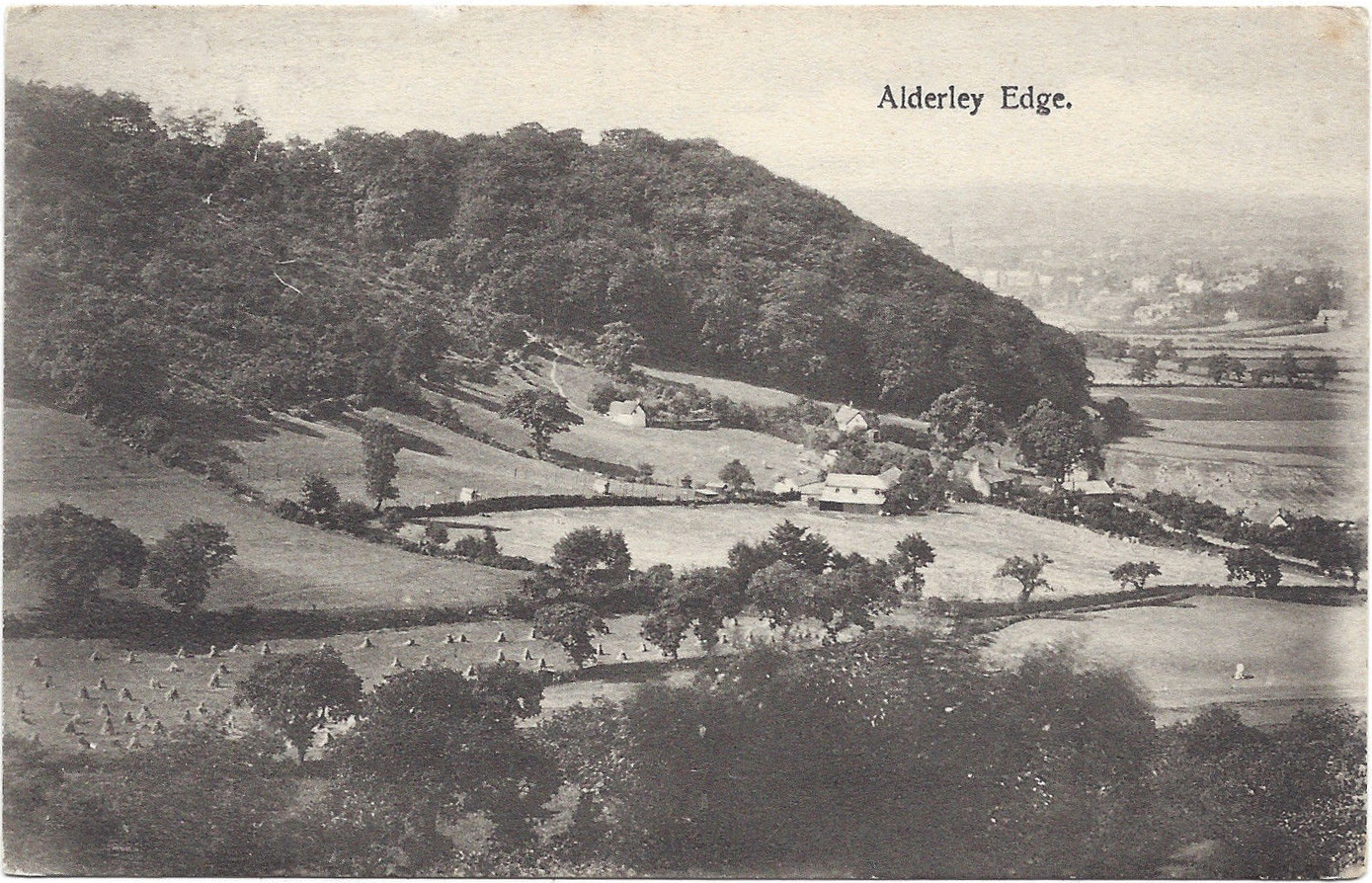
The new £145 academic collection Magical Tourism and Enchanting Geographies: Storytelling, Heritage, Fantasy, and Folklore (2025) has the chapter “Can you hear the knights breathing? Invisible heritage and the magic of Alderley Edge”. For which I can find an abstract at least…

“… home to a legend of which variant versions are found across Europe from antiquity to the present: the legend of the sleeping king or hero and his army, who will awaken when need is greatest. [I explore] the relationship between the legend (as a distinctly medievalist imagining), its medieval precedents, and its new re-imaginings in contemporary literary and oral culture of the NW Midlands [of England], which present a new chapter in a long regional oral and literary culture of storytelling as placemaking.”

Presumably the chapter relates partly to the Invisible Worlds project (2020-23), which created a phone-app AR guide for visitors to Alderley Edge.

Pioneering photographers in the Moorlands

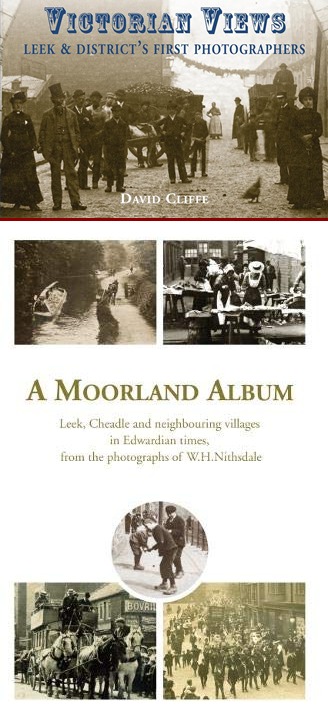
I’m pleased to learn that David Cliffe of Leek is doing good work uncovering the photographic history of the town of Leek and the wider Staffordshire Moorlands, and publishing the results as accessible books.

He’s also integrating the knowledge into local mystery novels in his Old Leek Mystery series…

Tragedy strikes when a travelling theatre visits the Staffordshire market town of Leek in Edwardian times. The town also becomes embroiled in suspicion of foreign agents. Local photographer Nathaniel Blake and his teenage daughter Cora turn amateur detective and find themselves in peril.

A better attempt at mapping the line of the Roman Road through Stoke

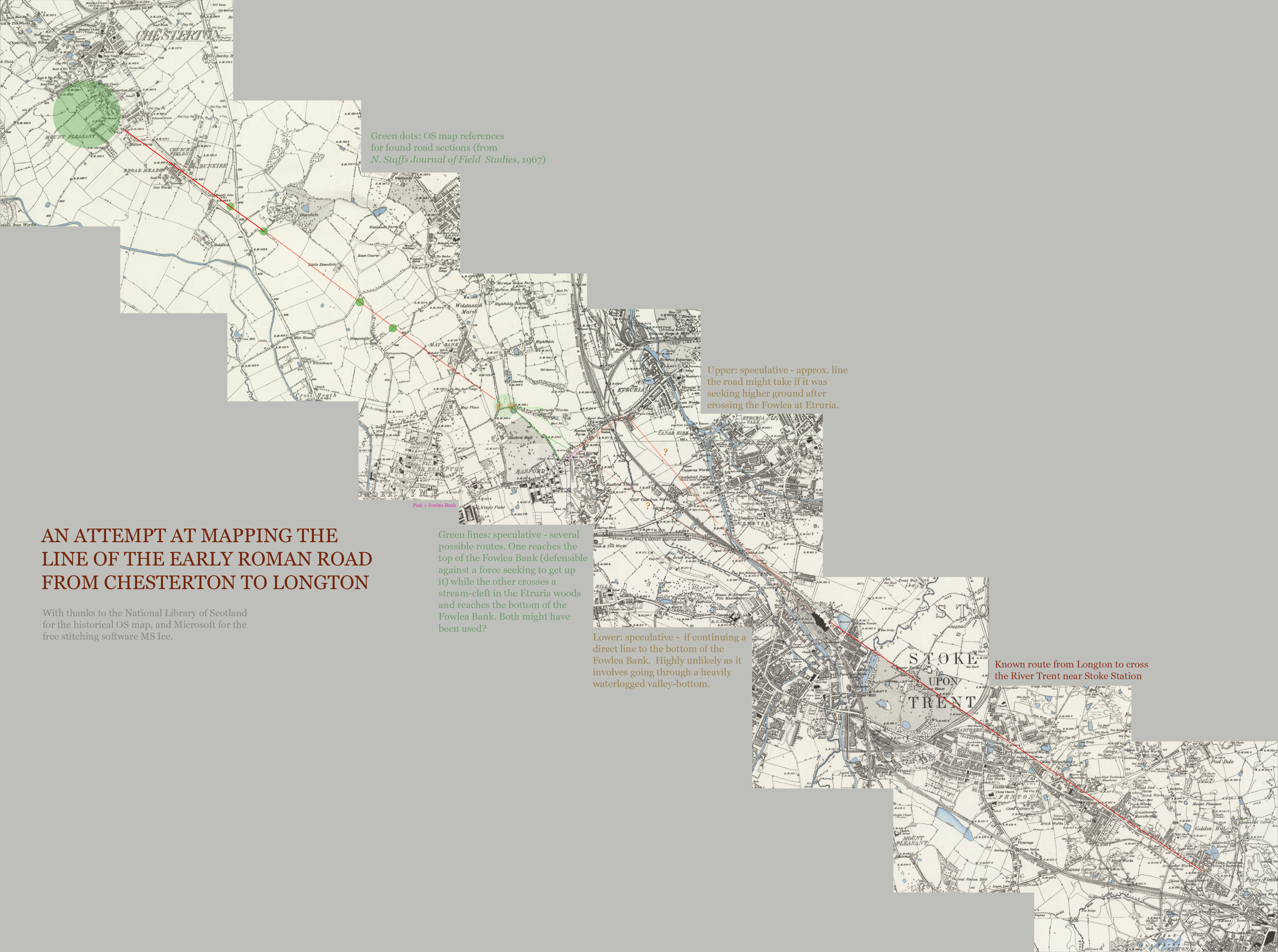
Having obtained the various OS map coordinates from the North Staffordshire Journal of Field Studies (1967), I can now plot more precisely the line(s) of the ancient Roman Road that ran from Chesterton – Stoke – Longton. The map used is public-domain OS and pre mass-housebuilding.

Updated: fixed dumb WordPress blogging software, which had scaled down the large image automatically. Now links to the full large version!

Tolkien Gleanings #332

Tolkien Gleanings #332

* Tolkien Society members now have a new issue of Vingilot (Fall 2025, though the cover has “Summer 2025”) to download. Poems and artwork, plus the article “The Hunt for the Fellowship”, which with the aid of the text and various timelines… “attempts a plausible reconstruction of the actions carried out by the enemy factions” in Fellowship, who these are and why they act.

* The latest edition of the open-access journal Alambique has two reviews in Spanish (Review 1 and Review 2) of the book Resena de Fantasia epica Espanola (1842-1903) (2024). The book offers an introduction and an “anthology of representative texts” of early Spanish fantasy literature from 1842-1903.

* Talking of early continental fantasy novels, Maurice Sand’s epic fantasy / sword-and-sorcery novel Le Coq aux Cheveux D’or (1867, in French) now has a free English translation on Archive.org. This is the first translation, so far as I know.

* In English from Poland, “Delights of Dinners, Pleasures of Picnics in the ‘Make-believe’ Food Fantasies of the Edwardian Children’s Literature” (2024). The article surveys a handful of classic British works translated into Polish. Tolkien’s hungry hobbits and (later) cooks would seem to echo this tradition. Freely available online.

* Signum University now has a page for the short online courses proposed for November 2025. Note “The Poetic Corpus of J.R.R. Tolkien: The Later Poems 2 (Volume 3: The Years 1931-1967)” and “She Watered It With her Tears: Grief, Mourning, and Death in Tolkien’s Legendarium”. And Anne-girls everywhere will also want to consider October’s now-confirmed online course “Reading Anne of Green Gables as Fantasy”.

* The Staffordshire Catholic History Society was formed in 1961, and to 1991 it produced twenty-four issues of a scholarly journal titled Staffordshire Catholic History. Thereafter the journal was issued as the journal of the Midlands Catholic History Society, an annual title which continues today. I’ve looked through the online tables-of-contents for both these journals, and the only item of possible Tolkien relevance appears to be the article “An English Spring: Newman’s Anglo-Saxonism” (2006). This sounds like it may have background relevance to Tolkien’s intellectual upbringing, though I can’t tell — because the journal runs are not online.

* This week on YouTube, “History in Flames with Robert Bartlett” offers a long podcast interview with the author of a new book on the destruction of mediaeval manuscripts over the centuries.

* And finally, London’s Curtis Brown agency, now owned by the Beverley Hills based UTA, has taken over the handling of rights requests on behalf of The Tolkien Estate.