Tolkien Gleanings #230
* “Fatty Bolger, a Local Hero”…
“It is tempting to try to save the world, [and local] grassroots terrors are perhaps mere deputies of the boss villains. But their sting is devastating, nonetheless. […] Pippin is the first to recognize the lengths that Fredegar went to fight the Enemy on the home front: “You would have done better to come with us after all, poor old Fredegar!” Perhaps Pippin is right, but none of the friends call Fredegar Fatty anymore, and those chaps know something about heroics.”
Readers will recall that ‘Fatty’ goes (in the background of the story) from being a timid credulous young fellow overly fond of plum-puddings, to leading… “a band of rebels […] up in the Brockenbores by the hills of Scary”.
* New in Spanish in the journal Historia Universal, “From Virgil to Tolkien”. The two men are here pictured as… “two lighthouses that in the midst of [civilisational] darkness became guides to a new approach to national identity”. Freely available online.
* West Point’s Modern War Institute has a new article on “From Middle-earth to Ukraine, the Enduring Value of Wylie’s General Theory of Power Control”. Freely available online. When war in unwinnable or has reached a stalemate on the battlefield, surprising tactics are needed (hobbits, in the case of LoTR, doing the reverse of what the enemy expects). Ideally these new tactics shift the centre-of-gravity of war away from the battlefield, while also holding out the prospect of ensuring a final settlement of lasting political value.
* In France, Vincent Ferre’s Dictionnaire Tolkien has appeared in a third edition (2024). This is “revised and expanded” according to the blurb, and apparently has a number of French summaries of English scholarly works.
* November 2024 at the online Signum University brings the prospect of a short-course on “The Poetic Corpus of J.R.R. Tolkien: The Early Poems 1 (1910-1919)”.
* Some notes on two books of essays recently read, Mark T. Hooker’s Tolkienian Mathomium and Hobbitonian Anthology:
M. p.26. “OE word bruna was commonly used to name bodies of clear running water, emanating from springs, that flowed over gravelly beds […] related to the German brunnen and Dutch bron, both meaning spring, as in ‘water welling up out of the ground’.”
M. p.51. “Tolkien says [in an interview] that he sometimes used the Gothic translation of his surname — Dwalakoneis”. In full, Ruginwaldus Dwalakoneis.
M. pp.220-221. “a number of authors consider that certain aspects of the [Babylonian astro-theological] myth of Astarte/Ishtar [aka Inanna] were co-opted by the Christian church […] for attribution to Mary”. The Encyclopedia Biblica “equates her title ‘Queen of Heaven’ with “a cult of Venus” (IV, 3993)”. See also p.223 for a comparison of women weeping for Tammuz [lover of the Babylonian Venus] and the weeping of women heard by Earendel. I would add that this feature is also present in Egypt in the nightly voyage of Ra-Horus through the Hours of the Night, though it may have been borrowed from Tammuz.
HA. pp.34-35. A 1932 reprinting of a 17th century list of the predecessors of King Arthur placed a “King Magoth” five generations earlier. Geoffrey of Monmouth had Goemagot as the leader of the giants who inhabited Albion [Britain] before the arrival of the Trojans. Both thought similar to Maggot, re: Farmer Maggot.
HA. p.96. Brother Hilary’s farm at Evesham grew mostly plums, not apples. Plums then being a far more commonly-eaten fruit than today. I would add that this colours the description… “later they sat on the lawns under the plum-trees and ate, until they had made piles of stones like small pyramids” (Return of the King).
* Renga is hunting down the Cracks of Doom (late 1981), which is thought to have been the first commercial Tolkien computer game. He has also been able to discount the game Middle Earth (1979) as the first such. This game has recently been found and, on playing it on old hardware, it appears to be a Jules Verne-ish ‘journey to the centre of the earth’ type RPG game set in the 1970s/80s. It has no Tolkien connection, other than the misleading title.
* And finally, the British ticket-seller Trainline has a new Web page titled “Tour Tolkien’s England: UK locations that inspired The Lord of the Rings & Middle-earth”. Hasty, but not as cringe inducing as you might expect. Though we do get “University of Birmingham’s Great Hall = The Hall of Elrond”, without any reference to it serving as the hospital to which Tolkien was brought from the battlefields of France. Gondor’s ‘Houses of Healing’ might therefore be a more apt comparison, since Tolkien was never a student there.
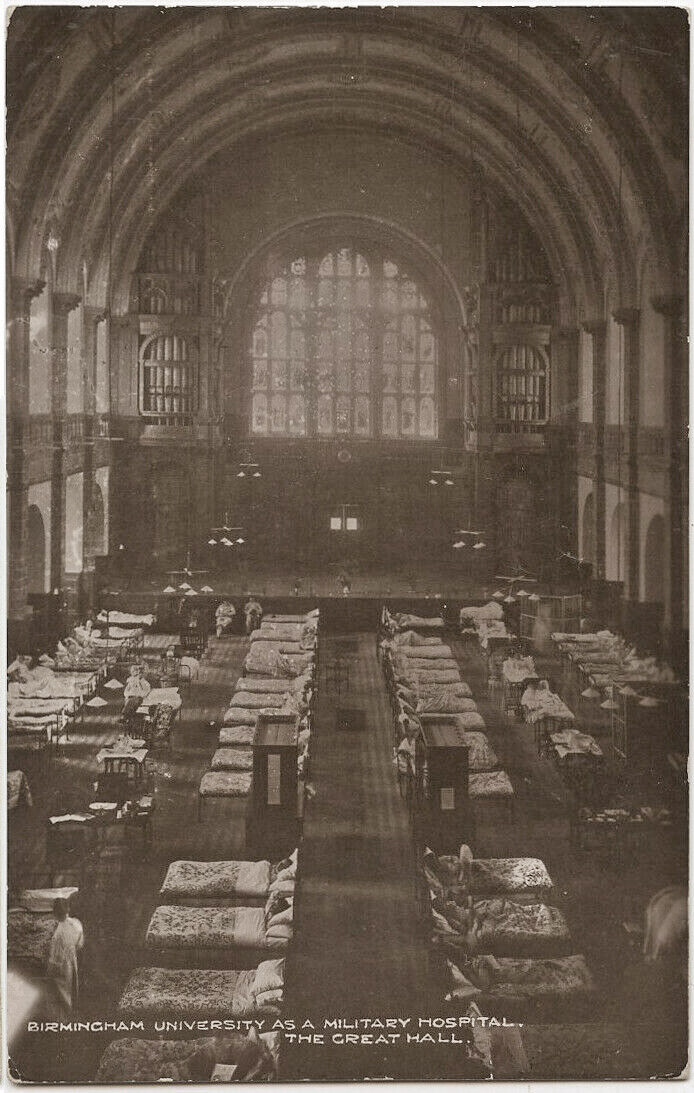
However… I see there’s now a Great Hall 360 Virtual Tour, and today one could indeed imagine it as Elrond’s hall.