Tolkien Gleanings #94.
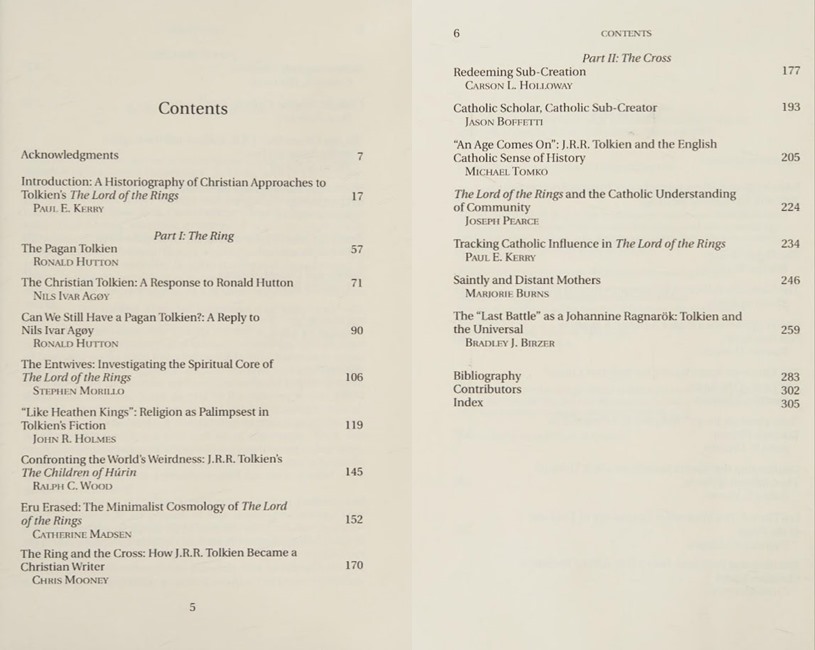
* New on Archive.org to borrow, The Ring and the Cross: Christianity and the writings of J.R.R. Tolkien (2011) from Fairleigh Dickinson University Press.
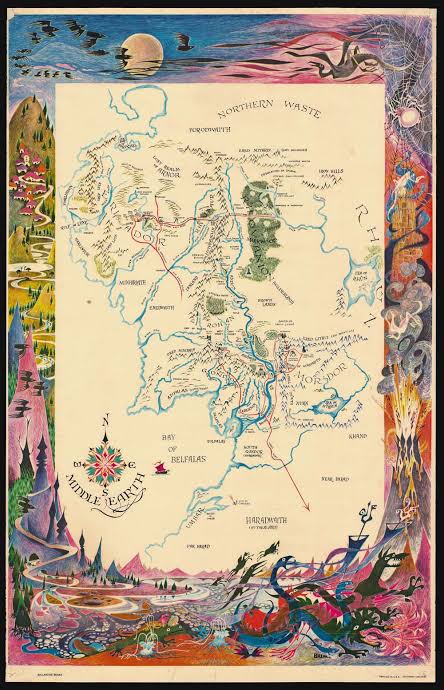
* Posted on a Spanish forum, as a spur to a general discussion of Tolkien, a map I’d not seen before. The text at the bottom was too small to read. But the style suggested the 1960s U.S. paperback cover-artist Barbara Remington. This thought led me to a fine 3,000px scan of the map still freely online at Boston Rare Maps. Turns out that Ballantine Books sold her rather pleasing map by mail for $1.50, back in the 1960s. The maps don’t show up on eBay today, if a PicClick search is anything to go by.
Although one has to wonder how many fans can actually properly ‘read’ the Middle-earth maps. A 2021 OS survey of 2,000 people found that 77% (nearly four people in every five) can’t read a standard British Ordnance Survey 1:25,000 map in even the most basic way.
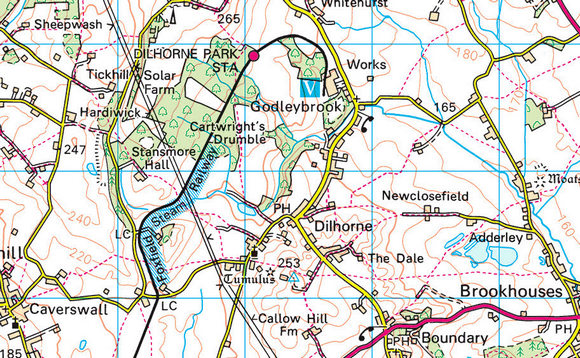
OS 1:25,000 map example, near Stoke-on-Trent. Red dashed lines are public footpaths.
60% of people also admit they get lost because they can’t even follow a simple way-marked map shown on a mobile phone. There’s perhaps an opportunity here to run short courses for teens in ‘Tolkien and the joy of maps’ that also teaches regular map-making / map-reading skills, based not only on the Middle-earth maps but also off the fact that Tolkien was a Signals Officer — a job for which swift map-reading was a vital skill. Could also be combined with Strider-like ‘natural wayfinding’ methods for North-South orientation, as many people also seem unable to maintain their orientation to north when walking.
* My latest 80-page PDF ‘zine Tolkien Gleanings issue 5 (May-June 2023) is now freely available. All the recent Gleanings collected in one searchable bundle, plus some quick essays, notes, a film review and artwork.
* And finally, Tolkien’s ‘trench fever’ could soon be cured with relative ease. Researchers on the disease at the University of Basel in Switzerland… “have discovered neutralizing antibodies, which prevent bacterial infections or bring them to a halt” in cases of what is commonly known as ‘trench fever’.