Tolkien Gleanings #83.
* The Digital Tolkien Project has posted abstracts for three upcoming talks. Talks on how an innovative interactive “digital reading environment” might help scholars visualise and navigate the 12-volume History of Middle-earth; on “the relationship of the Second Age Tale of Years to the text of Lord of the Rings, the Silmarillion, and Unfinished Tales“; and on “Linguistic Variation in Tolkien’s Writing Styles”.
* News of a new ‘for academic libraries’ book of the £85 variety, Mapping Middle-earth: Environmental and Political Narratives in J.R.R. Tolkien’s Cartographies. Due 22nd Feb 2024 from Bloomsbury Academic. Presumably based largely on the freely available 2019 PhD thesis from the same author. The new book has added a pleasing cover…
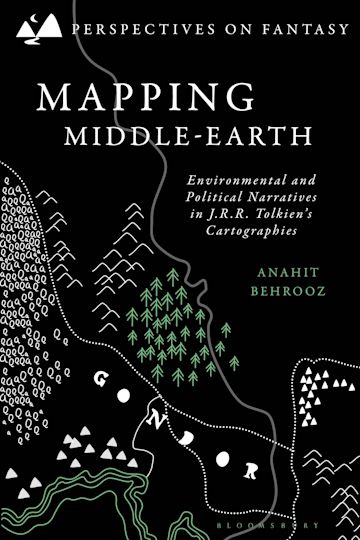
I assume the filling-in of the word “Gondor” is because of the Estate’s trademark.
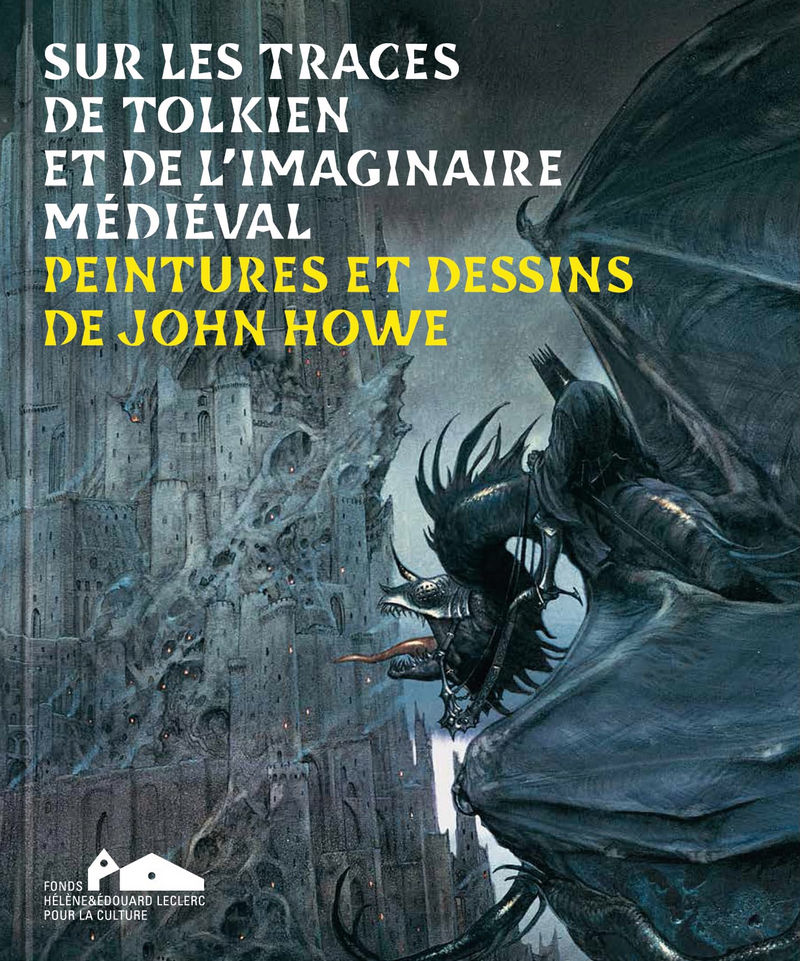
* And talking of book covers, here’s a peep at the cover for the book and exhibition catalogue Sur les traces de Tolkien et de l’imaginaire medieval: Peintures et dessins de John Howe, due to ship in a few weeks.
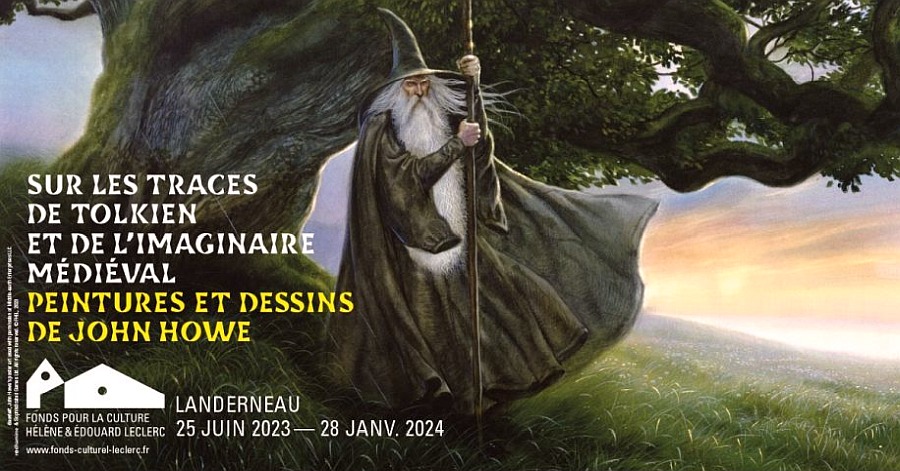
Also “Online ticketing is open” for the French summer show for which this is the catalogue. “Online” here meaning tickets to the show, not an online virtual tour (yet).
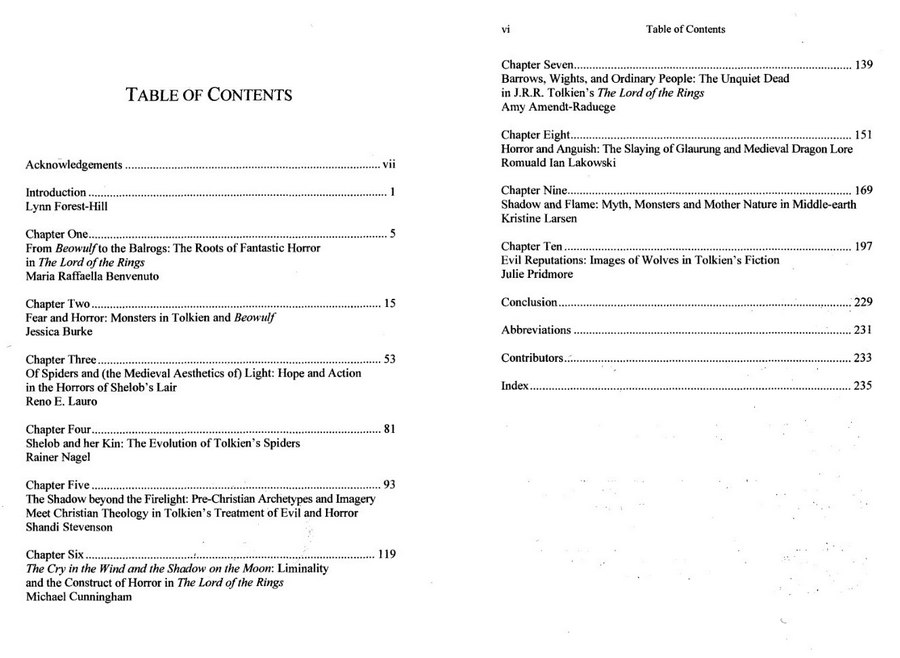
* Somehow I’d completely missed the book The Mirror Crack’d: Fear and Horror in J.R.R. Tolkien’s Major Works (2008). Not even my Lovecraft blog had noted it, at the time. Issued in hardcover only, and Amazon UK suggests it’s now well out-of-print and unavailable. Among others, Mythlore gave it a review. This and other reviews suggest a usefully unique volume of patchy quality, though The Irish Journal of Gothic and Horror Studies noted that the essays do “cohere clearly in their investigation of Tolkien’s medieval sources”. Also useful, I’d suggest, for not spending half the book on the movies.
* A new study offers a useful reminder to scholars that articles by academic historians in leading journals have a 24.27% error rate in their use of quotation references. And that’s after peer-review and proof reading. The new study in the journal Scientometrics asked if the references actually… “substantiate the propositions for which they are cited”. Around 25% don’t. That sounds about right to me, from my experience. If planning to rely on an evidential quote from such a source (usually time-pressed university academics, rather than independent scholars) always dig back to get the source, if that’s possible. Be wary of their use of titles, too. For instance, in the academic book Horror in Architecture (2013) I recently found mention of “the cursed De La Poer family of Lovecraft’s The Drowned”, for which the title should of course be “The Rats in The Walls”. No-one had picked up this obvious error regarding one of the greatest horror tales of the 20th century. Tom Shippey has often also amusingly observed similar errors in literary academia. All this is why, in my opinion, full footnotes are required (ideally with the full reference, which is what I do). Hiding ‘endnotes’ at the back of the article or chapter, which then need to be again tracked down in the bibliography, greatly aids such fudging and fakery.
* And finally, the excellent $70 desktop back-of-the-book index maker PDF Index Generator. Version 3.3 (May 2023) has “fixed footnotes, as it was showing footnote number & normal page number too!” A useful fix.