Tolkien Gleanings #60.
* An unusual study of “Subtlety, Understatement and Omission in The Lord of the Rings“, in the new issue of the journal English Studies in Africa (April 2023) ($ paywall). It seems rather interesting, but is sadly inaccessible due to the paywall.
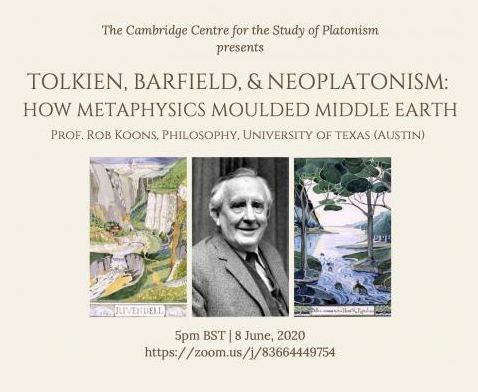
* A YouTube recording of a Cambridge talk “Tolkien, Barfield, and Neoplatonism: How Metaphysics Moulded Middle-earth” (2020). He’s rather a fast speaker, so you may want to download as a file and then slow/pitch-shift in AIMP or a similarly capable media-player.
* Joseph Pearce considers “Tolkien & Lewis on the Blessed Virgin Mary” (summer 2022, reprinted here for springtime 2023).
* New on Archive.org, Science Fiction And Fantasy Artists Of The Twentieth Century: A Biographical Dictionary (2009). This is a thoroughly out-of-print but major reference work. The book offers excellent short biographies and bibliographies for 400+ key artists involved with publishers of literary SF and fantasy for adults. Overwhelmingly North American, but with around 70 British artists manning the tail-guns.
* A lucky someone has managed to bag a picture-map by Bernard Sleigh (famous for “An Anciente Mappe of Fairyland”), for a mere £20. The map shows the Lickey hills in 1920, before the tram-line and terminus. As you’ll recall, the Lickeys were a key place in Tolkien’s early boyhood. Being the site of what later became ‘Fern Cottage’, and later a site of his early courtship… “Near the end of autumn term 1909 Ronald and Edith ride their bicycles to the Lickey Hills on an afternoon excursion.” (Chronology). Tolkien also returned there at other times in his boyhood, on excursions or via visits to the Birmingham Oratory’s ‘Retreat’ house with Father Francis. He also often stayed with his Incledon relatives at nearby Barnt Green, near the southern foot of the Lickeys, and… “in July 1913, he made several paintings and drawings, including King’s Norton from Bilberry Hill [a key hill on the Lickeys]” (Reader’s Guide).
Regrettably Sleigh’s home-city has never given him an exhibition, or even placed any scans of his maps online. But an example of his penmanship can be seen here on his Sutton Park map. I should add that, so far as I know, the young Tolkien did not know north Birmingham or the then-adjacent Sutton. If one is raised in Birmingham there is often not a great deal of to-ing and fro-ing between north and south, other than perhaps a one-off day-trip around the No. 11’s Outer Circle. Incidentally, I wonder if some of Sleigh’s maps (made circa 1920-37) might have influenced Tolkien’s own cartography, and that of his son and map-collaborator? Sleigh was also a contemporary fairy poet and writer of fairy-tales, and was born and raised in Kings Norton — just a little south of Tolkien’s places and some 20 years before Tolkien’s time there.
* And finally, “The Devil’s Coach Horses” (1925), by Tolkien himself. Now freely available on Archive.org and seen in its original context, after their recent mass ingestion of microfilm journals. By contrast, JSTOR would like to charge you $51 just for this one item. Here Tolkien the aspiring academic has much to say about the words used for cart-horses and the West Midlands dialects in which they were used.