* “Song Lyrics in The Hobbit: What They Tell Us”, a 2022 undergraduate dissertation by a mature student, for the University of Southern Mississippi in the USA. Open access and public.
* News of a forthcoming book, via a slightly-expired call for papers. Titled Tolkien as a translator: investigations on Tolkien translation studies, and at a guess probably pencilled-in for 2024. The topic is…
“Tolkien as a great translator [who deserves] a collection of essays on his way of translating, the criteria he used, the choices that distinguished his style and that inevitably influenced his sub-creation(s), and the author’s thoughts on translation itself.”
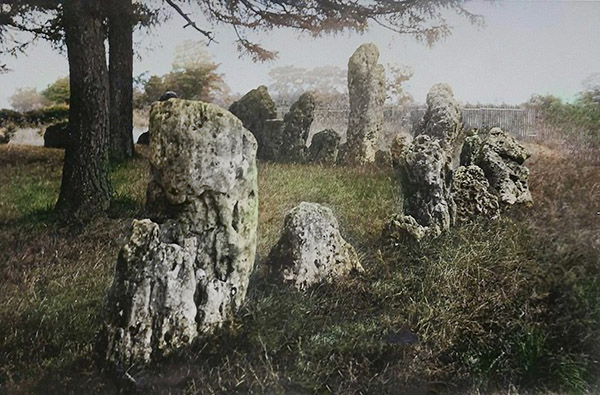
* Since I’m no longer listening to the BBC, it’s taken me a while to twig to the existence of their recent Open Country podcast. This ‘audio countryside ramble’ took a November 2022 open-air walk in the Cotswolds, with Tolkien scholar… “John Garth to find traces of Tolkien Land at Faringdon Folly and the Rollright Stones”. The .MP3 is available at Listen Notes…

The tower is debatable. Probably Tolkien’s initial Oxford audience for the famous Beowulf lecture would have recognised the similarity, but in Worlds Garth wants a poster of it to be the inspiration for the hill of Hobbiton. I wasn’t convinced. Yet evidence for the ancient Rollright Stones is clear, for instance when in 1948 Tolkien berated his publisher on the topic of the Farmer Giles of Ham illustrations…
The incident of the dog and dragon occurs near Rollright, by the way, and though that is not plainly stated at least it clearly takes place in Oxfordshire. [As currently illustrated] The dragon is absurd. Ridiculously coy, and quite incapable of performing any of the tasks laid on him by the author.”
* And finally, according to the Pipedia, there has yet to be even a “list of literature where the pipe plays a major role in character and/or plot development”, let alone a book survey of such. That’s an opportunity for someone, though Middle-earth is already well-served by the new third edition of Pipe Smoking in Middle Earth (2022). Tolkien himself used a standard Dunhill briar pipe, of the sort common in the trenches at the time of the First World War — partly due to Mr. Dunhill sending them out to front-line soldiers and officers. The type of pipe-bowl also causes some aficionados of pipe-weed to call it a ‘pot’ or ‘billiard’ type of pipe, which I have to assume is correct. Sadly Tolkien did not sport a long Gandalf-ian ‘Churchwarden’ type of pipe. His favoured tobacco came in tins of Capstan Navy Cut ‘Blue’ flake pipe-tobacco, apparently a smooth and creamy Virginia blend today referred to as ‘Capstan Navy Cut Ready Rubbed’.