Two local folklore talks

A couple of local folklore talks, albeit in central London. London Fortean Society: ‘The Haunted Landscape: Folklore, Monsters and Ghosts’ event, set for 19th November 2022.

Includes:

* Dr. Victoria Flood – “Alderley Edge and the Dead Man”. (“Based on research undertaken as part of the Arts and Humanities Research Council-funded ‘Invisible Worlds’ project, this paper traces engagement with medieval prophecy at the Edge from the eighteenth century to the present”).

* Jeremy Harte – “Hell-Wrestling with the Magic Methodists” (who largely originated on Mow Cop).

Little brother of Mega-Tolk

My last big Mega-Tolk round-up was only a month ago, but there are already more items of interest freely available.

* In Mythlore, “Soup, Bones, and Shakespeare: Literary Authorship and Allusion in Middle-earth”. Includes observations on what are claimed to be Tolkien’s “literary allusions to Shakespeare’s Macbeth” in The Lord of the Rings.

* In Journal of Tolkien Research “Hearing Tolkien in Vaughan Williams?”. Explores the “juxtaposition of their approach and philosophies” re: the much-loved English music (and now apparently adopted as Tolkien-ish) “Fantasia on a Theme by Thomas Tallis (1910), The Lark Ascending (1914), and Fantasia on Greensleeves (1934)”. Excellent. Also notes a Birmingham connection…

Samwise Gamgee in Lord of the Rings sings the tale of the Stone troll “to an old tune” — and Tolkien himself sang this poem in Sayer’s tape recorder with slightly different words in a tune that, according to Sayer, is “an old English folk-tune called ‘The Fox and Hens.’” This tune, as Bratman notes, is a Birmingham variant tune for the folksong “The Fox and the Goose” or “The Fox Went out on a Chilly Night.”

* Mythlore “Review of Musical Scores and the Eternal Present: Theology, Time, and Tolkien (2021).”

* A Kirk Center review of In the House of Tom Bombadil (2021). A slim but apparently perceptive new study of Bombadil by a pastor. Sounds interesting, if rather short.

* A review in Fafnir: Nordic Journal of Science Fiction and Fantasy Research of Middle-earth, or There and Back Again (2020). The review has a misleading comment on the Pearl, re: the casket.

* Review of Eternal Light and Earthly Concerns: Belief and the Shaping of Medieval Society (2021). On the medieval practice of always… “lighting the altars of churches” [at all times. This] “Christian practice of lighting in fact stemmed from ‘pagan’ practices and Old Testament precedents.”

Also noted along the way was a not-free retail book new to me, The Library: A Catalogue of Wonders (2018). Mostly historical (though makes no mention of scriptorium/library cats), and only has one chapter that is a rather scattergun survey of various libraries in fantasy fiction. But this chapter has a substantial section which usefully surveys the range of books and libraries in Middle-earth — this boil down to about six pages once the superfluous publication history of the Hobbit/LoTR is discounted. You do have to wonder if an author who talks of “the elf-city of Rivendell” has actually read The Lord of the Rings, but the survey does appear comprehensive. A passing aside also claims that Tolkien was influenced by Borges, though any glance at the relevant dates would have cast doubt on this. While it’s not impossible that Tolkien saw “The Garden of Forking Paths” in English in Ellery Queen’s Mystery Magazine (Aug 1948), Borges otherwise only arrived in English in 1962. True, Tolkien had learned to read some Spanish in his youth, and perused Father Francis’s library which included books and dictionaries in Spanish. But I doubt he then went to enjoyed Spanish contemporary fiction, or that he would have even encountered Borges in Spanish print form. There was no love the other way, with Borges finding his sampling of Tolkien (probably just the first chapters of Fellowship) “rambling on and on” and tiresome. Elsewhere he calls the tale “pointless”.

Tolkien (2019)

One of the nice things about finishing and releasing my big Tolkien book, at last, is that I’ve been able to watch the recent ‘young Tolkien’ biopic film in its extended form (i.e. complete with 12 minutes of deleted scenes on the DVD version). I hadn’t wanted to watch Tolkien (2019) before now, due to the risk of skewing my book.

Here are some notes…

Update: These notes have now been replaced by my full polished review in the free Tolkien Gleanings PDF issue 1.

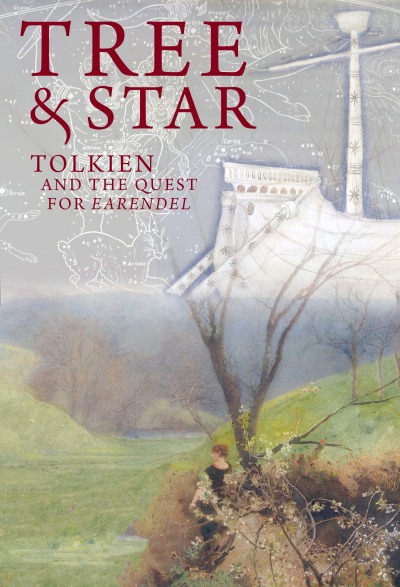
New book – “Tree & Star: Tolkien and the quest for Earendel”

I’m pleased to say that my “big Tolkien book” has been finished after many years, and is now available to buy on Gumroad as an ebook or at Lulu.com as a paperback.

The title is Tree & Star: Tolkien and the quest for Earendel

200,000 words. 472 pages. Delivered as a DRM-free printable .PDF file, suitable for reading on a 10″ digital tablet.

CONTENTS:

Introduction: 24th September 1914.

1. J.R.R. Tolkien’s discovery of Cynewulf’s earendel and its key variants.

2. Down the little rivers and bright streams.

3. Earendel variants: of magic horses, flaming arrows and sea-wargs.

4. Earendel and the early Christian north: the solstice chanter-songs.

5. Earendel and the early Christian north: a glitter of eagle wings?

6. Earendel and the early Christian north: an imposition or a recovery?

7. A Christmas interlude: of the curious Earendel of Charles William Stubbs, some poems, and party-trees.

8. Before Cynewulf: ‘dipping a toe’ in ancient star-lore.

9. Earendel’s earthly voyage, ‘there and back again’.

10. In Cornwall: Tolkien’s holiday with Fr. Vincent on The Lizard.

Selected bibliography.

Index.


Note: Yes, I am well aware that modern academics claim Cynewulf was not the author of the earendel lines, but I largely worked with the scholarly assumptions current during Tolkien’s time. Hence Chapter One is titled “.. discovery of Cynewulf’s earendel and its key variants.”


PDF Samples: tolk_earendel_sample.pdf and tree_and_star_index.pdf


I think $36 (around £30) is about the right price for something of this size and scholarly weight, in ebook. I’ve also tried to keep the paperback at Lulu.com at a similar price, and have managed to price it there at around $45.

Not all potential buyers will immediately know how Gumroad works, for the ebook version. You input the price you want to pay and click on “I Want This”. In this case there is a minimum, though I believe the nice thing about Gumroad is that generous people you can input a higher price if they wish. Your purchase is then placed in your Library at Gumroad, and you should also get a link sent by email, from where you can download it. I believe you can also “Send to Kindle” (Amazon’s tablet), if you have that set up at Gumroad, though I’ve not tested the resulting formatting.

Gumroad does not require a sign-up to purchase, and can accept PayPal and cards.

Medieval Bees

A new 53 minute YouTube seminar “Bees in the Medieval Mediterranean: Economic, Environmental and Cultural Perspectives”. Starts at 6:12 minutes.
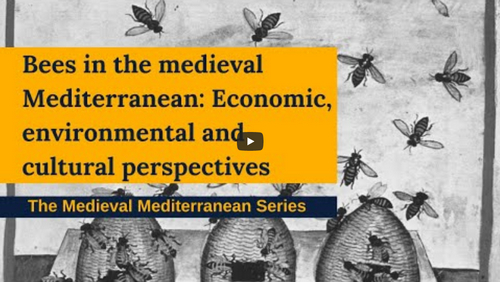
Some of the accents are a little difficult, but if you listen closely and on headphones they’re not impenetrable. They’re giving an overview of a major pan-European project that’s been partly completed.

The short discussion of the religious aspect was interesting. The thinkers of the medieval world did not know how bees reproduced, even if perhaps the guilds of industrial-scale medieval bee-keepers came to discern something of this over the centuries. Thus bees were deemed “virginal” by the thinkers, and could then be closely associated in the minds of the religious with the chastity and sweetness of Mary and Christ. This made their wax especially suitable for church candles.

The seminar’s listener learns that the Baltic not only had amber, but also bees-wax as a major portable and durable export. One that went long distances across Europe. “Vast” bee-forests were created within the forbidding forests of the Baltic and Bavaria, leading to “vast” exports of wax to the Black Sea, and thence it found its way to the monks who specialised in making all sorts of religious church candles. The Bavarian wax was especially valued, since the white colour and non-smoky burning were deemed important in churches.

The project’s paper is “Beekeeping in late medieval Europe”, in open access. This adds some detail to the idea of the vast eastern bee-forests…

bee forests were created through hollowing out large spaces in tree trunks and allowing bees to naturally move from tree to tree as they swarmed, protected from the worst of the winter weather within the trees’ cavities.

Logs were also used in some places. One assumes that glades were also created, perhaps by controlled burning, for the flowers and shrubs required by the bees. Such methods obviously produced enormous amounts of wax for white candles. Apparently honey and wax production were quite different things, and such trades did not overlap.

This somewhat intersects with my Gawain book, since the Lord of Alton in North Staffordshire went to fight with the crusaders of the Teutonic Order in eastern Europe. The project’s article tells of how the vast bee-forests were pagan, and there was a quite a religious/political tussle with the highly efficient Order over their control and use. But it appears to have been normalised by the time of Gawain, or at least that is the impression I get from the article. It notes one aspect of the pagan beliefs of that area that I had not noted from the BBC In Our Time programme on the Teutonic Order — that the linden was an especially revered tree.

Ironically, it seems that medieval church candles came either from forests tended by the ‘nominally Christian’ ‘former’ pagans of the Baltic, or the Arabs along the coast of North Africa.

The speakers also touch on the British Isles at one point, and the fringes of the West Midlands. Apparently we know from Domesday and somewhat later census documents that the Welsh Marches were a big bee-keeping — and presumably even nationally exporting — area. For honey rather than candle-wax, was the impression I had from what was said. This was in hives rather than damp Welsh forests, and was likely not monastic in nature. The seminar suggests that northern monastic bee-keeping was often more for medicinal and symbolic purposes (i.e. to demonstrate to novices the ‘ideal community’ in connection with the heavenly, which the monastery should strive to be like), than for sale.

Neither the recording or paper has mention of the folklore of bees, re: the folk-idea that the bees woke and “sung” at Christmas “a drowsy echo of the angels’ song” in heaven. Or that one must go to quietly “tell the bees” of someone’s death. But this “heavenly messengers” old wives’ lore now makes a bit more sense to me, now I know of the long-standing Christian connection of bees with Christ/Mary.

See also the recent Kristine Larsen paper, “Tolkien’s Blue Bee, Pliny, and the Kalevala.

New local history books on Archive.org

New on Archive.org, to borrow…

Warriors, warlords and saints: the Anglo-Saxon kingdom of Mercia.

Historic Staffordshire (1896, 1975 reprint).

Diary of a hunter (1981, ferreting memoirs in Staffordshire).

Psychiatry in North Staffordshire 1808-1986.

The North Staffordshire Railway in LMS days.

People of the Potteries (At last, I’ve been able to see it. It will be noted in my forthcoming update of my bibliography of North Staffordshire folklore, re: the ‘white rabbit’ ghost of Etruria Grove, and the chapter “Bemersley” with its details of a Mow Cop innkeeper and early ‘magic methodist’ named Zacchariah Baddeley).

From the latter book, on the Fowlea Brook at Etruria…

1) From “A Etruria ghost”

“Etruria is much changed from what it was forty years ago [i.e. 1820s-30s]. [Apart from the curving line of houses that formed Etruria, as seen on the Henry Lark Pratt painting…] The whole country was open, and some parts may be described as wild. The sloping hills of the ‘wood’ [later known as ‘Etruria Woods’ by Warrillow?] with its low brushwood and gorse, hemmed the village on one side, although the effect was somewhat spoiled by a marshy meadow which lay between it and the village. The rushes that grew here were a favourite resort for curious birds in winter, and now and then even sea birds would find their way to the place. [The latter still happens today]. One thing helped to make it a safe shelter for such visitors — the brook that runs through the valley would sometimes, after heavy rain, be swollen to a lakelet, filling the whole meadows, and even finding its way to the doors of the cottages.”

From “Alfred Bourne”

“… Foulhay brook. How different was that brook then than now. In the days of which I write its waters were as clear as spring waters, and its embankments studded with willow trees.”

Presumably this then gives the name. On the 1775 Yates map the Fowlea at Etruria is marked as “Fowl Hay”. In other words, ‘the wildfowl(-rich) hay-meadows’.