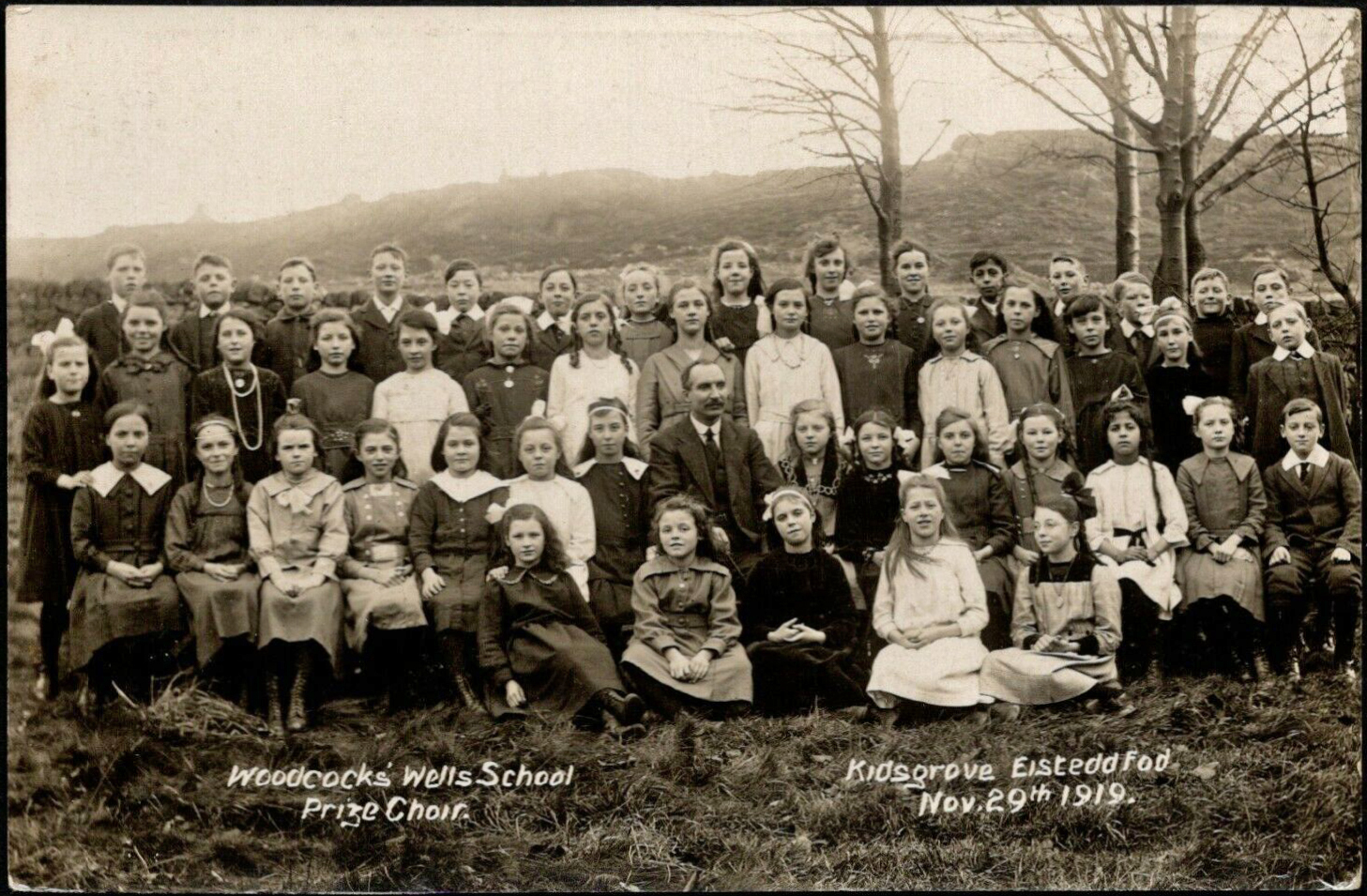
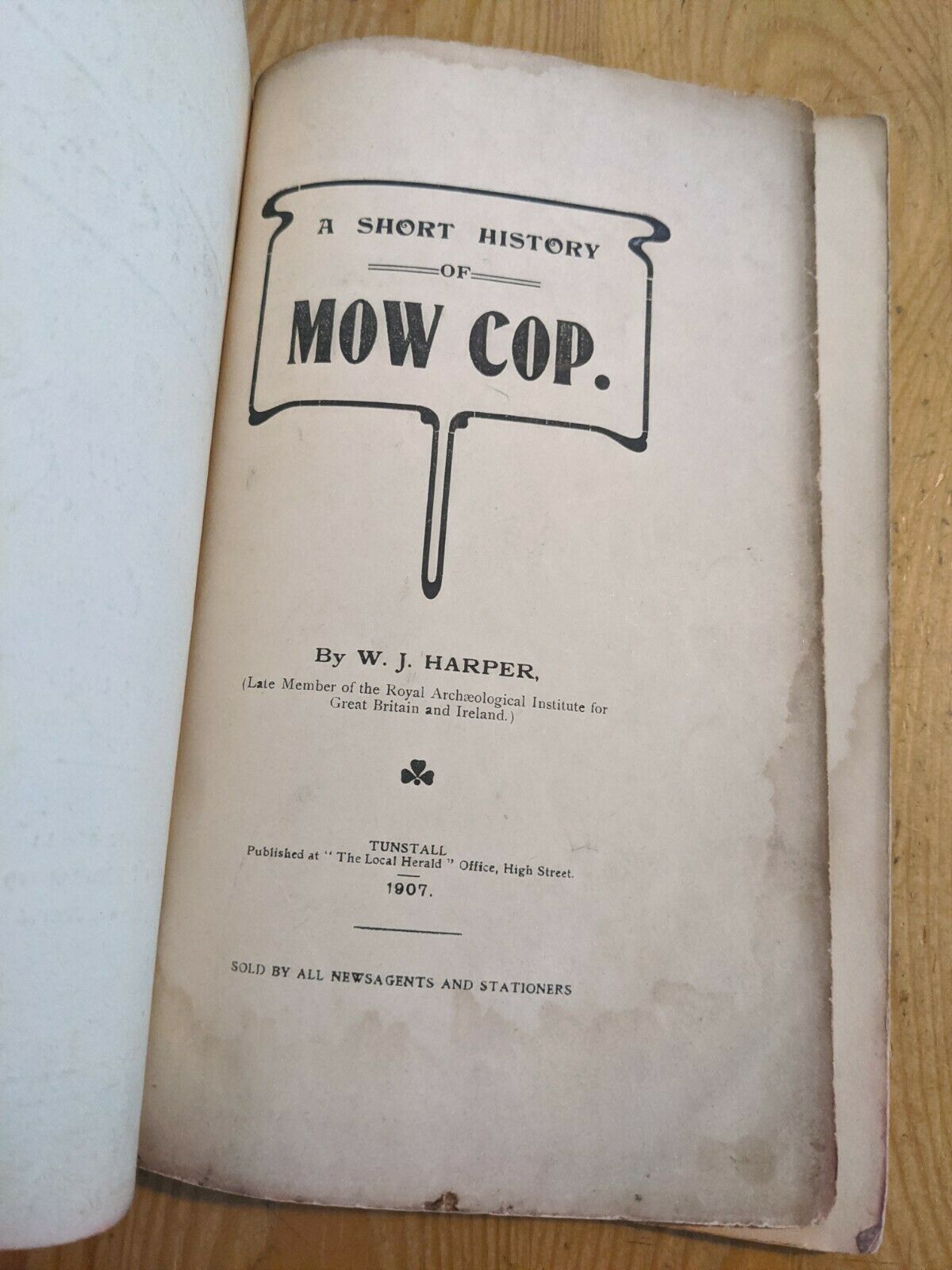
Part of an interview with an old man of Mow Cop, published in a booklet on A Short History of Mow Cop in 1907 (aka Mow Cop and its Slopes: A Short History). It’s a £10 eBay listing and I can’t get more of it.
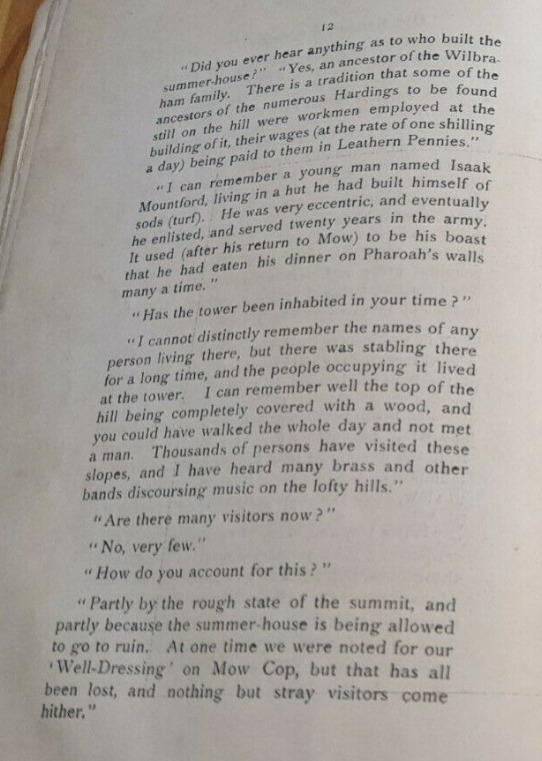
The author obviously had the gumption, which many Victorian antiquaries did not, to interview a local old man and to print his memories. The man recalled that the top of Mow Cop used to be extensively wooded. How that came about would be interesting to know. Was it planted for timber or was it a natural and scrubby re-wilding? A thirty-year growth would be about right for the 1850s, if the economic slump of the 1820s and then the 1840s had caused widespread abandonment and also removal of the sheep — which would otherwise devastate such uplands.
Importantly for local folklore, he recalled that there used to be annual well-dressing ceremonies, and the book shows a drawing of one well. It might have slipped my memory, but I don’t recall that I’d heard anywhere else that there had once been an annual well-dressing event on Mow Cop. There is also a Woodcocks’ Well School on Mow Cop, so that may give another name.
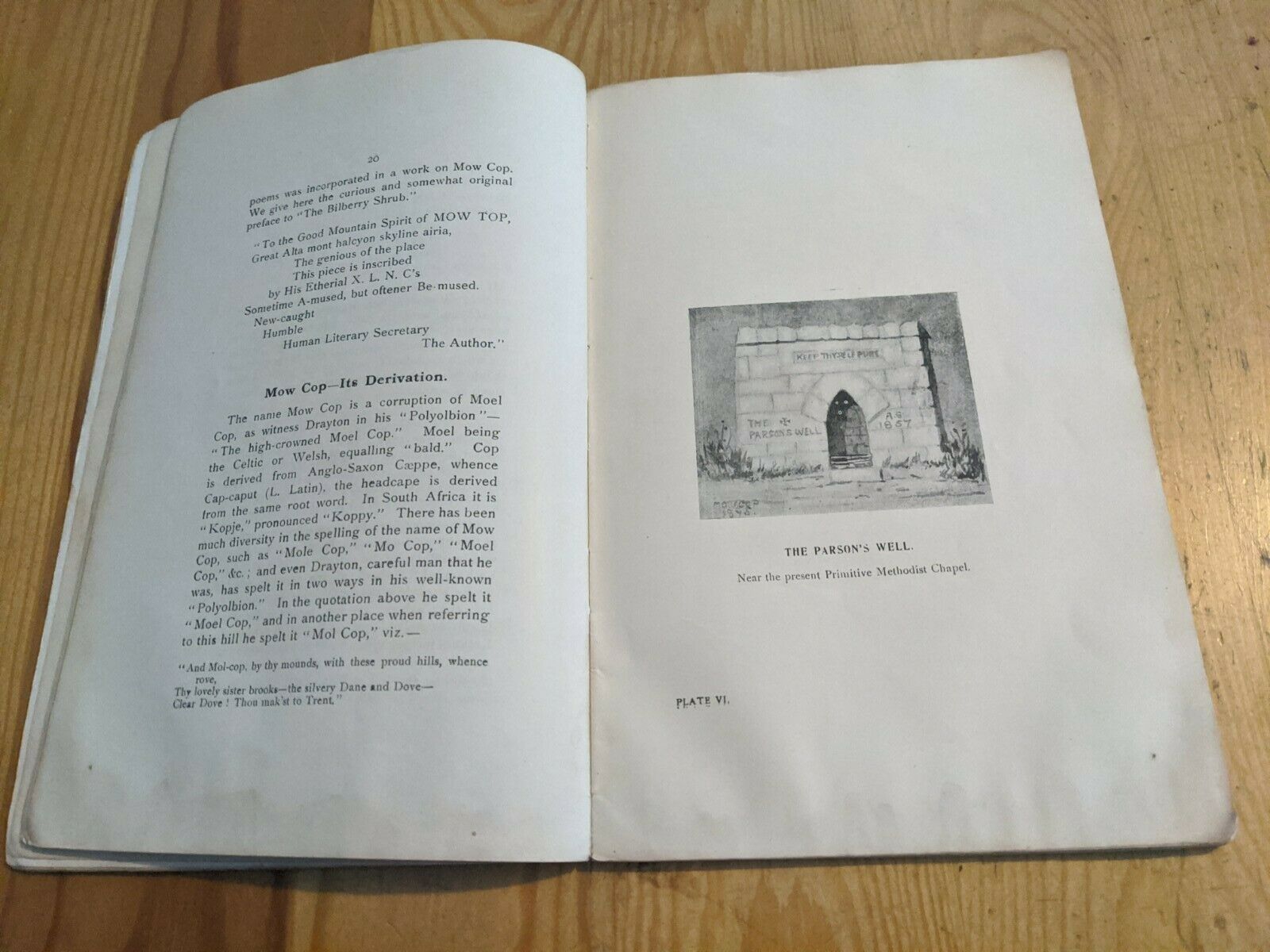
That might perhaps be an inspiration for local people today, in terms of re-starting the well-dressing and also pairing it with summit tree-planting and litter-picking along the watercourses and around the wells. There was also an Eisteddfod at nearby Kidsgrove from 1913-1955, in which Mow Cop schools won prizes. So singing might feature too.