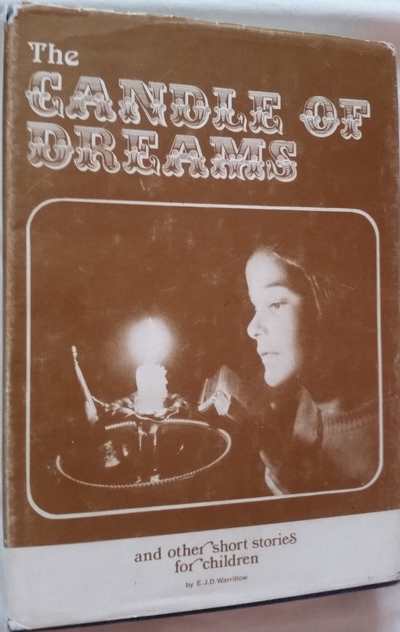
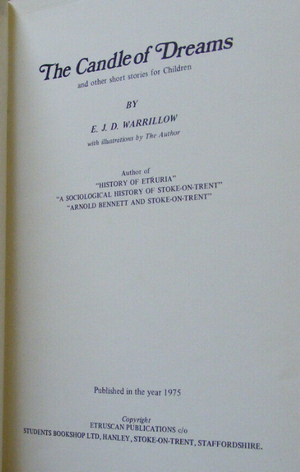
Another new local book found, The Journals of William Clowes (1844). He was born in Burslem in 1780, and came of age and was married in 1800. Among the accounts of prayer meetings and verbose ‘tremblings before god’, there are some insights into local lore and difficulties of travel. For instance, it seems inconceivable today that it would be any difficulty to get from Tunstall to Kidgrove, and yet in the winters of the early decades of the 19th century it could be a wild boggart-haunted road…
It was about this period also that Mr. W. E. Miller, the travelling preacher in the circuit, strongly pressed me to lead a class at Kidsgrove, to which I consented. This place, at which there is a large colliery [coal mine], is distant about two miles from [my home in] Tunstall; and to attend every week, and especially in the winter season, when the nights were cold and stormy, was not a very easy matter.
In a lonely part of the road leading to Kidsgrove, which is skirted by a wood, there wandered a ghost, as tradition and common report asserted. It was called the “Kidsgrove bogget”. On my first induction into office as the Kidsgrove class-leader, I confess, when passing the haunted domains of this “Kidsgrove bogget”, that I occasionally felt a little fear creeping on me; but, unlike the school-boy with his satchel on his back in crossing the church-yard, “Whistling aloud to keep his courage up”, I endeavoured to pray away those fears […] Very frequently my Tunstall friends would accompany me; and on these occasions we used to make the lonely lane to ring with shouts of glory, and singing the praises of God.
The class-meeting at Kidsgrove rose into great vigour and usefulness in a short time, and many of the roughest colliers [miners] were brought to God. At one period several of these came into the house where we were holding the class-meeting, some of whom were half drunk, and the house was crowded with people. I hardly knew what course to adopt; at last I came to the resolution to address both saint and sinner, and to give an exhortation […] I then began personally to address the ungodly [drunkard ruffians] some of them were struck with such terror and alarm that they jumped up and rushed out of the house, and they confessed afterwards that they thought they should have fallen into hell if they had remained any longer in the house, and they should take care not to go to William Clowes’s class again. [But] One ruffian was so wrought on that he fell like an ox, and laid quietly under the form [of address] till the meeting closed. The meeting being thus tolerably cleared, a mighty shout of glory went through the house.
This usefully shows that the Boggart pre-dates the building of the Harecastle Tunnel. Some have suggested the tunnel-building as ‘the cause’ of the Boggart’s appearance.