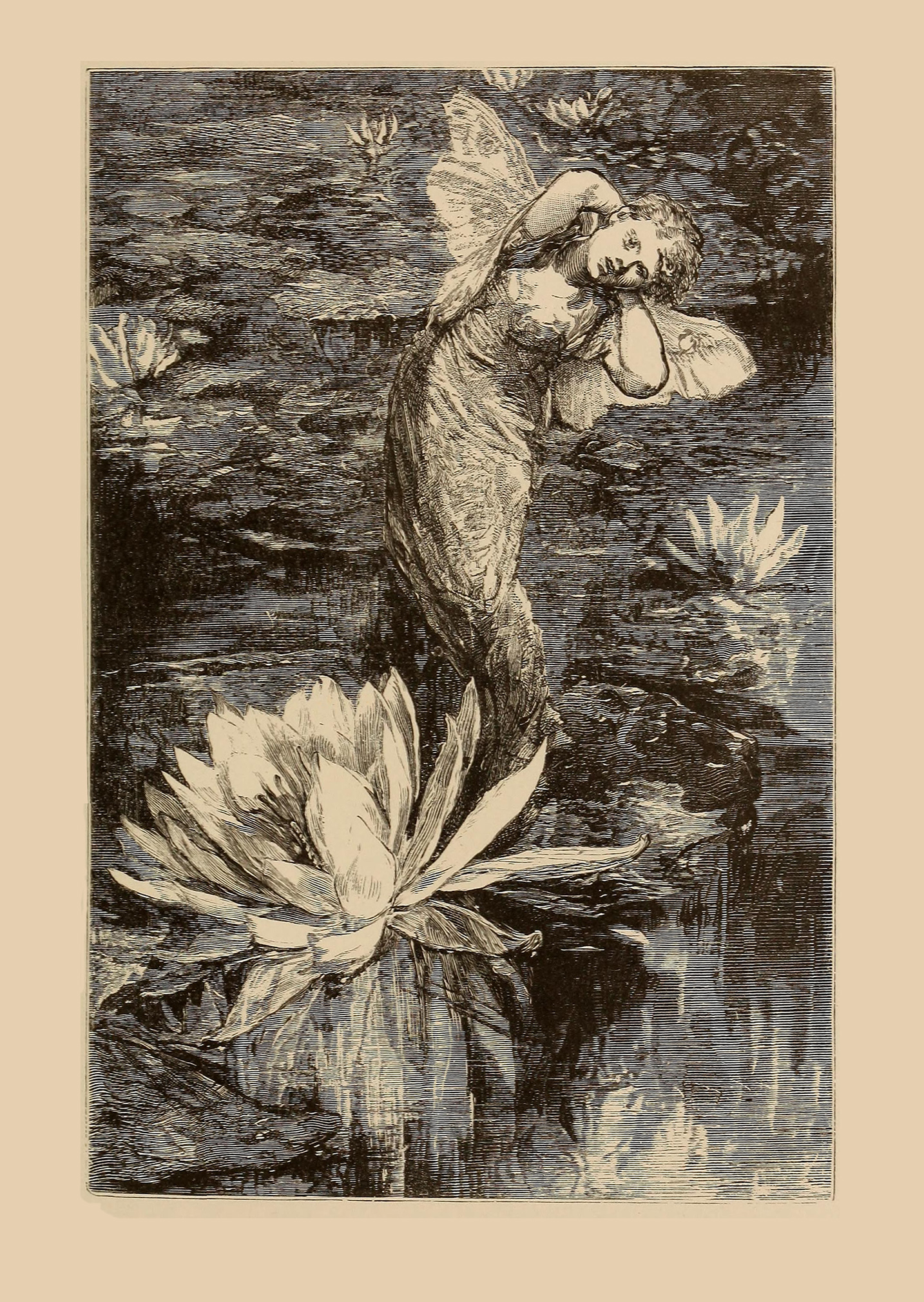
A macabre / fantasy illustrator duo from Rhode Island, a placename which is of course familiar to all who thrill to supernatural literature. John La Farge (1835–1910, lived and died in Providence, Rhode Island) and his engraver Henry Marsh (American, 1826–1912). Bed-ridden early in his career and in need of the cash, La Farge produced fairly loose watercolour designs which were engraved by Marsh and published in the upmarket Riverside Magazine for Young People. The “water-lily” picture appeared in an anthology of poetry. La Farge went on to a strong career in stained glass design.
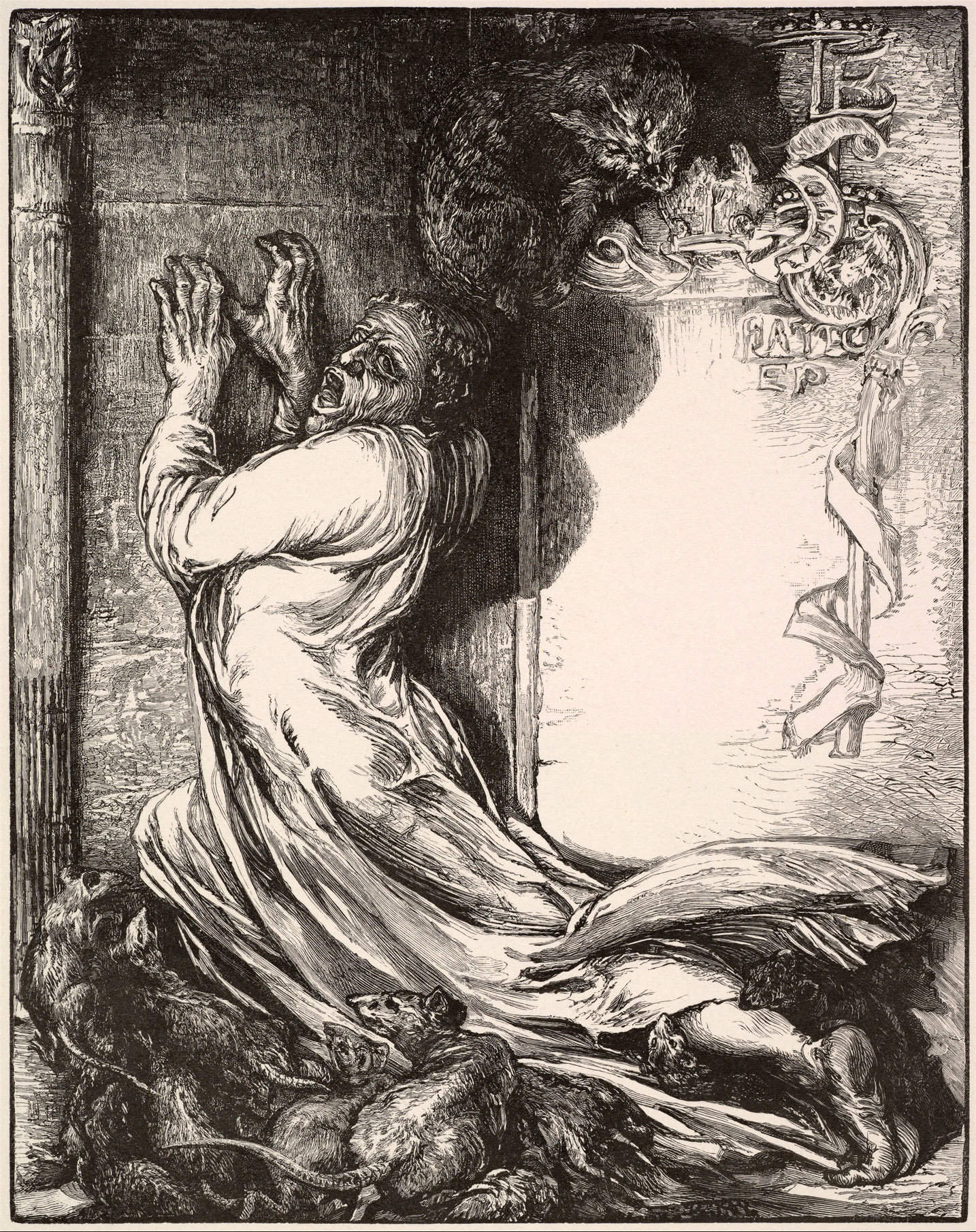
Apparently these fantastical works were remade in oils some 15-20 years later, and were then presumably shown in Providence circa 1885 (give or take five years). One then wonders if a later sight of “Bishop Hatto and the Rats” might have been a boyhood influence leading to the famous horror story “The Rats in the Walls? Le Farge died at Butler Hospital in Providence in 1910, and there must have been good accounts of his life in the obituaries. Had Lovecraft known the picture, then he would have especially enjoyed the combination of a great bristling malkin of a cat, a churchman, and the rats, all done by an artist from his beloved Rhode Island.
“Bishop Hatto and the Rats”.
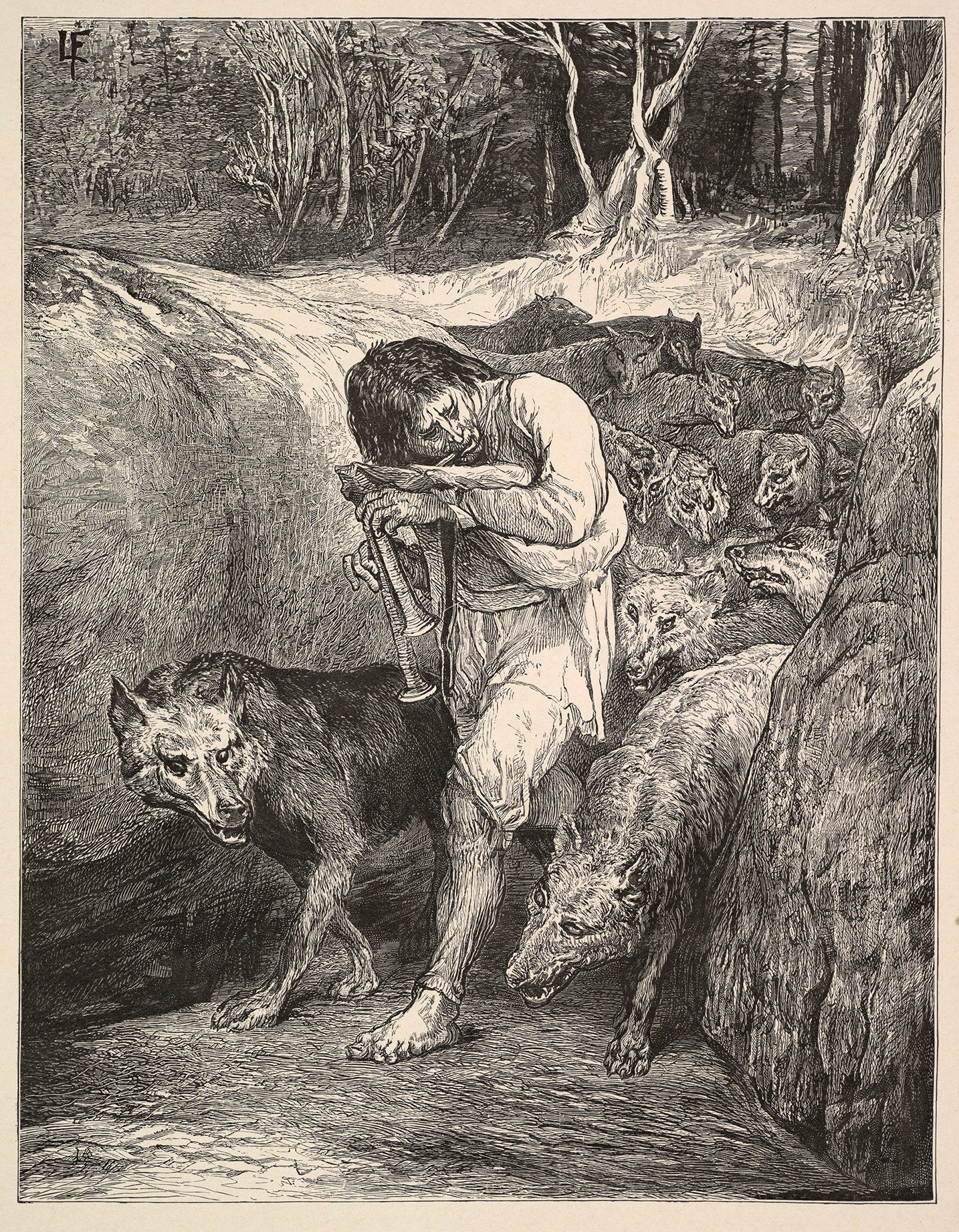
“The Wolf-charmer”.
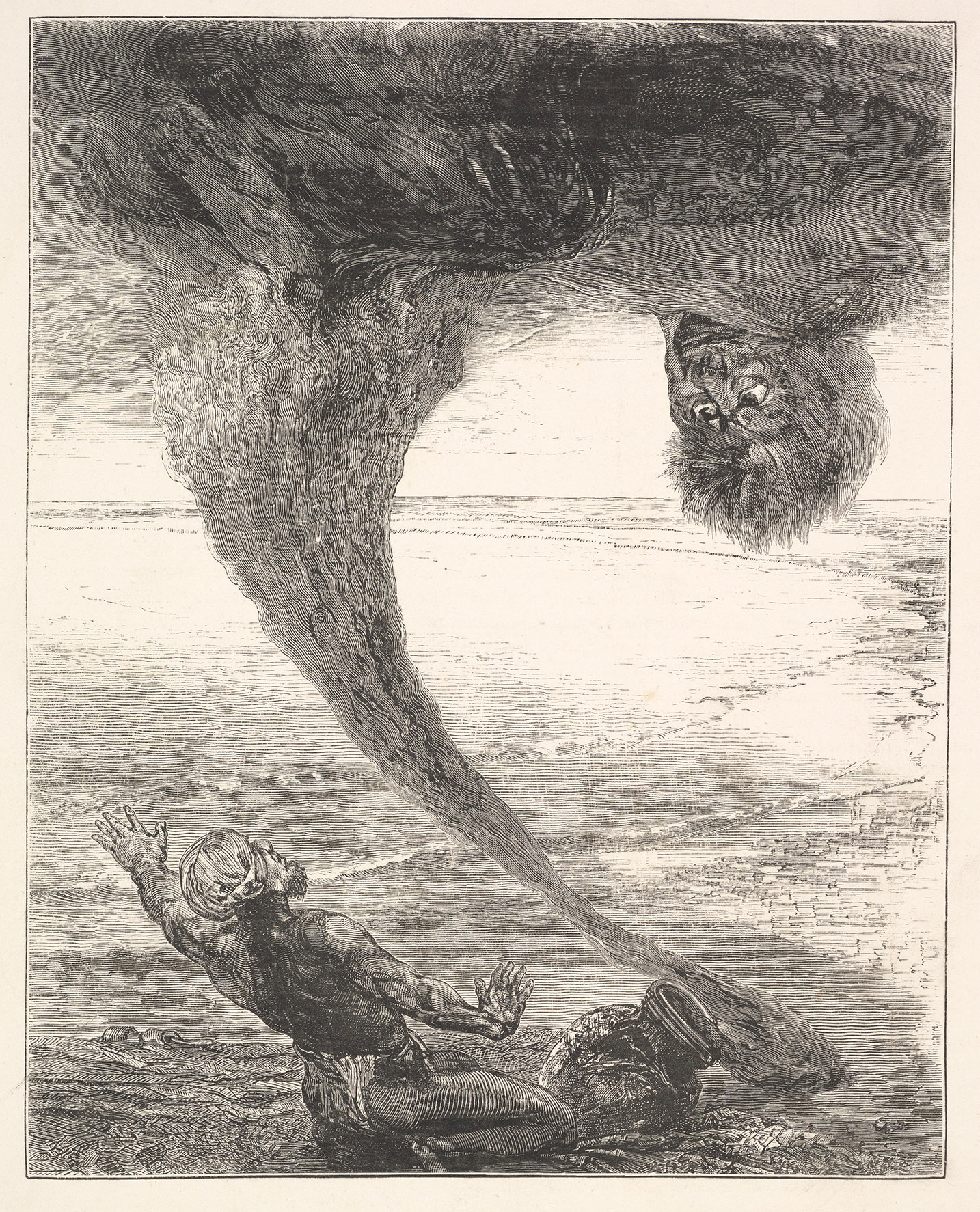
“The Giant and the Travelers”.

“The Fisherman and the Afrit”. An afrit (also called afreet or ifriit) is a mischievous solo creature, similar but far less powerful than a jinn (genie), and they are probably best likened to ‘the imps of the jinn‘.
“The spirit of the water-lily”.