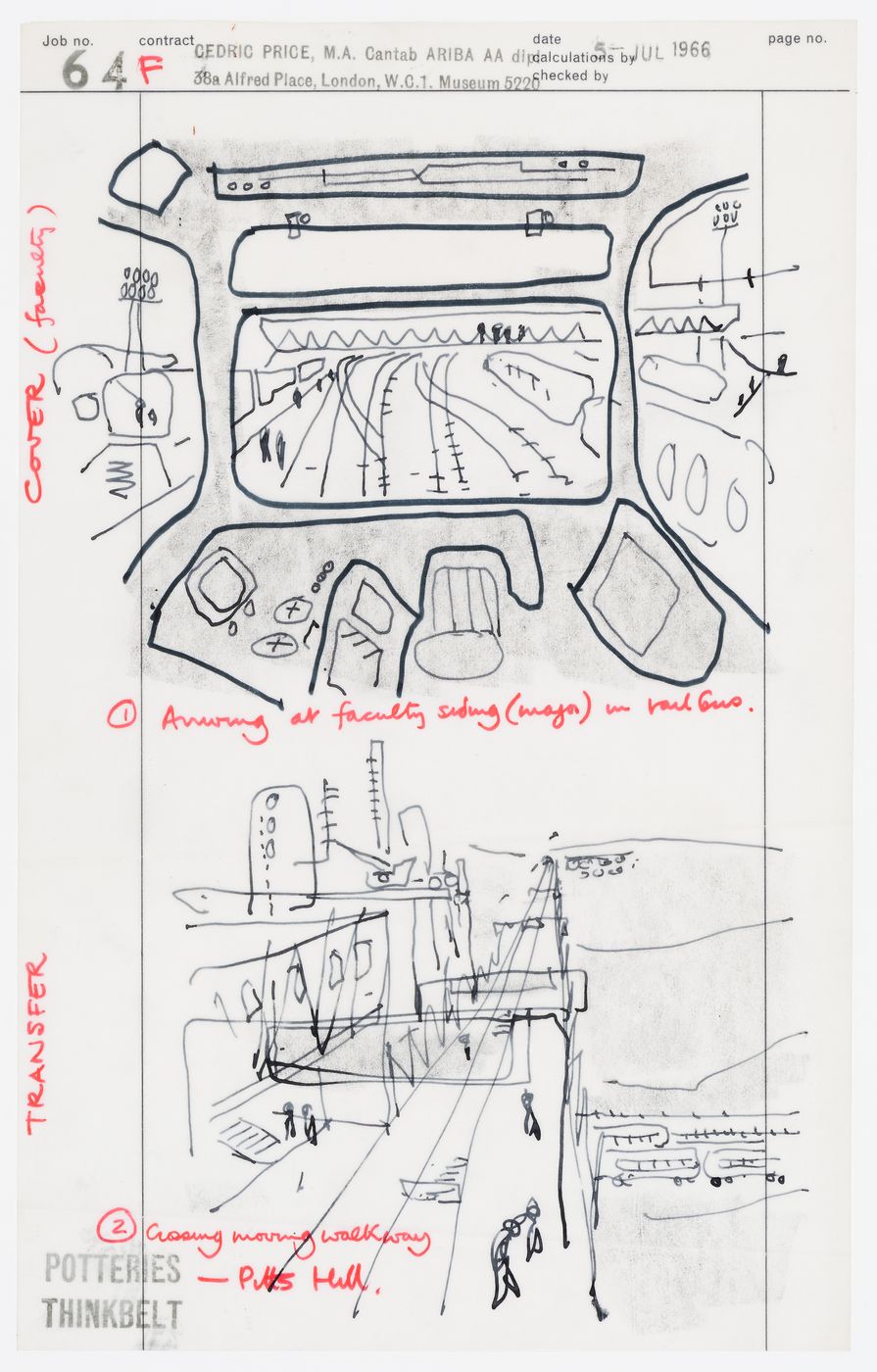
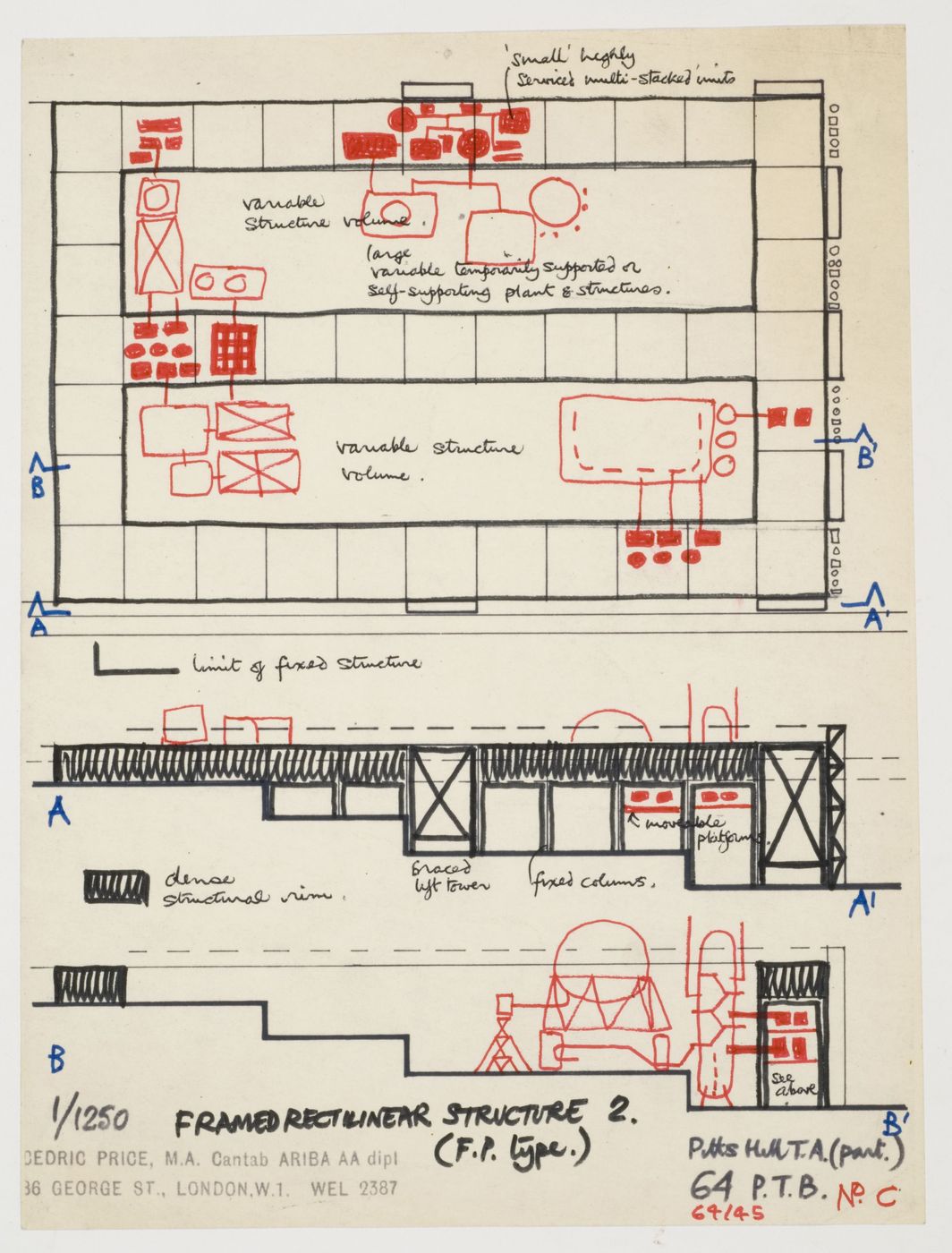
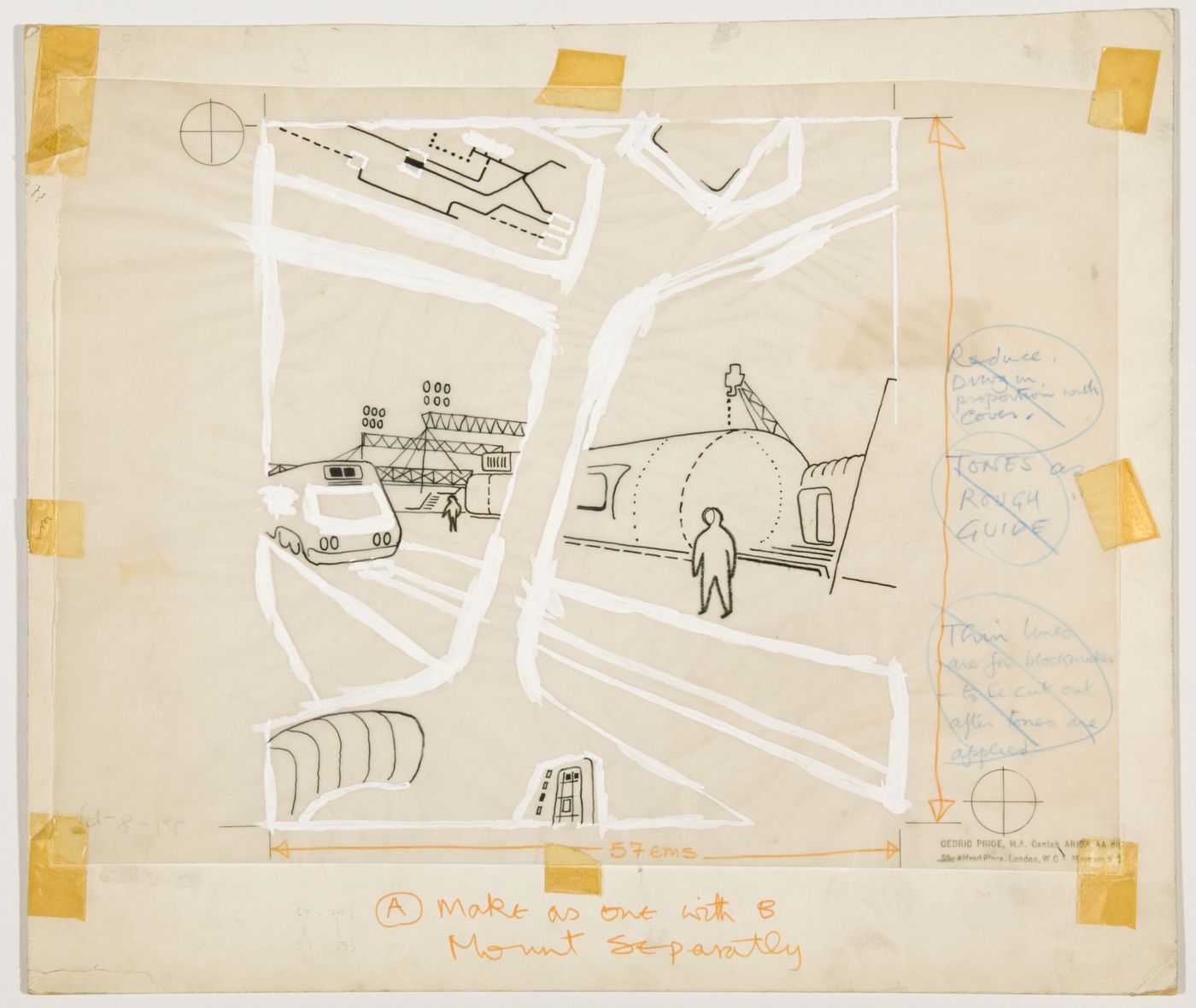
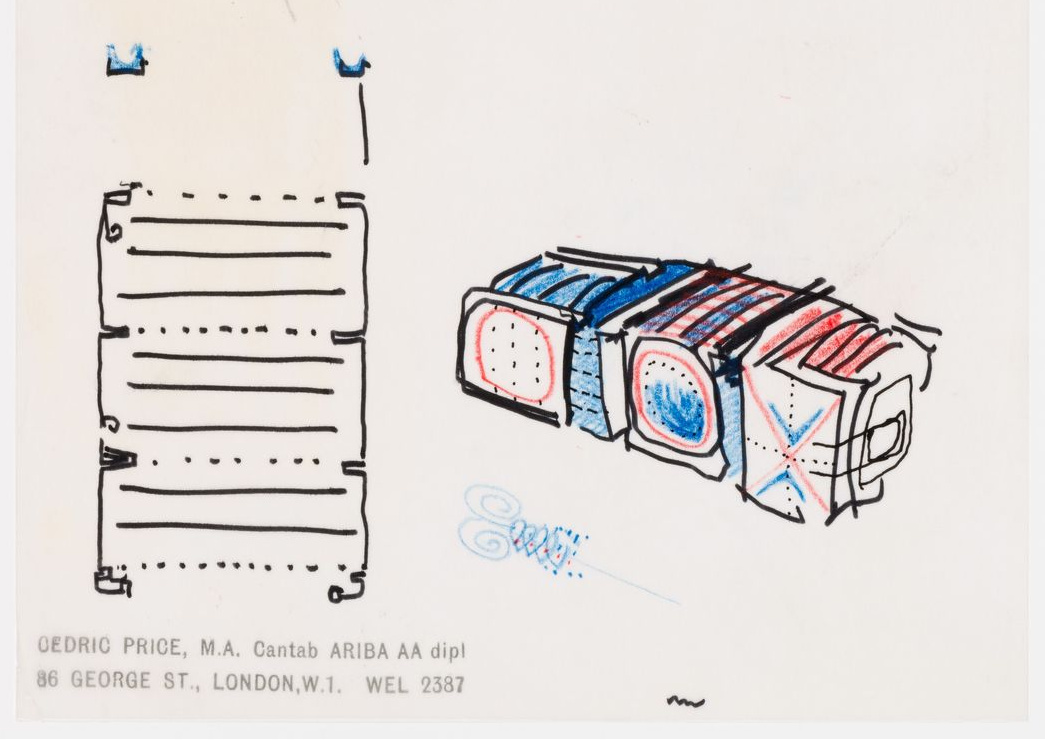
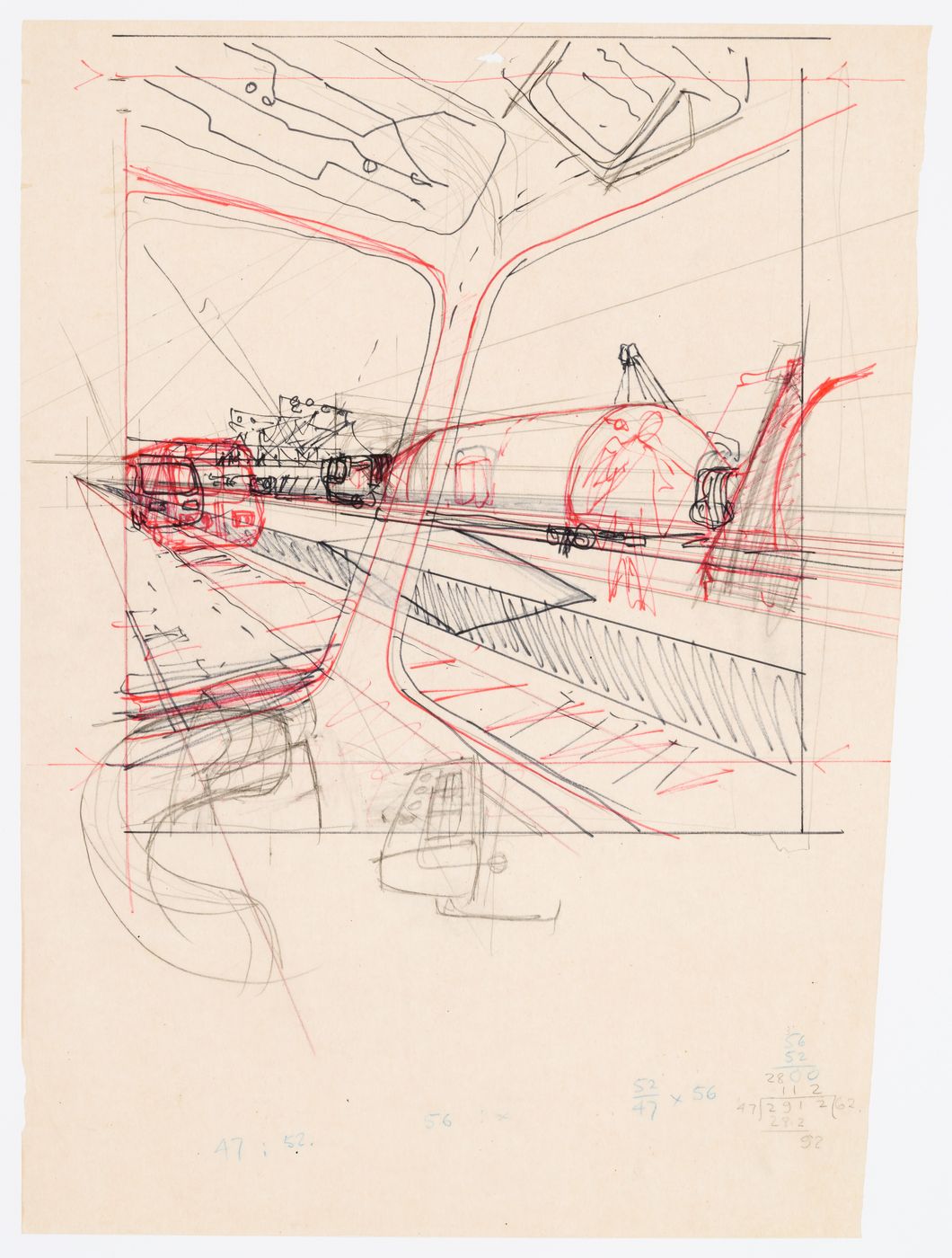
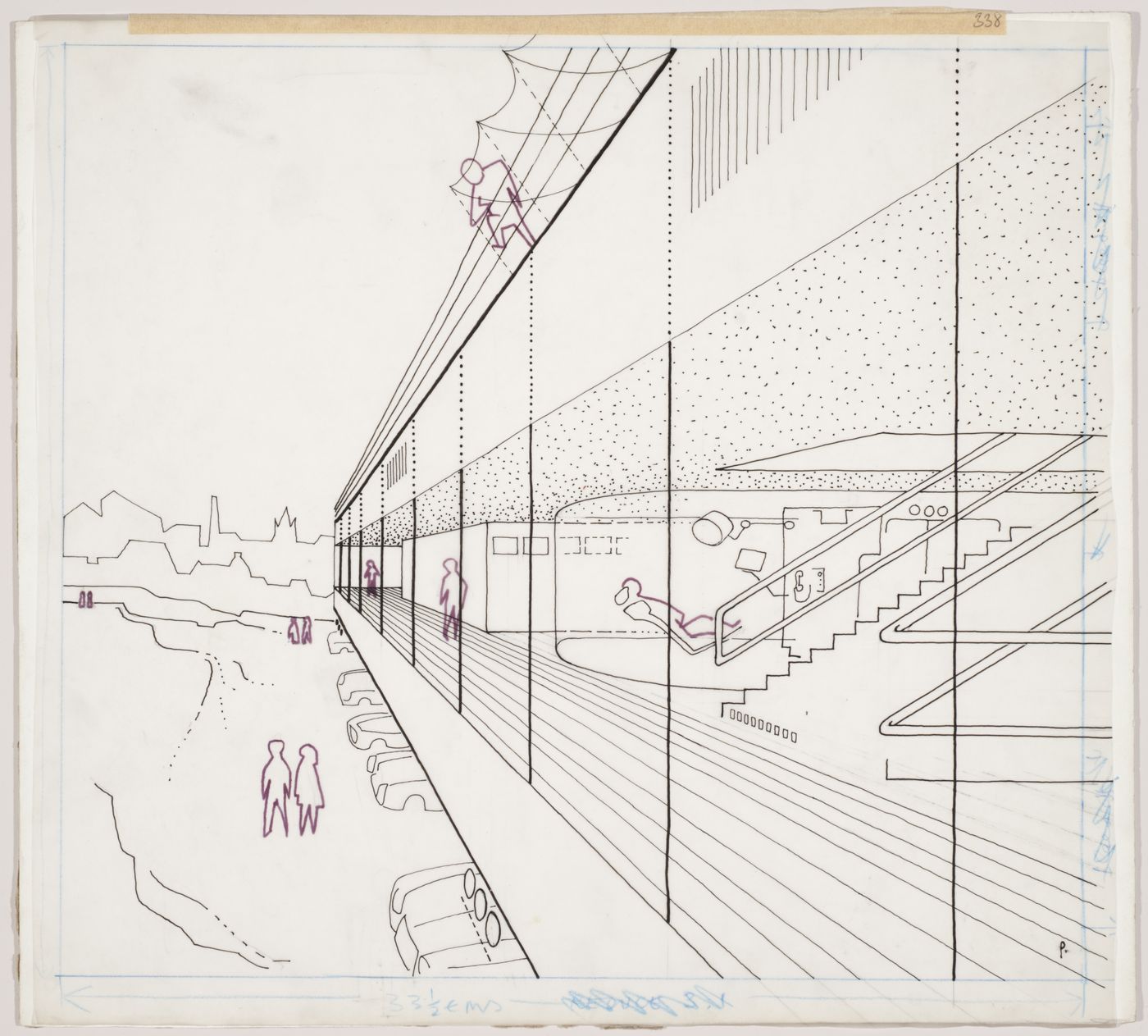
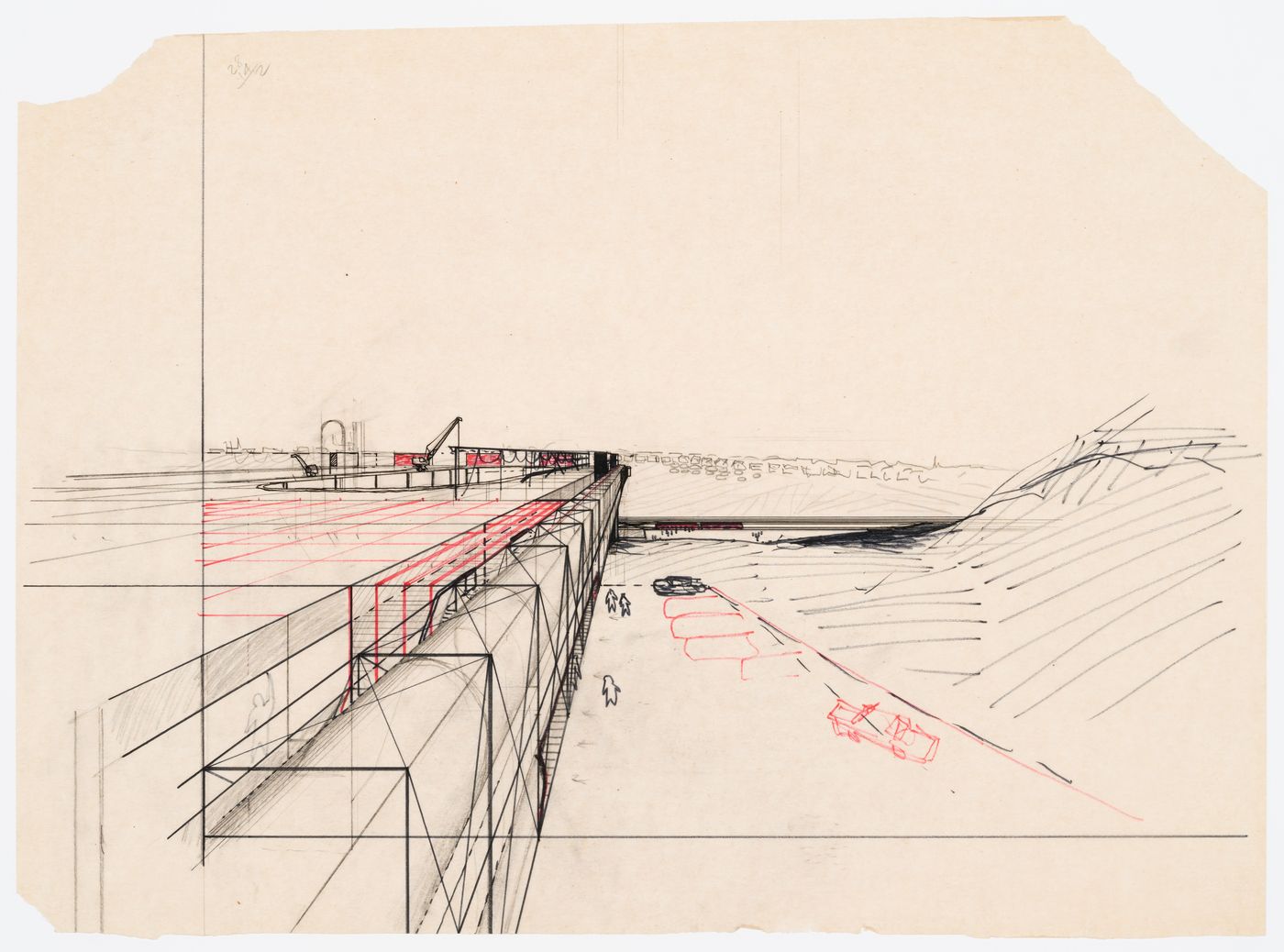
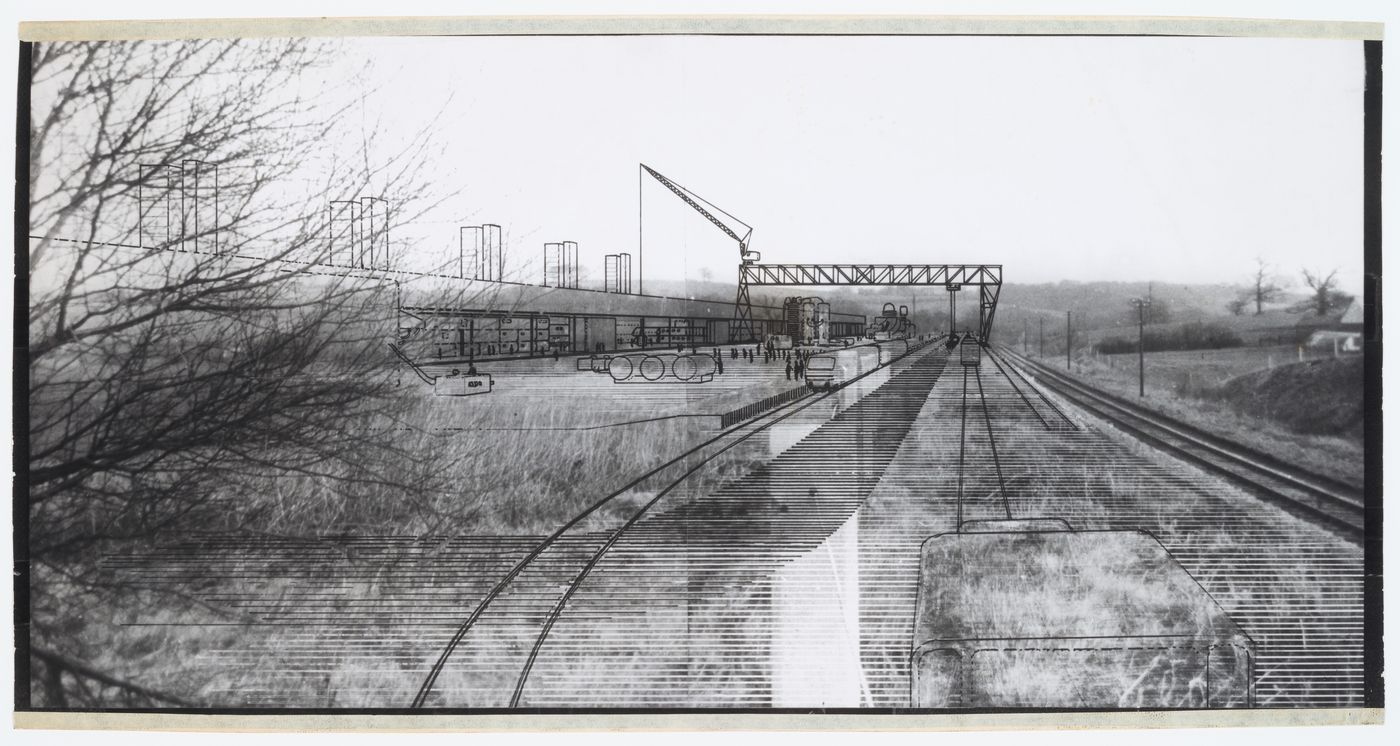
Below are some of Cedric Price’s conceptual drawings for the £80m “Potteries Thinkbelt” across North Staffordshire, which he proposed in the mid 1960s. The aim was to make some productive use of the old railway lines, then being closed wholesale by Labour’s despised Dr. Beeching. We also had commercial mineral and mining railway lines which were expected to become disused. More widely in the UK, it was imagined from about 1965 that advanced education might be one substitute for declining heavy industry.
While Price had some local connections and thus local knowledge, having been born in Stone and taking his first job in Burslem after leaving school, his plans on returning to the city were almost laughably radical. A sort of ‘travelling university campus’ was proposed. This would have used the former rail lines of the Potteries to provide a new 20,000-student university for North Staffordshire, a place which Price labelled “a disaster area” (New Society, No. 192, 1966). Others thought the same. The Labour government minister Dick Crossman visited Stoke and instantly decided it was a “huge, ghastly conurbation” that should be “evacuated” and not have a penny invested in it. Countless billions, he mused, would never restore the ghastly collection of “slag heaps, pools of water, old potteries, deserted coal mines”. From the 1950s to the 2000s Labour’s doctrine was that of “managed decline”, something that was still having an effect in the city as recently as the brutal mass demolition of Middleport in the 2000s.
But back in the 1960s Price mused that, if the city could not be saved, perhaps the students could. He proposed four types of uber-modern student housing and classrooms-on-rails, all shuttling students of hard science and engineering around the Potteries, inside newly designed rail-car types named ‘Capsule’, ‘Crate’, ‘Battery’ and ‘Sprawl’. These units would be hermetically sealed, with no windows and with artificial atmospheres, to prevent contact with the dismal city outside. Their trains would be serviced from thirty new custom-built railheads and sidings around the Potteries. The structures would “hot-house” students and staff, forcing them into “new living patterns”. Inflatable structures were also rather hazily mentioned, presumably bouncy-castle style entertainment pods.
At the corners of this sprawling ‘rail university’ there would be connection hubs with airports, motorways, mainline rail stations. The humdrum local planners at the City Council would only be permitted to build around the network once everything was in place.
Apparently Price’s proposals were made partly in response to the way in which the leafy new university at Keele had ‘shut itself off’ from the Potteries, and was widely seen as being unconcerned with local people and the needs of the city’s industries. The dispersed nature of the Thinkbelt also fitted nicely into the way that the city council required that all towns be equally serviced, so as not to alienate any voters.
Needless to say, the Thinkbelt was never built. Price departed Stoke for the failing city of Detroit, USA, to propose that their city build a ‘Think Grid’. Stoke’s City Council later dabbled with another ‘grand idea’ proposal, this time around the fledgling 1990s Internet, called WorldGate. That, too, failed to materialise.
Over 30 years later, the Potteries did something rather more sensible with its old mineral railway lines. In opposition to certain rather rotund Councillors who openly claimed that ‘no-one cycles in Stoke, it’s too hilly’, the dynamic new Mayor Mike Wolfe quietly championed bicycle routes. The city successfully paved many of the old rail lines to provide over a hundred miles of off-road bicycle paths (map: North | South). Instead of being imprisoned in sealed pods, the city’s youngsters were to be out in the open air of an increasingly green city.
Further reading:
* An architecture for the new Britain : the social vision of Cedric Price’s Fun Palace and Potteries Thinkbelt, Columbia University PhD thesis, 2003.
* Cedric Price : Potteries Thinkbelt, Routledge, 2007.
* The evolution engine: Organicism, ecology, cybernetics and Cedric Price’s Potteries Thinkbelt, Buffalo University PhD thesis, 2012.
* Cedric Price : Works 1952–2003, AA Publications, 2018.
So far as I can tell, the response of the people of the Potteries to such proposals has not been collected.
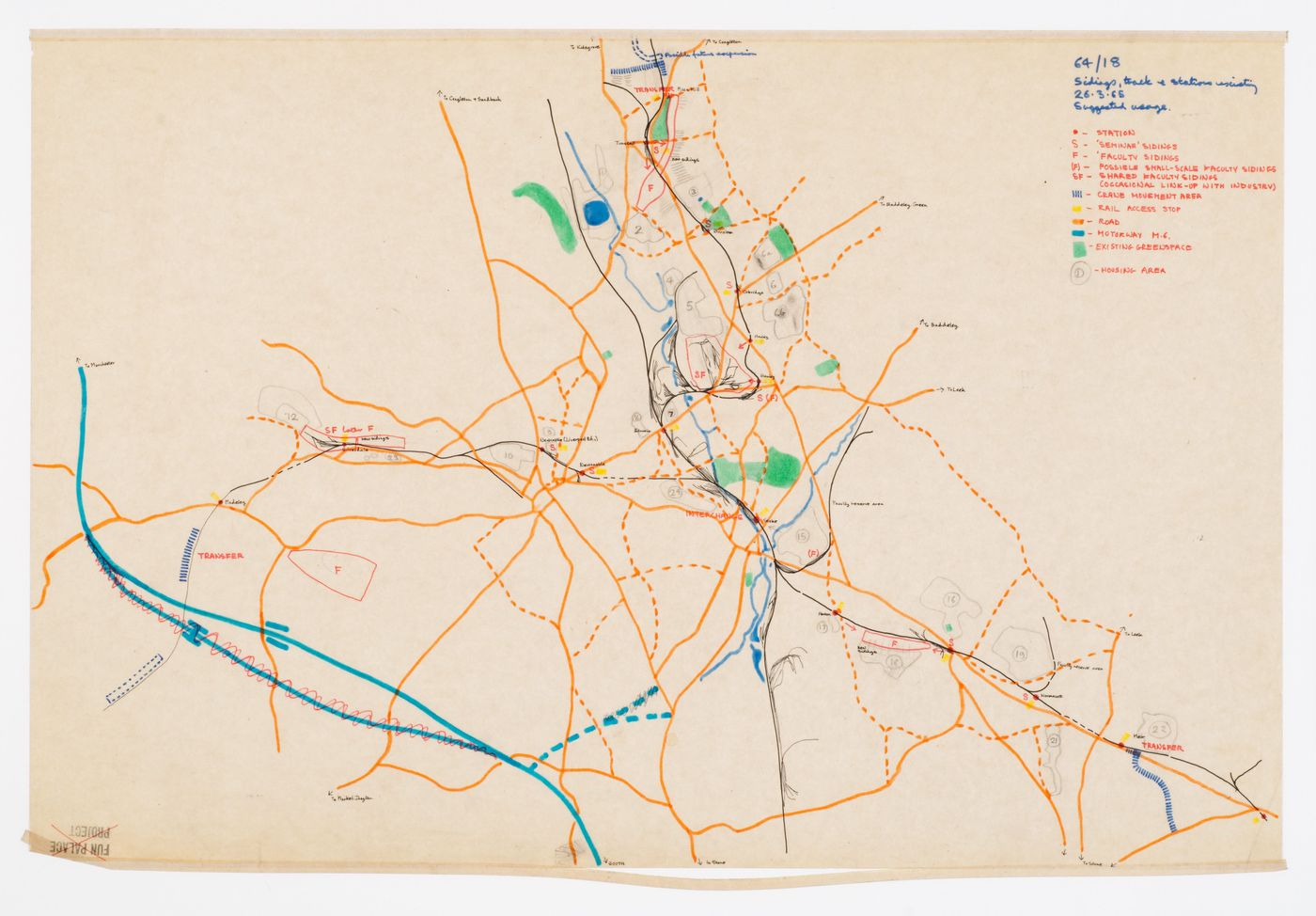 What Price had to work with. The local rail structure as it existed 1964-65.