What is historically correct in Chapter Seven of Spyders?

This is a note on what is historically correct in Chapter Seven of the North Staffordshire novel The Spyders of Burslem:—

The Burslem Workhouse. The original local workhouse is imagined in the novel as lasting into the late 1860s, but in reality the old one became the Scotia Pottery in 1857 and soon after was sold to Bodley & Harrold…

“The old parish workhouse was sold by the guardians in 1857 for £1,000 after several unsuccessful attempts to secure more. It was bought by James Vernon who converted it into the Scotia Pottery” — A History of the County of Stafford: Volume 8.

The newer and purpose-built Wolstanton & Burslem Union Workhouse at Chell served a wider area than simply Burslem. It had 132 inmates in 1839. It had around 160 adult inmates listed in the 1881 census. This suggests that my estimate of about 100 Workhouse inmates from Burslem town (then a town of 22,000) would be about the right number for 1869.

The Lyme was a real local forest, although long gone by 1869. It gave its name to Newcastle-under-Lyme.

There was a North Staffs Fox Hunt. See the book: A History of the North Staffordshire Hounds and Country, 1825 to 1902. Also the 1995 updating by Simon P. Huguet, The North Staffordshire Hounds: a history of the North Staffordshire Hunt, 1845-1995.

Mrs. Mary Brougham the bookseller was a real historical figure. See the historical notes on the previous chapter for full details. She did indeed commission some fine ceramic Parian miniatures from local artisans.

The Free Trade Movement was real. See the book The Free-trade Movement and its Results for details.

The various trades of Birmingham, Burton, and Leek are correct. However, leather was more in Walsall.

The Cat Motor is an obvious invention. There was however much activity in this area in the mid 1800s, and Dr. Morton suggested that the history of static electricity in the UK could be…

“divided into three periods … the second, a period extending from 1800 to 1869”.

Earth currents had indeed only just been discovered in 1869. The Stoke inventor Oliver Lodge — a partial inspiration for Miss Craft (the inventor in the novel) — apparently made one of the first practical local demonstrations of electricity as a boy at Wolstanton in 1868. Like Craft he was a science prodigy, and later was a key player in the invention of radio.

Mrs. Brougham’s casual mention of Mr. Morlock Bones and his assistant Moriarty again shows the reader they are in an alterative history. Morlock Bones is, of course, a play on the name Sherlock Holmes. Morlock is my allusion to the ‘morlocks’ in H.G. Wells’s famous The Time Machine. Wells published a macabre story set in Stoke, in the same year that The Time Machine was published.

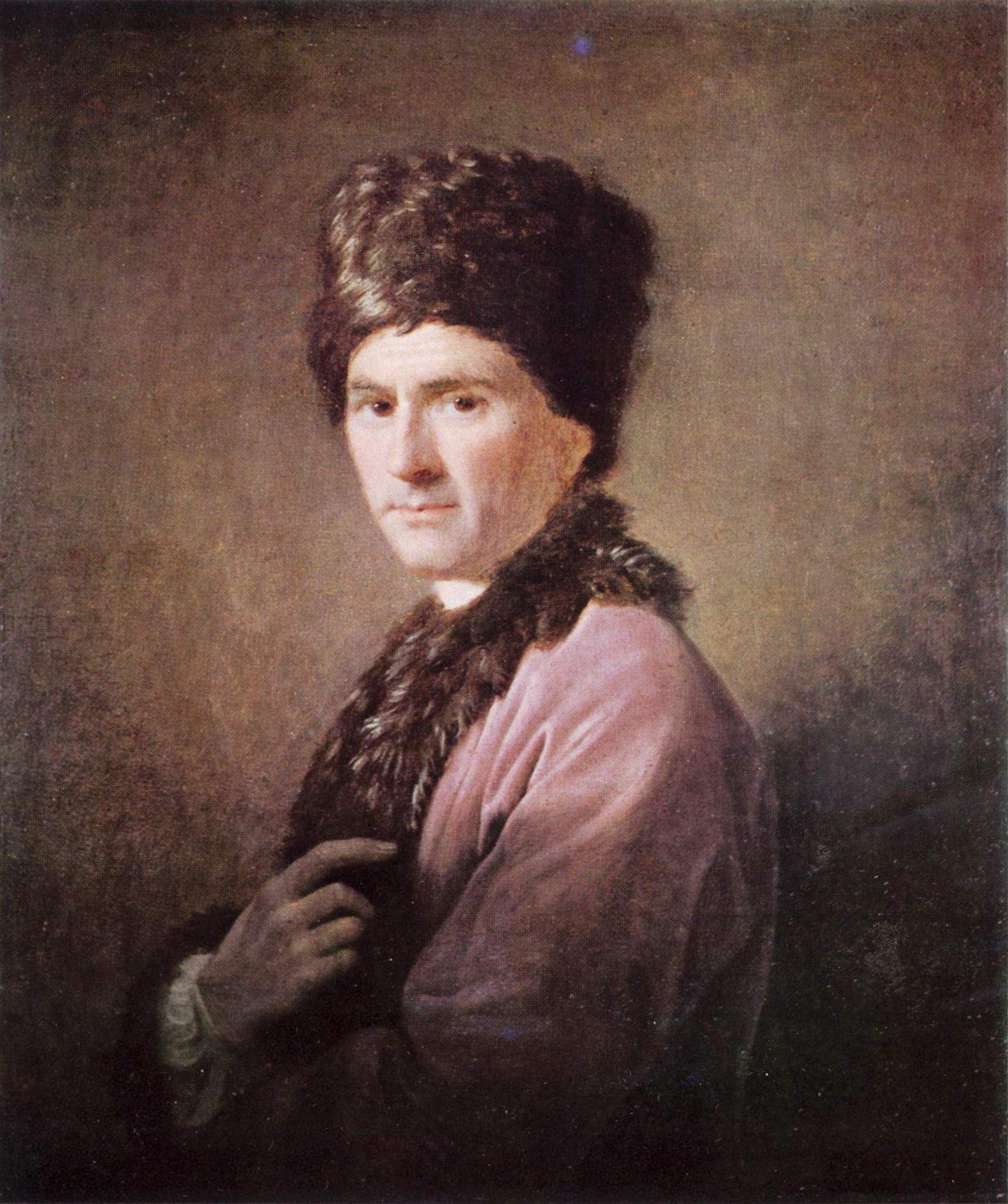
The description of the Rousseau psychographic portrait is correct, and is based on this painting of him…

Rousseau wore this type of dress in the Staffordshire Moorlands, and did indeed go hunting herbs on the moors. Erasmus Darwin did once try to meet with Rousseau in the Moorlands, but the paranoid Rousseau rebuffed him.

Rousseau did indeed give his five children into the care of the state. The extreme Jacobins of the French Revolution indeed adored Rousseau. And…

“The Jacobin leaders were explicitly disciples of Rousseau […] It was Rousseau’s followers who prevailed in the French Revolution, especially in its destructive third phase” — from Rousseau and the French Revolution.

The real Thomas Wedgwood was indeed interested in educational theory in his youth. See the biography for more details.

What is historically correct in Chapter Six of The Spyders of Burslem.

This is a note on what is historically correct in Chapter 6 of the North Staffordshire novel The Spyders of Burslem, set in 1869:—

The description of differing times is broadly correct. The passage of measured time was not yet wholly uniform in provincial England in 1869.

The animosity toward women readers is correct. A old colleague of mine once wrote her M.A. dissertation of the subject. Here is a report of a debate, given in the Journal of the Society of Arts (2nd April 1869), on the topic. This is advocating in the other direction…

The novels mentioned are of the time, but Middlemarch was only begun in 1869 and did not see print serialisation until 1871.

The famous fantasy novel At the Back of the North Wind by George MacDonald was indeed in that year being serialised in Good Words.

There was indeed a Mrs. Brougham, Bookseller, in Burslem. As well as selling books she held what then amounted to a local lending library and a local records service before the opening of the Wedgwood Institute library in the 1870s. She seems to have inherited the business from her father(?), Mr. Stephen Brougham, since he is mentioned in regard to his marriage as a Burslem bookseller in The New Monthly in 1816. She appears as “Mary Brougham, printer” of Burslem, and appears to have operated as such from 1828 into the 1850s, whence the printing seems to have taken a back seat to the bookselling.

Mrs. Brougham also appears to have had a sideline in commissioning brooches from the finest local artisans, since in 1851 it was recorded that “The elegant Parian Brooches manufactured by Mrs. M. Brougham, of Burslem, had received the patronage of Queen Victoria”. This fact features in the novel, and is tied into the visit of the Queen to Burslem.

The real Mrs. Brougham appears to have been connected with the Burslem and Tunstall Literary and Scientific Society (founded 1838, seems to have later floundered and was re-founded in 1849 as a Mechanic’s Institute which lasted until 1854).

Charlotte Cotton was another female bookseller in Burslem at the time. For a small town of 22,000 to support two booksellers suggests good sales and a wide readership.

The Potteries has indeed been called the cradle of the nation’s comedy, although at a later date.

In 1869 about nine out of ten of the town’s children and youth did indeed have some form of schooling, and could read and write.

I remember reading years ago that some historians had changed their views on the history of British education, and had come to see the penny schools as providing a generally good service, regulated by the market because paid for weekly and directly, and the compulsory state education as often inferior to what it replaced. I assume in the novel that people in a prosperous working town would pay a shilling (five pence) a week rather than a penny. This supposition seems to be backed up by this quote from the Journal of the Society of Arts, 1869…

“Penny schools [in England] used to be laughed at, and then the fee was raised to twopence and threepence; and when the parents found the value of the education which was given they were willing to give even another penny, and thus more teaching [staff] power could be provided.”

My grandmother has bad memories of being schooled by nuns, and this is reflected in the narrators’ comments about the potential cruelty of compulsory education run by religious zealots using corporal punishment.

Blackshaw was, I seem to remember from my research reading, a real chemist in the Burslem Market Square. Lovatt was a real drapier (gent’s outfitter), and there was a Commercial Bank of England branch.

Toni Chilterni the barber is a name some people may recognise 🙂

Pigeon racing may have been a gambling sport at that time, since cock fighting had been abolished.

Spyders in the context of its tradition

Zompist today gives an intelligent newb’s impression of first encountering H.P. Lovecraft (specifically, the classic At the Mountains of Madness). I think he may also have inadvertently summed up some people’s reaction to The Spyders of Burslem (which is imagined as written by an old man in 1919). Especially if they’re not aware of the tradition that Spyders arises from, and are instead expecting a speed-read supermarket novel…

“What stands out about both stories is the narrative technique, which I find so antiquated that it’s hard to deal with. Bluntly, the narration hides the good stuff as long as possible. It approaches the theme from way off, teases us with ambiguous details, goes out of its way to suggest that there may be rationalistic explanations or it may all be mad hallucinations. This was kind of standard for the period, of course, but Lovecraft takes it to an extreme. I let him go on and on, but I think it’s not to modern tastes.”

What’s historically correct in Chapter 5 of The Spyders of Burslem?

This is a note on what is historically correct in Chapter 5 of the North Staffordshire novel The Spyders of Burslem, set in 1869:—

“A spectral cloud was haunting Burslem” is a play on the opening line of the Communist Manifesto. The title of the chapter is a play on the famous final line of the most famous poem of the period, Dover Beach.

The Burslem and Tunstall Gas Company was a real company of the time, supplying the town’s gas.

Most of the names given for the type of pottery worker are correct. But I have invented “jug-runner”, imagining them as the boys who would go to fill water jugs for the potters, and fetch their weak beer during the mid-morning meal.

Mow Cop is a real place, and the topography is as described. Rousseau had indeed lived in the Staffordshire Moorlands, and had seemingly gone mad there, in the 1700s.


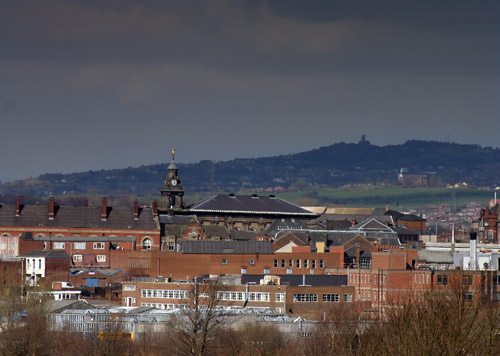
Above: Burslem Town Hall, with a storm coming in from the tower and hill of Mow Cop.

The Town Hall does have “immense Roman columns”, but today it only has one golden angel, and not four as in the novel. On the inside, I’m not sure if the town ever displayed paintings of its prize cats on the walls. Probably not 😉


Above: the golden angel atop the Town Hall today.


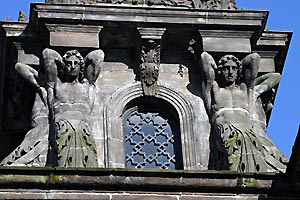
Above: The mythological figures that support the top structure of the Town Hall tower.

From the novel: “These [county police] were well-paid men of large mustaches and little insight who saw a posting in Burslem as a penance. They were county men and they took the train to Stafford and to their warm beds every night, and left the patrol of the darkened streets to the night-watchmen of the manufactories or to the lamp-men.”

…the Town Hall did indeed house the Police Office at that time, among several other things. The lock-ups were indeed in the cellars. The County police stationed in the town were indeed thought to be much worse than the local ones they replaced, although the reference I found to that sentiment was from a little earlier in the century.


Above: the Town Hall today, seen from what the novel imagines as Mrs. Brougham’s bookshop (left).

The steampunk concept for the top of the Town Hall is an obvious invention. One can see, however, that there might once have been a detachable top section.

The Stoke inventor Oliver Lodge — a partial inspiration for Miss Craft (the inventor in the novel) — apparently made one of the first practical local demonstrations of electricity in 1868 at Moreton House on the southern tip of the Wolstanton Marsh, when aged about 16 or 17. Like Craft he was a science prodigy, and later was a key player in the invention of radio.

From the novel: “They had gone down into The Backlands, that area of sooty scrub and farmland that immediately surrounded the town to the south. Unlit at night, the locals told tales of great black dogs and loathsome toads that roamed there after twilight. The dogs had eyes that softly twinkled in the moonlight, like the reflections from lumps of fresh-cut coal. That, anyway, was the tale told to little boys to bring them home promptly for their tea.”

“The Backlands” broadly equate to the area now covered by Grange Park, between Burslem and Festival Park. The only black dogs there today tend to be slobbery labradors.

“Burgweard Woods” is my play on the name Bradwell Woods. These woods still exist on the western slopes of the valley opposite Burslem. Burgweard Lyme may have been the first name for Burslem, Burgweard being a man’s name, and the Lyme being the huge county-spanning escarpment forest that once ran past the valley. Hence the novel calls them the Burgweard Woods.

“Aetherstorms” are an obvious fantastical invention, and yet the aether was of course then a common concept, and many supernatural things were attributed to it.

The town’s Great Beast Market is my name for the meat market, which seems to have been built around 1836. Rather than being to the east between the Town Hall and the Queen’s Theatre, I have imagined it as being just to the north.

Tripey Ashley was a real name, I think he was mentioned in Arthur Berry’s autobiography. Ashley had a famously stinking yard between Burslem and Hanley.

Chapter Four of The Spyders of Burslem: what is historically correct?

Notes on “Chapter Four: A Pint of the Finest”, in the North Staffordshire novel The Spyders of Burslem:—

There was indeed a horse-tram that ran between Burslem and Hanley.

There was no pub called The Albion, as far as I know. Burslem did have an Albion Pottery and an Albion Street. Albion is, of course, an ancient name for the British Isles.

“I was not at all a pub-going man, and had no local woman with fur cuffs and a sharp bonnet to place on my arm and to guide me in such matters.” [so in procrastination about entering the pub] “I stepped into a shadowy little side alley and spent some minutes there reading some garish poster adverts for ‘The Circus of Pandemonium’. I knew that the Circus had then just arrived for its winter camp in the great railway sidings at Cliffe Vale…”

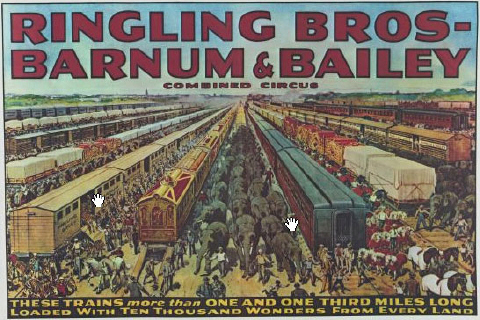
…there was indeed a large circus based there in the winter, but later. The railway sidings and buildings at Cliffe Vale were used as the winter quarters for the world’s biggest circus, Barnum & Bailey, from 1897 until 1911.

“The faces were not always of an attractive nature, and there was much use of powder and rouge, for that was a time when many of the diseases of childhood were not kind to the skin.”

…broadly true of the faces of the 1860s. There would also have been a lot more deformity around.

“the shallow diggings of the Red Shagg, the Bassey, and the Half Yards”

…these were the names of local ironstone mines. The Bassey had, however, been abandoned in 1861.

“For the deep coal mines were then a very new thing, and the first of them had only recently been sunk. The deep pits were able to be sunk because the really powerful steam engines had then become available to drain such places, and the Davy lamps to detect the gasses.”

…true. The first deep coal pits were sunk in Warwickshire, seemingly in the 1850s. These two new inventions made possible access to the deep coal seams, which otherwise would have been out of reach.

The description of the coal miner’s lifestyle seems to have been correct. Their pay was indeed twice the pay of an ironstone miner.

It seems there were many female publicans around at that time. I found many during my family tree research in South Staffordshire. The licencing magistrates seem to have not been prejudiced against them.

The Burslem Cosmograph newspaper is an invention of the novel. The 1855 Stamp Act had indeed removed the tax on newspapers, provoking a rash of such little town newspapers. However, it seems Burslem did not have its own newspaper. There was a North Staffordshire Mercury, and Potteries Mercury, whose titles have a similarly ‘cosmic’ ring to them.

“family memories of the last-ever plague year of 1647”

…1647 was indeed the last year the plague seems to have been in Burslem.

Rousseau had indeed lived in the Staffordshire Moorlands, but only for a year in 1766-7. He is also featured later in the novel.

“the strange newly-discovered earth currents and the electrikery”

… earth currents had indeed only just been discovered by science in 1869.

“firedamp and chokedamp” were real names for coal mine gasses.

“Jimmy Tunnicliffe” — this major character is based on a “James Tunnicliff”, a Staffordshire ‘cunning’ man brought to trial at the Stafford spring assizes, 1857 (full account in Susan Hoyle’s unpublished “James Tunnicliff’s Story: The Narrative of a Cunning-Man’). His appearance, however, is taken from Arthur Berry’s autobiography in which he describes a Burslem man of the 1920s or 30s…

“an effeminate man who wears a ginger wig … muttering to himself all day, he pushes an old pram with a bird cage in it.”

The working-class tradition of tolerating cross-dressers is correct. The term “intersex”, as used by the narrator was in real use in the 1880s until in faded away in the 1940s. Since the novel is imagined as an account written in 1919, it is the sort of word a narrator of that time would have used.

Astrology had indeed been suppressed in England in the 1850s, as stated in the novel. This makes the real choice of the Zodiac for the frontage of the Institute all the more curious. It seems there is no historical documentation about why it was chosen.

The anti-socialist feelings of Moses Steel the mine-owner are broadly historically correct. The North Staffordshire Miners’ Association was about to be formed. His comments about Kropotkin, Marx and Engels are all factually correct.

Chapter three of The Spyders of Burslem: what is historically correct?

This is a note on the historical accuracy of “Chapter Three: The Raising of the Zodiac” of the North Staffordshire novel The Spyders of Burslem:—

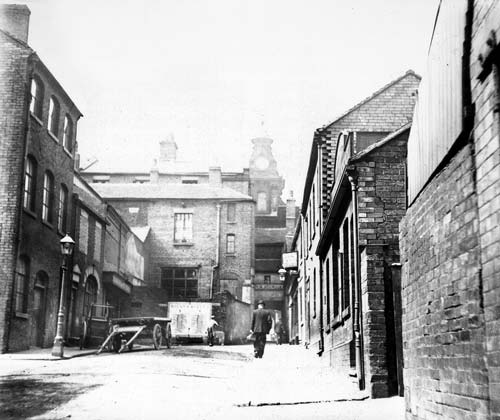
Brickhouse and the Cock Yard are real, and can still be walked down, although in the 1970s the western side of Brickhouse was marred by modern shop units in the ugly ‘municipal socialism’ style. Below is an old view of the alley and the yard off it. For the purposes of a later chapter of the novel the Cock Yard has to be more enclosed, and so it is envisaged as having a wall and entrance into it from Brickhouse…

The Cock Yard was indeed used for cock-fighting, a sport which had been abolished by 1869.

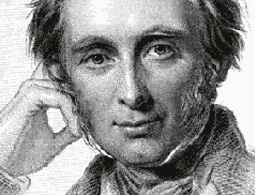
The portrayal of John Ruskin is accurate. He did have ginger hair, and he was famously worried about the fossil hunters destroying faith in the historical ‘truth’ of the Bible. He was a…

“London art critic and champion of the Pre-Raphaelite school of English painting, and more recently a great practical advocate of the education of girls and young women”


Above: the young Ruskin.

Ruskin also donated his books to the Wedgwood Institute library. It’s not known if he ever visited the Instutute, but he travelled widely inspecting education, so he may have. Ruskin did write one of the first real fantasy novels, The King of the Golden River (1841), and also the second book mentioned, The Queen of the Air (1869) which was “a study of the Greek myths of cloud and storm” rather than a novel. He did not, however, write the latter for little Rudyard Kipling.

Ruskin’s friend William Morris did live in Leek, in the Staffordshire Moorlands — although in reality that was a little later than 1869, between 1875 – 1878. The novel has shifted those dates to imagine him in Leek in 1869, thus giving Ruskin a reason to visit North Staffordshire.

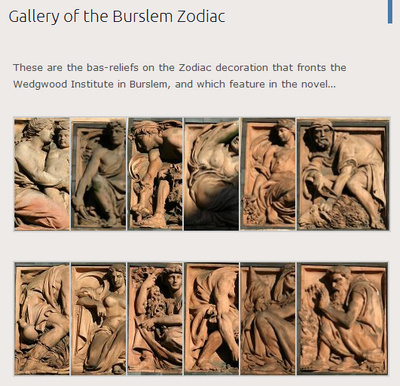
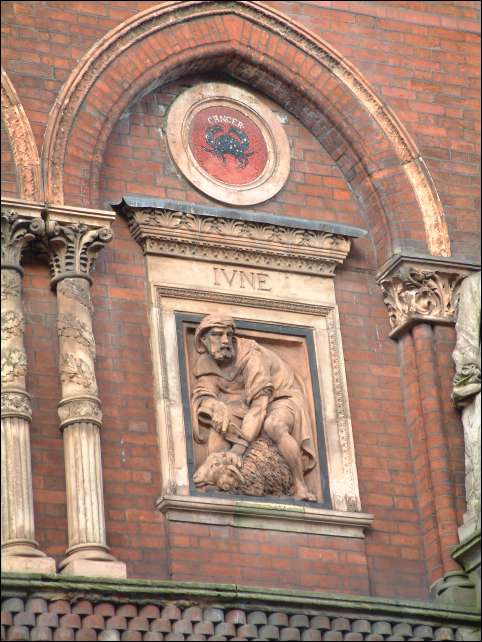
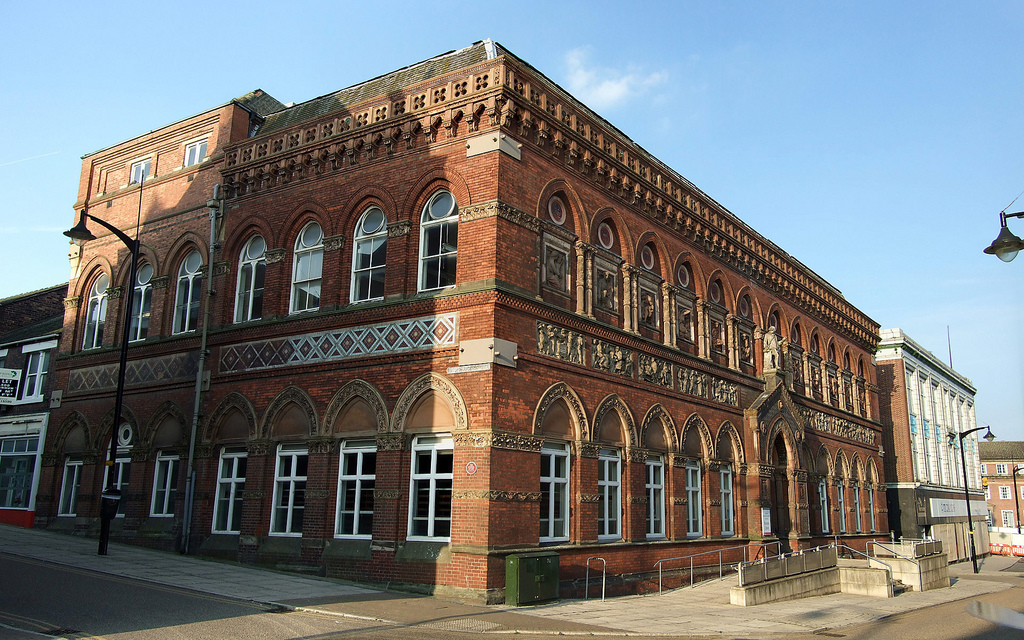
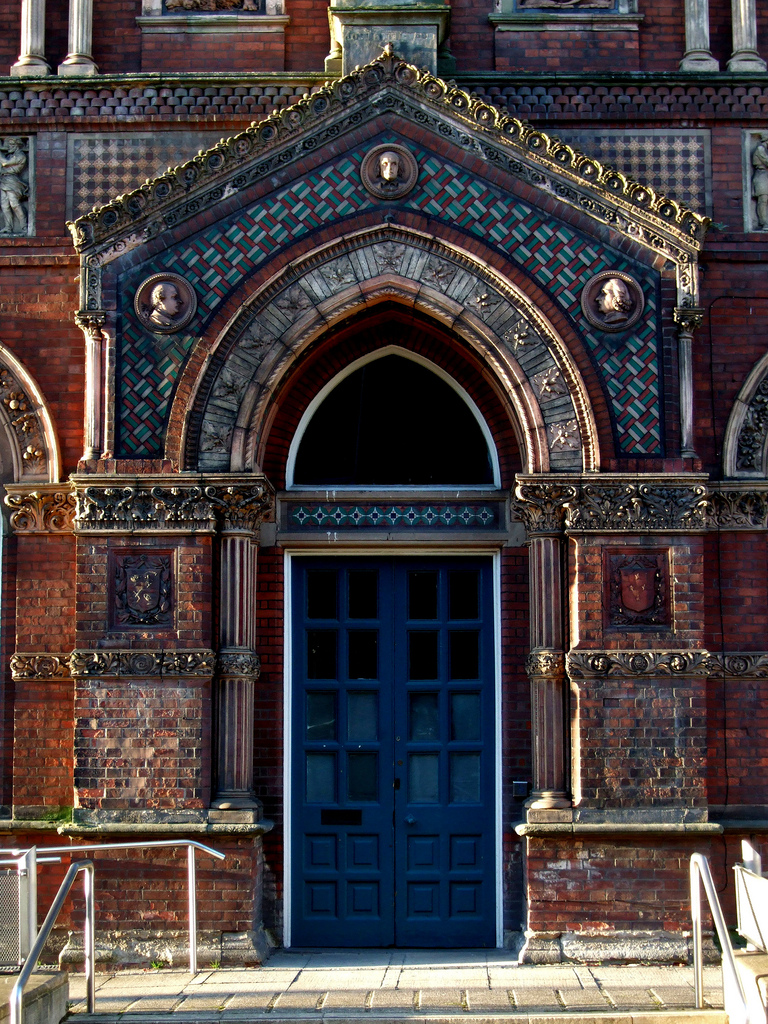
Rudyard Kipling’s father John Lockwood Kipling did design the façade of the Wedgwood Institute in Burslem. The Zodiac frieze is real, and can still be seen today. The bas-reliefs for Cancer and Aries are indeed reversed, which is used in the novel…

In 1869, Rudyard Kipling would have been about four years old, not the seven years old imagined in the novel.

Ruskin’s reference to Horace Walpole and the wider architectural influences that his horror genre spawned is historically correct.

Psychographs (photographics in which human feelings are recorded) are an obvious invention of the novel. They are introduced in the Curiosities Room because they play a crucial part later in the novel.

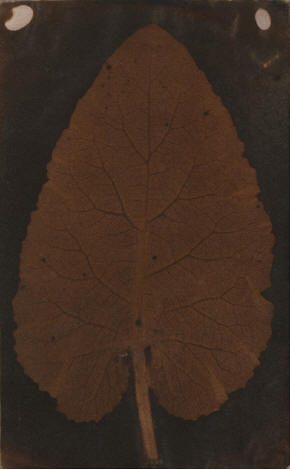
Some of Thomas Wedgwood’s earliest photographs were indeed of leaves, probably made at the Etruria Hall near Burslem…

The skull of an auroch was indeed found on a gravel bank of the Fowlea — but that was later, in 1877.

The North Staffordshire Field Club was a real organisation, founded in 1865.

Carnivorous “living fossils”, found in the mines and on display in the Curiosities Room, are an obvious invention of the novel.

Priestley did discover oxygen, and his bust is enshrined above the Wedgwood Institute entrance.

The Birmingham “toy trade” was actually something different. But the novel imagines it to be “small clockwork toys”, which are on display in the Institute’s Curiosities Room.

Feeling earth tremors and experiencing earth slippage was indeed common in Burslem in the 20th century. Possibly also in the 19th century, although in 1869 the deep coal mines had only been sunk for a matter of a decade or so.

The comment by a craftsman about an “angel satyr” is an allusion to Kilvert.

Chapter Two of The Spyders of Burslem: what is historically accurate?

This is my note on the historical accuracy of Chapter Two of the novel The Spyders of Burslem, set in 1869 in the town of Burslem in North Staffordshire:—

Burslem’s market was indeed on a Monday and not on a Friday. “St.” or ‘Pit’ Monday was the people’s unofficial extension of the weekend, and manufacturers and mine owners often found it difficult to get male workers to return to work on Mondays. Here is the book Fish and Chips, and the British Working Class, 1870-1940 on the topic…

The towns where this was so had a strong tradition of the observance of ‘St Monday’, especially among their mining populations: they included Bolton, Wigan, Burslem and Wolverhampton.

The Market Square is still proportioned as described, and slopes to the south.

The evening meal is indeed called “tea” in much of the West Midlands. Lunch is called “dinner”.

Sissy Mint was the name of a real Burslem chip-shop owner (male), although later in the 1920s. Denry’s didn’t exist in 1869.

The local folk term “Spyder Jack” is an invention for the novel, but Jack was a common name in folklore, e.g. Jack-in-the-Green, and also later in popular culture. For example, the character of Spring Heeled Jack was born in the ‘penny dreadful‘ pulp publications in 1880.
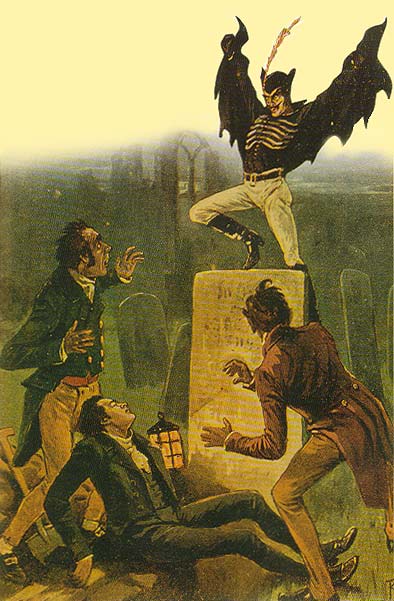

Above: ‘Spring Heeled Jack’ illustration from the 1880s.

There are still very few trees in the town centre. Some trees have appeared under the regional development agency AWM’s regeneration schemes, but nature is still effectively “shut out” of most of the town centre, although it is certainly now creeping up the hill in the wasteland hillside behind The School of Art, which in a later chapter of the novel is imagined as the location of a “cliff” of squalid rookeries…

“The area was only partly paved, and with uneven cobbles, and I found no respectable streets in that part of the town. No robust and big-armed women had ‘stoned’ their front steps clean and gleaming with aid of brisk holystones, as they did elsewhere. It was the grimy and flaking quarter of the moonlight flitter, the cutpurse of quick hand, the blowsy fancy girl married to the lean drunkard for the hatching of a sniveling brood of children. I saw none of the plump and knowing cats that frequented the rest of the town. Ivy encroached on tall and crumbling houses, black snails copulated on stained walls, and old posters for gaudy entertainments peeled damply along the main thoroughfares. Its street people were few and furtive, mostly hurrying about their clandestine business all huddled down beneath caps and shawls.”
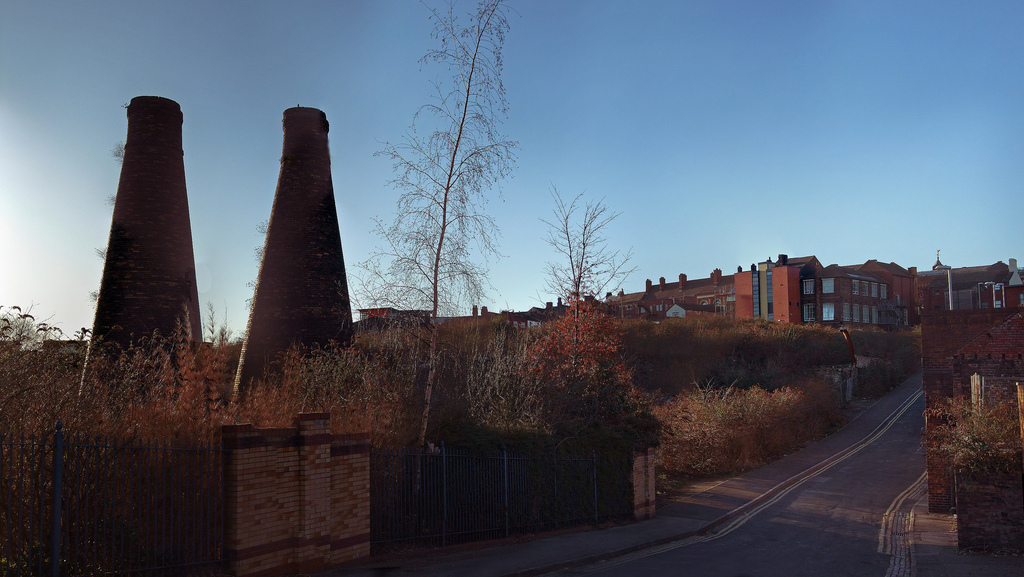

Above: the back way to Burslem today, imagined in the novel as the poorest part of the town centre.

The town’s many cats are an invention for the novel. They may have existed, since there would have been a need for rodent control. ‘Cheshire’ cats are a nod to Alice in Wonderland, but have some reality since the old British Blue breed does have a sort of natural smile to its face.

The Wedgwood Institute entrance interior is indeed heavily tiled with ceramics, as I remember it. The Institute building was the Burslem Public Library in recent years, and the public was admitted. But then the local Council closed it, and the building is now disused.

“Tile-wright” is accurate, as “wright” was once common as a master craftsman’s title. The name Torben is a nod to the chap who was involved in opened up and restoring the disused School of Art to be what it is today.

The physical description of Thomas Wedgwood is roughly accurate, had he lived to the age of ninety. His clothes are about right, if he was an intellectual gentleman of means who still dressed as if in an earlier period.

The details of the Midlands early photographers are all correct, including their activities and studios. Benjamin Stone really did go on a trip to photograph the children on Norway, Rejlander’s studio was on the Malden Road, etc.

Impressionism in painting was emerging at that time. But the Burlington Magazine was not established until 1903.

“The Tories pass their great Reform Act in the debating chamber of Parliament, an act by which urban working men would soon have the vote”

…this is correct, and refers to the Conservative Party’s 1867 Reform Act. Benjamin Disraeli was indeed prime minister, and was indeed Jewish. The Catholic emancipation was a real historical event, as was the famine in Ireland.

The “Potteries Benefit Building Society” is a truncation, for the purposes of dialogue, of the name “Staffordshire Potteries Economic Permanent Benefit Building Society”. This was a real society that was founded in October 1854.

The employment conditions are confirmed by memoirs and industry reports of the time. Women were employed as described.

The lack of prohibition of strong liquor was a fact of the time, as was alcoholism and fetal alcohol syndrome leading to deformed babies.

The idea that girls might be the best subjects for ‘initial’ education in a town was in the air at the time, through the writings and activities of Ruskin, and influential advocate for the education of girls. But even before that, education had by no means been limited only to boys in Burslem (see my book on the history of early Burslem and the Fowlea Valley). Ruskin appears in the novel in a later chapter.

Egerton was the name of a prominent local family who inter-married with the Wedgwoods. A “Temperance Society” has an anti-alcohol organisation, part of a huge anti-alcohol social movement of the time.

I’m not entirely sure if Charles Darwin was actually a cousin of Thomas Wedgwood. But Erasmus Darwin was certainly a friend of master potter Josiah Wedgwood and knew Thomas Wedgwood. The family is sometimes referred to in history books in terms of “the Darwin-Wedgwood family alliance” and there was much intermarriage.

Thomas Wedgwood did indeed have some correspondence links with the famous Lunar Society in his youth, but doesn’t seem to have ever attended a meeting.

The Wedgwood Institute was indeed funded by public subscription, not by the local state.

The Seven Dreamers pub is based on the well-known Leopard pub in Burslem. The reference in the changed name is to H.P. Lovecraft’s great un-written novel The Seven Dreamers.

“Potteries Atmospherical Loop Line Railway system”

…is an allusion to the real Loop Line railway, although the novel re-imagines it as being potentially powered by the aether. The real Potteries Loop Line was powered by steam and was completed as far as Burslem in 1873, when a station was opened. Thus, the hero’s Chapter One arrival at Burslem via Longport train station would have been historically correct for 1869.

The Burslem Literary and Scientific Society was a real group…

“The Burslem and Tunstall Literary and Scientific Society was founded for ‘all classes of society’ in 1838.” — The Victoria history of the county of Stafford.

… and it had leading female members such as Mary Brougham the printer, town librarian and bookseller. In the novel Mary Brougham appears in later chapters of Spyders. It seems that the Society did not last until 1869, though.

“Mr. Oakhanger” and “Mrs. Shuttershaw”. These names are borrowed from a memoir of a 1930s childhood in the Potteries.

The economics of food and trade, as briefly explained by Frederick Hoss the publican (now, who does that name remind you of…?), are accurate for the time.

Gas street lighting was indeed in the town at that time, and was a mature technology having been introduced in 1826.

The description of the view of the Burslem Town Hall, and the meat market behind it, is broadly accurate, but I have relocated the Meat Market a little to the north.
Chapter One of The Spyders of Burslem: what is historically correct?

This is an account of the historical accuracy of the first chapter of the novel The Spyders of Burslem.

The novel is set in England in 1869. The train journey and the scenery of the route is accurately described. The escape of the Tasmanian Devil, read about by the hero in The Times, happened as described. Stoke Station is accurately described, and is much unchanged today. The Iron Works at Etruria did light up the sky, even during the day. Longport train station was then open, and is as described, but the “black roses” is the first hint that the novel is set in a slightly ‘alternative’ England. The narrator describes his post-Darwin generation and their estrangement from the church and from the corruption in London, which is accurate for 1869. London was indeed called ‘The Thing’ by that generation.

Mr. Thomas Wedgwood was a real person — but he was not alive in 1869. The novel imagines him living into his nineties, and masterminding the creation of the Wedgwood Institute. The Institute, however, was real, is as described, and was opened at that time.

The description of Burslem’s pottery industry is correct. Plot’s book describing the district’s industry is a real book, and it had indeed been updated into the 1850s.

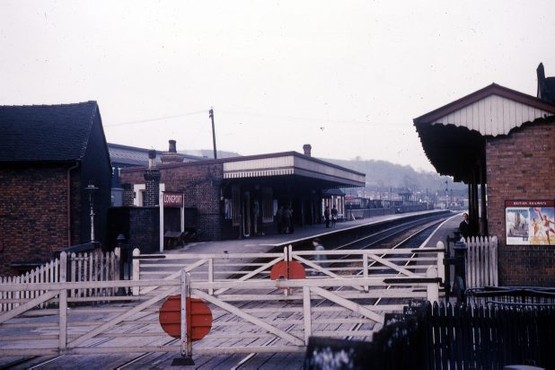
BERT BENTLEY ARCHIVE - BURSLEM - Longport station & level crossing.

BERT BENTLEY ARCHIVE – BURSLEM – Longport station & level crossing.

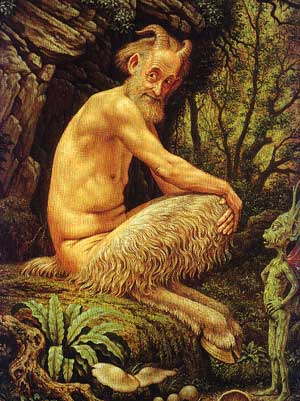
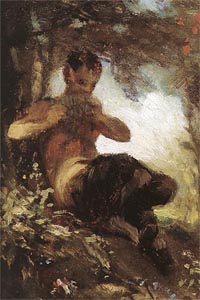
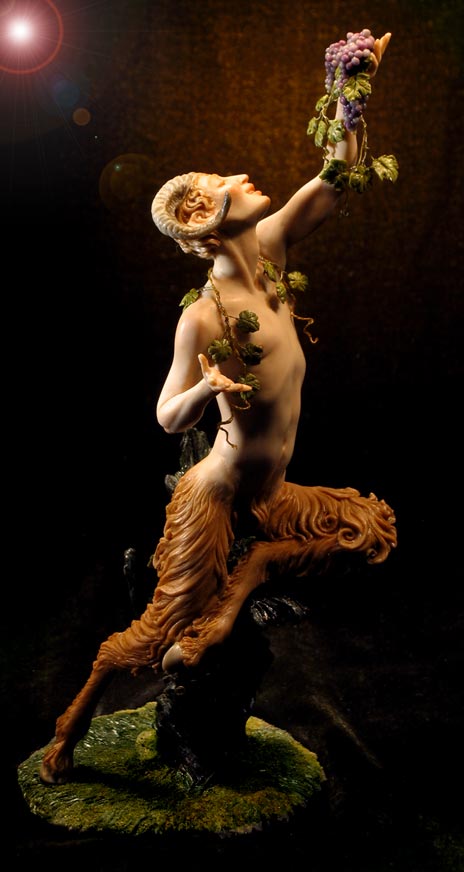
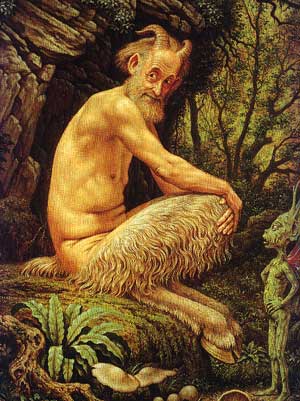
Maddock was the name of a real ticket man at Longport station in Victorian times. There is also a Maddock Street nearby. Fauns are, obviously, an invention. But Maddock’s appearance is visually/mythologically correct…

The Transformation of The Faun was the original title of Nathaniel Hawthorne’s The Marble Faun (1860), “possibly one of the strangest major works of American fiction”.

The use of “tha” for “you” is accurate for the local dialect.

Dale Hall, Trubshaw Cross are real places. Trubshaw Cross was indeed a great confluence of pack-horse routes to a safe crossing of the Fowlea. The packhorse men were called ‘jaggers’, as they are in the novel.

The reference to borax importation…

“I later learned that huge wagons of borax came weekly into the Potteries for the pot glazes, hauled all the way across Europe from the mountainous vampyr country of Romania.”

…is partly historically correct. Romania does indeed have most of Europe’s borax mines. But Italy/Turkey probably supplied most of the borax for the Potteries at that time. There are no vampires in the novel, despite this hint. This is one of several “false clues”.

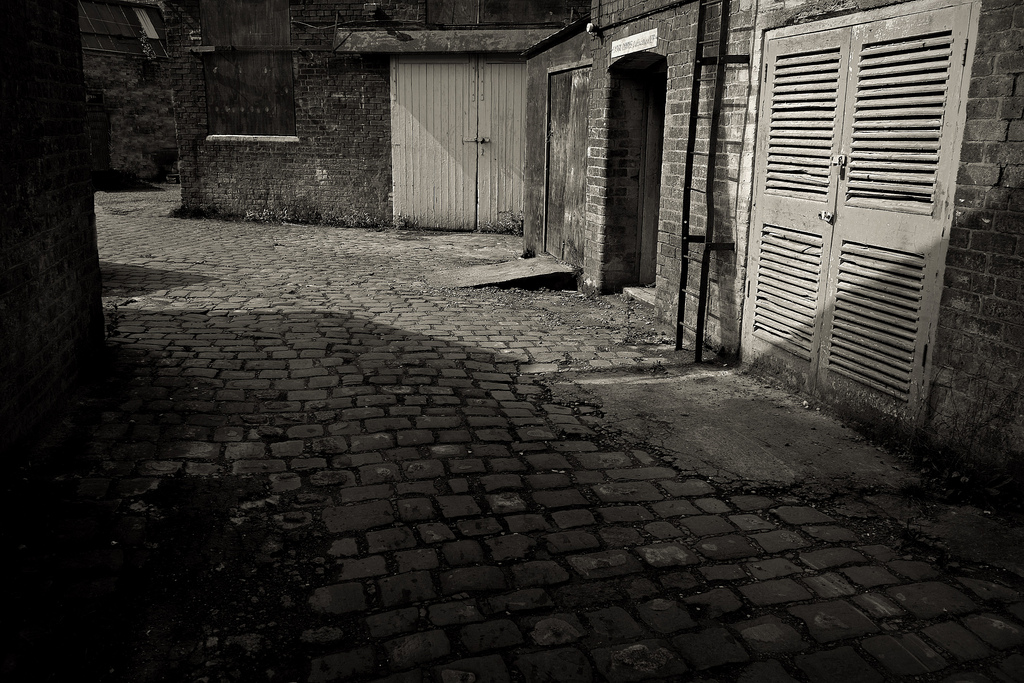
There are yards, still to be seen at Longport, that are very like the ones described in the novel. One can also see here in my photo of the flat square cobbles at Longport, which can also still be seen on the entrance to Longport train station.

The description of the Trent & Mersey canal is correct, topographically and historically. So are the north-east and southerly views described from the canal bridge at Longport. Arnold Bennett also starts one of his novels with a view seen from this bridge. But in both instances, the imagined views are what one might be able to see if there were no buildings in the way.

“Puck in a performance of Shakespeare’s A Midsummer Night’s Nightmare

… this is obviously a variation on the Dream, and is another indication we are in an ‘alternative history’ world.

Queen Victoria never came to Burslem, that’s an invention for the purposes of the novel. Indeed, she is famously said to have asked for the blinds on her train carriage to be pulled down when passing through the Black Country in South Staffordshire (although that was probably an anti-royal myth). However, the Wedgwood Institute is located in Queen Street, Burslem.

The part where the girls run to touch the iron railings is historically correct. The practice was noted by a clergyman in the nearby town of Leek, in his memoirs.

The topography of the road route from Longport to Burslem is correct. The description of the intense “territoriality” of the streets is historically correct. Arthur Berry describes women wearing men’s caps in his autobiography.

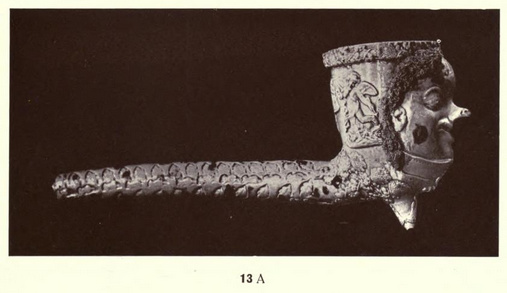
Pipes would then have been mostly clay pipes, not carved wooden pipes. Here is an early clay pipe from North Staffordshire, with a long section of the pipe broken off…

Clogs of the sort envisaged in the novel

The novel The Spyders of Burslem envisages the town in 1869 being alive with the tapping of wooden clogs on hard cobbles. Some may imagine them as sort of like Dutch clogs, but they would have been more like these, on show in the Potteries Museum & Art Gallery. Since the gallery is not allowed to show anything that’s not from Staffordshire, they must be authentic ‘county clogs’. Note the thick carved wooden soles. I photographed them for this blog, yesterday…