J.R.R. Tolkien’s Vision of Freedom

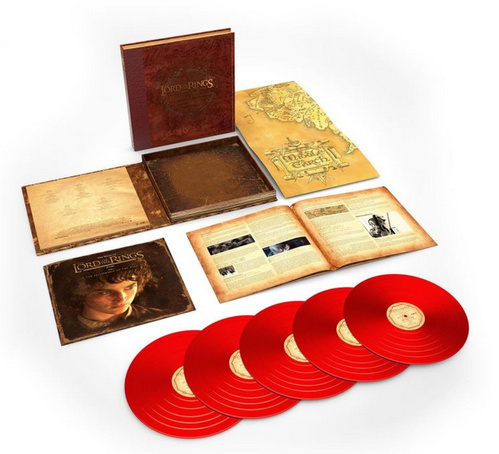
There’s an entertaining and well-delivered recent Acton Institute podcast on Tolkien’s political stances, “J.R.R. Tolkien’s Vision of Freedom” (major plot spoilers). Be warned that the sound quality at the start is terrible. The lecture itself starts at 3:48 minutes, using a different microphone, and from then on the sound becomes much better.

It’s a very illuminating lecture, and didn’t drift off into the usual tedious American think-tank concerns about: ‘… and how does this relate to the Constitution and the Founding Fathers?’ The speaker’s grasp of both The Lord of the Rings and British history is obvious somewhat superficial (at one point he forgets the names Merry and Pippin, and never mentions the roots of Tolkien’s ‘conservative anarch’ politics in the lived experience of pre-Norman England), but otherwise the lecture seems soundly based. After listening I can certainly see an additional political aspect to the initial tepid reception of The Lord of the Rings in the Cold War of the mid and late 1950s. Soviet agents and communist sympathisers were in key positions in British literary life at the time. The publication of Orwell’s Animal Farm for instance, was repeatedly blocked by what we now know to be Soviet ‘sleeper’ agents. One wonders how this influenced the reviews for The Lord of the Rings, though one also has to wonder how many of those early reviewers actually read the book, let alone got all the way to “The Scouring of the Shire”. The same problem also informs the more recent sour reception of the movie adaptation, among leftists and Guardian readers.

The lecturer also has a whole book on the topic, for those who need the details and the footnotes, The Hobbit Party: The Vision of Freedom That Tolkien Got, and the West Forgot. This has a deeply off-putting title and cover, which I presume were somehow meant to ‘attract the Harry Potter generation’, but with the unintended consequence of making everyone else cringe and flee. Nevertheless, the book has been well-reviewed, and it’s definitely not another ‘Shopping Lists of the Inklings: a Lacanian analysis’.

The Runic Poem’s “moor-stepper”: Orion

I saw the constellation Orion rising in the dawn sky, standing up and rather fine, this morning at 6.30am. So I thought I’d make a suggestion that might put right a misconception, about the nature of the “moor-stepper” found in the gnomic “Ur” Runic Poem (pub. 1705). Especially for the benefit of any pagans out there, who according to my cursory searches appear to think it was a Grendel-like monster or a wild auroch (extinct type of wild bull).

Runic Poem, original:

U | [ur] byþ anmod    and oferhyrned,
felafrecne deor,    feohteþ mid hornum,
mære morstapa;    þæt is modig wuht.

Charles William Kennedy, 1910, in the “Introduction” to the best translation of Cynewulf:

U | [Ur] is headstrong and horned, a savage beast. With its horns the great moor-stepper fighteth; that is a valiant wight.

My translation:

U | is steadfast     has horns above all,
a very savage beast,    fighting with its horns,
great mere-stepper;    that is greatly spirited.

orionPicture: Simplified design based on Orion shown in the Firmamentum star atlas, 1690 AD. He steps into a mere, a spring-fed mere-pool that feeds the river constellation. (This is a .GIF image and may not appear if you have a GIF blocker).

Having seen Orion this morning I can say that his stepping pose is quite obvious to the star-gazer. So I’d suggest it’s not only a moor-stepping bull in the Runic Poem. It’s also Orion, who is frozen in the pose of stepping up. The “mere” is the (assumed moorland) mere-pond that feeds the river constellation, into which he steps in order to face the bull. He is at a disadvantage in the fight, due to the terrain, not to mention the gigantic bull. The trickster hare gives him ‘a leg up’ on her ears, and lets him borrow her back legs for a moment, with the implication that he may be about to spring over the bull’s horns.

My use of “greatly spirited” is more subtle than Kennedy — since the lines are meant to be a sort of night-sky riddle. So there’s no need to blatantly spell out that to the reader the supernatural aspects. The implication of the lines is that both the Bull and Orion are “greatly spirited”, and that they both exemplify the ‘fighting spirit’ in the rune Ur. The word “wight” was also avoided because modern readers now understand “wight” as being connected to Tolkien’s “barrow-wight”.

Orion’s rising (as a wintertime standing figure) traditionally heralds the autumn storms — “the storms that annually attend the heliacal rising of Arcturus and Orion” (Bede, drawing on Job in the Bible). Thus, the runic Ur is also the associated “greatly spirited” storms and winds. Thus we get the name, presumably, Ur-ion.

The Ur rune might be thought of in terms of man’s bravery and courage, in the face of implacable fury. Not in terms of the rather lumpen modern pagan suggestion that: “durh… Ur means a mad cow, dude!”

It’s then a dual-pronged rune in meaning as well as design: consider for instance the military distinction made between the two types of battlefield bravery: mad foolhardy rush-at-’em bravery, and considered bravery that is brought forth from within oneself in the face of an implacable opposing force. Only the latter type gets medals.

There is a sound-play in the rune poem (given above) between mǽre (‘great’, ‘monstrous’, ‘boundary’, ‘mere (pool)’) and the following word morstapa (‘ranger in-the-wilds’, ‘Orion’). If the Runic Poem was a mnemonic for teaching people the runic alphabet and then helping them to recall its subtleties, this would be a kind of test for them. The choice of meaning that a student has to bravely declare to the teacher (‘it’s just an angry bull’) thus encapsulates the choice a brave man must take in battle, in weighing the evidence and then pressing forward bravely regardless of the known risk. The correct student should emulate this type of subtle military decision-making, before he makes his brave call on the gnomic meaning of the lines (‘actually it’s the Bull and Orion, and is about the two types of bravery’).

Incidentally, “modig” = ‘spirited’ in the Anglian form. Which implies the Runic Poem may be Mercian, or at least copied there by a scribe, because in other territories modig was only used religiously and later. (The Cambridge History of the English Language, Volume 1, p. 343).

I can call an eminent philologist to my cause here. Bosworth obviously also thought the morstapa wasn’t the wild bull itself, but rather a man ranging into the wilds to fight it…

Mor-stapa, an; m. a moor stepper, a desert ranger (A Dictionary of the Anglo-saxon Language, 1838)

Compare also the Roman writer Manilus (d. 384 BC) on Orion (Jewish: gibbor, ‘the giant’; Arabic: ‘the hero’). To him this sky-deity makes… “Smart souls, swift bodies, minds busy about their duty (officium), hearts attending all problems with speed and indefatigable vigor”. (A.E. Housman trans.) Also Thomas Hood of Trinity College, Cambridge (1590)… “the reason why this fellow was placed in heaven, was to teach men not to be too confident in their own strength.” Horne, famed for his deep study of Orion and his three-volume epic poem on the topic, also has in his Introduction… “Orion is man standing naked before Heaven and Destiny, resolved to work as a really free agent to the utmost pitch of his powers…”.

Tolkien might have nodded to the -or part of Gibbor in The Lord of the Rings… “as he climbed over the rim of the world, the Swordsman of the Sky, Menelvagor with his shining belt. The Elves all burst into song.”

Finally, I’d also note that the bottom half of Orion with his ‘stepping’ leg looks like the shape of the Ur rune….

malton-pinPicture: Malton Pin, 10th century northern England (my crop of the British Museum’s photo of the cleaned brooch); and a modern simplified version of the rune.

“Tolkien” (if he ever existed) did not “write” this work in the conventional sense

A delightful ‘biff on the nose’ to parroting literary academics and over-cautious politically correct historians, from Catholic World: The Lord of the Rings: A Source-Criticism Analysis

“Because The Lord of the Rings is a composite of sources, we may be quite certain that “Tolkien” (if he ever existed) did not “write” this work in the conventional sense, but that it was assembled over a long period of time by someone else of the same name. We know this because a work of the range, depth, and detail of The Lord of the Rings is far beyond the capacity of any modern expert in source-criticism to ever imagine creating themselves.”

In case you’re skim-reading this: it’s a joke.

On John Buchan, the Lord of the Rings, and ebooks

The British author John Buchan’s works appear to have fallen into the public domain in January 2011. But you might not know it, as many are still way too difficult to find in the public domain as good e-copies. Still less as free audiobooks.

I’ve never really known anything about Buchan’s work, beyond the films of the famous The Thirty-Nine Steps. That brisk spy novel was apparently followed by two more, similarly set in the First World War, Greenmantle and Mr Standfast. So I had never thought of Buchan as anything but a rather dated spy novelist. But recently I read that a good case has been made that Buchan may have influenced The Lord of the Rings, via the historical novels The Blanket of the Dark (1931, Oxfordshire under a Sauron-like tyrant) and Midwinter (1923, a model for Strider and the Rangers), which are historical adventure novels set in olde England. For details of the seemingly well-founded claims see the recent way-too-expensive book of Tolkien scholarship Tolkien and the Study of His Sources: Critical Essays. So far I’ve only read the first chapter of The Blanket of the Dark, but it’s good and does have something of Tolkien about it. And yes, Tolkien read it. Like many intelligent people who work with text for a living, he did not care to relax with worthy-but-ponderous modernist slogs or the latest angst-filled wrist-slasher of a ‘socially-concerned’ novel. He preferred Haggard, Buchan, Chesterton, cozy detective mysteries, and in his later years he is known to have sampled science-fiction writers such as Asimov.

But what of Buchan? I now see that Buchan was an adventure novelist, military historian, supernatural tale-spinner, and generally a writer of vast scope. He died with over over 100 works to his credit, and was far more than just a spy novelist. A Scot, in historical adventure tales he seems to have followed in the tradition of Robert Louis Stevenson’s Kidnapped — long journeys through large landscapes, allowing full reign for Buchan’s talents in the description of landscapes. Such books were very popular at the time, pushing unadventurous boys and men into vast but precisely-realised wild landscapes beset by epic political intrigues. In America a similar approach was perhaps best exemplified at the time by Everett McNeil, who was the best-selling boys’ novelist of the time. McNeil was a follower of the similar and earlier Henty, and likewise sent boys on vivid epic journeys into the American wilderness and across the sea, in the company of famous explorers and soldiers. One can see how these sort of fresh and epic landscape-adventure novels, by the likes of Buchan and McNeil (and the earlier Henty), might have given Tolkien a star by which to steer The Lord of the Rings with.

Anyway, I thought I’d do a quick survey to see what is said to be most interesting among Buchan’s vast output.

First, the Scottish books seem to be ones to avoid as your ‘first taste of Buchan’. His first real novel, John Burnet of Barns (1898), is described as a novel of “doomed attraction across language and outlook”, and a lifelong rivalry that leads to… doom. Oh dear. It’s said by modern marketeers to be ranked alongside Kidnapped as a Scottish “adventure classic”, but frankly I never much liked Kidnapped as either book or film, and John Burnet sounds more of the same (only more gloomy and dour). John Burnet heralded a string of what sound like similarly depressing ‘Scottish local novels’ by Buchan, which one suspects are are probably now rather more fascinating to the Scots than to the rest of us. Buchan also edited an anthology of Scots vernacular poetry, The Northern Muse, if one wants to pile on some further misery.

WitchWood

Buchan seems to find the most readers outside of Scotland when he inserts a fresh element or two into Scottish life. Buchan’s Witch Wood appears to be a firm favourite of many, for instance, being a 1927 novel of devil-worship and evil forests in seventeenth-century Scotland. Knowing some of the context from my work on H. P. Lovecraft, at a guess I’d say the novel was probably inspired by Andrew Lang and/or by Margaret Murray’s The Witch Cult in Western Europe? At first I suspected that the devil worship would be of the tedious Wheatley-esque kind, very uninteresting to those used to the vivid Solomon Kane stories of R. E. Howard and the richly weird work of H. P. Lovecraft. But Witch Wood is apparently rather more subtle and interestingly macabre than the usual mumbo-jumbo, and was influenced via Blackwood and Machen. Buchan’s earlier supernatural story “The Watcher by the Threshold”, more ethnographic and found in the story collection of the same name, was apparently a forerunner of the novel Witch Wood. Be warned, however, that according to S.T. Joshi “The dialogue portions of John Buchan’s enormously long novel Witch Wood are almost entirely in Scots dialect”. Oh dear.

Other notable ‘weird’ novels are said to include The Dancing Floor and Sick Heart River.

the_watcher

Readers seeking similarly supernatural Buchan tales might look at Buchan’s story-and-poems collection The Moon Endureth: Tales and Fancies (1912, seemingly abridged in the American version), which came a decade after The Watcher by the Threshold. It has a manageable early sampling of his supernatural and mystery fiction including “The Grove of Ashtoreth” (Africa, haunted grove, ancestral taint) and some interesting historical-mystical poetry. His other two most notable supernatural stories can be found collected in the The Rungate Club book of club stories (1928). In this, his “The Wind in the Portico” (1928) sounds very similar in setting to Lovecraft’s famous “Rats in the Walls” of 1924. “Skule Skerry” (1928) has a scientist who encounters vast forces on a barren island, and it sounds similar to Blackwood’s famous “The Willows” of 1907.

His pamphlet-essay “The Novel and the Fairy Tale” (1931) isn’t online, but may interest those who enjoy Tolkien and the supernatural, and it seems that the essay was read by Tolkien in the 1930s. Update: It’s now online.

There is also a good deal of uncollected journalism by Buchan, who was also very much involved in political and military life, which in 2015 was surveyed by a a UWE PhD thesis. Novels such as his Prester John (1910) fit in here. It is not, as one might expect, a tale of the Crusades. Instead, it’s an early adventure novel set in Africa, which was published in the American ‘slick’ pulp magazine Adventure in 1910-11.

Lastly the Huntingtower has also been cited as a possible influence on Tolkien’s The Hobbit. It is apparently a lightweight boys’ adventure/spy tale and is another favourite of many Buchan fans. Like Buchan’s Witch Wood, an unusual element is inserted into Scottish rural/coastal life in Huntingtower. A band of unofficial self-organised Boy Scouts have come out to Galloway from the slums of Glasgow to camp, and they and the reluctant hero come into conflict with spies.


So, in conclusion, the ‘starter Buchan’ seems to come in three distinct clusters:

1) For the spy-novel fans, The Thirty-Nine Steps and its follow-on novels Greenmantle and Mr Standfast. All are on Librivox as free audio books.

2) For the fans of Blackwood-esque supernatural fiction, “The Watcher by the Threshold”, then the novel Witch Wood. Then his other main supernatural stories: “The Grove of Ashtoreth”; “The Wind in the Portico”; and “Skule Skerry”. There are no free audiobook readings of these, that I could find.

3) For the lovers of The Lord of the Rings, the novels Midwinter (1923) and The Blanket of the Dark (1931). Sadly there are no free or other audiobooks for these, and they’re only available as books from Project Gutenberg in Australia as .txt files. You’ll need to convert them for the Kindle ereader etc, via Calibre or Send To Kindle. I’d suspect that someone is still fussing around with a dubious copyright claim on these, which is presumably preventing their appearing on Archive.org and Hathi.

365892._UY350_SS350_

midw

It should be added that several Tolkien fans who have read these through can be found remarking that the similarity does not seem too great to them. Possibly the academic who was making the connections was seeing things in them that a general reader would miss.

Tolkien’s The Fall of Arthur

It’s not often we get a new work by the Midlands author J.R.R. Tolkien. But one is to be published in hardcover and Kindle ebook today, presumably with an audio-book to follow soon after. Written in the early 1930s, The Fall of Arthur was Tolkien’s last try at working up the fabric of British legend into the sort of bleakly beautiful native verse epic he wanted it to be.

Tolkien’s Arthur is a Romano-British military leader fighting in “Saxon lands” in order to stem an invasion of the island at its root, he eventually finds himself at the edge of a great eastern Mirkwood when he and Gawain are called back to Britain to deal with the treachery of Mordred. Tolkien appears to have assumed a King Arthur drawn along the Romano-British historical lines proposed by R.G. Collingwood (the excellent Director’s Cut of the recent movie King Arthur did much the same). This character developed over time into a legendary one, but much later descends to touch history again — when Arthur was re-shaped by the bards to parallel Alfred and his defence of Mercia against the Vikings. What will be interesting will be the extent to which Tolkien blends this plain historical approach with a mythic one, and the extent to which he sets the pursuit of Mordred in the nexus of the Welsh Marches and the English Midlands. One has to hope that, from a Midlands man, we might have a Midlands epic.

the-fall-of-arthur-by-tolkien

Anyway the result was a 1000-line epic poem, much admired by his colleagues, but which was left unfinished. Here’s a taste of his dark Mordred…

   His bed was barren / there black phantoms
   of desire unsated / and savage fury
   in his brain had brooded / till bleak morning

And his scheming Guinevere…

   lady ruthless
   fair as fay-woman and fell-minded
   in the world walking for the woe of men.

Tolkien left the work unfinished and instead turned to the realms of Middle-Earth where his world-building talent had a free rein, namely The Hobbit, and The Lord of the Rings.

Once The Fall of Arthur is published, and despite our culture’s general modern disdain for poetry, doubtless there will be numerous unofficial fan attempts to finish the work. The new publication is also perfectly timed to feed into interest in the vivid poetry contemporaneous with the iconography of the Staffordshire Hoard.