The cassette-tape audio book Charles Tomlinson Reads His Stoke Poems (Keele University, 1985) is now online for free, in .mp3 format. Scroll down to the second collection.
Author Archives: David Haden
Windows before glass
“In old country-houses in England, instead of glass for windows, they used wicker, or fine strips of oak disposed checkerwise. Horn was also used. The windows of princes and great noblemen were of crystal; those of Studley Castle, Holinshed says, of beryl.” (Hawthorne, from the American Notebooks).
“The Devil and His Imps”
A scholarly etymological article from 1895 lists the then-known native names for British folkloric monsters and imps…
Devils, Devilets, Devilings, Dablets, and other Imps, Black Angels, Black Men, Black Bears, Black Bulls, Black Dogs, Bogles and Bogies and Boggards, Bollies and Boodies, Bugs, Bugaboos, and Bugbears, Bullbears, Bull beggars, Barghests and Boghests, Boggleboes and Boboggles, Boocows and Boomen, Churchgrims, Demons, Dobbies, Doolies, Gallybeggars, Galliments, Goblins, Hobs, Hob Goblins, Hob Thursts, Hob Thrushes, Hodge Pokers, Lobs, Padfoots, Pokers, Pookas, Pucks, Puckles, Pugs, Thurses, Urchins, Woodwoses, Banshees, Cluricaunes, Leprechauns, Logherimans, Mermaids, Mermen, Merrows, Kelpies, Necks, Nicks, Nickers, Nixes, Nixies, Niogles, Shagfoals, Shocks, Shucks, the family of Ghosts, Specters, Spooks, Vampires, Fetches, Swarths, Warths, Waiths, the half saved tribes of Elves, Fairies, Fays, Brownies, Buccas, Spriggans, Knockers, Nisses, Piskies, Pixies, Colepixies, Drows, and Trolls with ‘Jack with the Lantern’, ‘Kit with the Candlestick’ and ‘Will with the Wisp’ lighting their darker kinsmen and the Shoopiltie, the Shellycoat, the Ganfir, the Bwbach, and his Welsh brethren in the background; the Deuce, the Devil, the Dickens, Ragamuffin, Ruffin, Humdudgeon, and Tantrabobus and all their company; the neglected family of Scarecrows and Wussets all these came up for an historical and etymological review…
The films of old, weird, Britain
The BFI’s Sight & Sound cinema magazine surveys “The films of old, weird, Britain”…
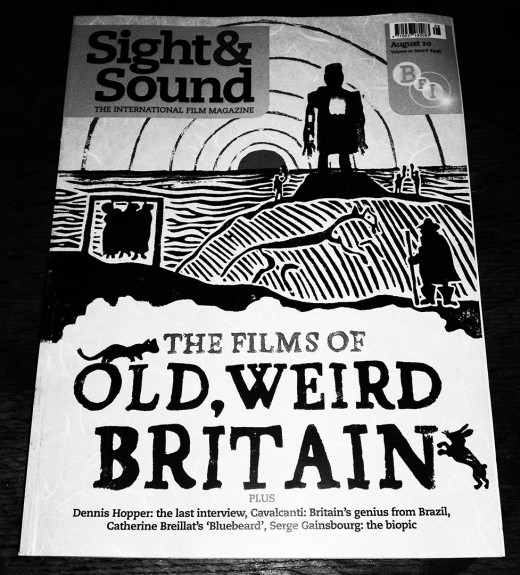
By “weird” they mean the Lovecraftian type of supernatural and archaic “weird”, not simply “odd”.
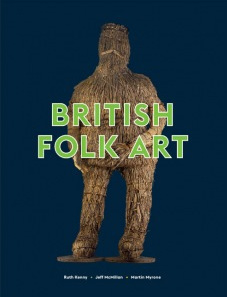
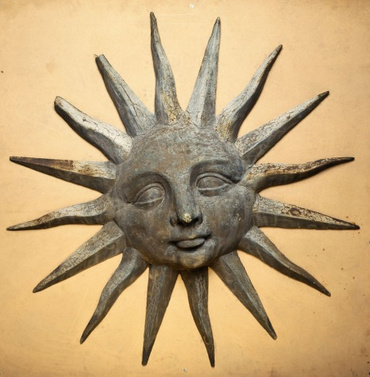
British Folk Art
The Bronze Age Man of Jodrell Bank
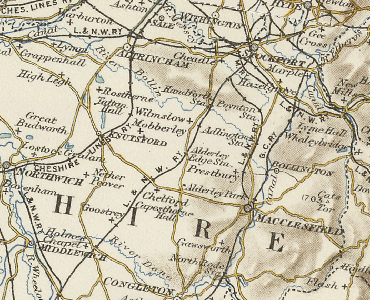
Excellent BBC Radio 4 “Listen Again” broadcast The Bronze Age Man of Jodrell Bank, about author Alan Garner, his Blackden Trust and the Bronze Age landscape around Alderley Edge. It’s actually only about ten miles north of Stoke-on-Trent, although difficult to get to without a car — it takes about 70 minutes on the train and you also have to change at Stockport.
Sir Arthur Conan Doyle’s “Tales of…” books
I enjoyed the weird mystery tale by Sir Arthur Conan Doyle, set in the Peak District, “The Terror of Blue John Gap” (1910). It was collected in one volume of a 1922 uniform edition of “Tales of…”. Here are three of the more interesting volumes, which you should be able to find free on Project Gutenberg.

The Last of the Legions and Other Tales of Long Ago. Gutenberg.
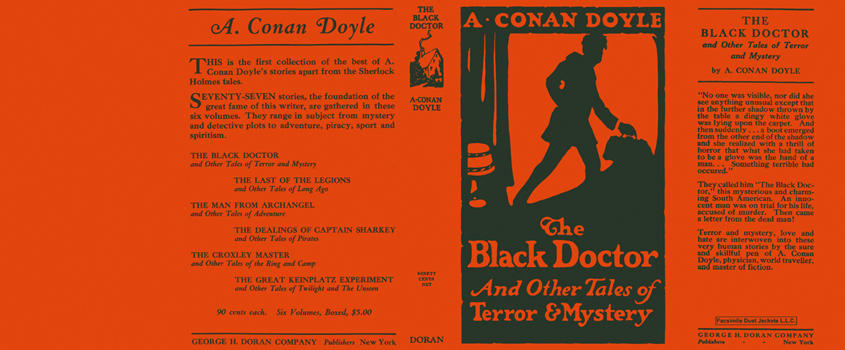
Tales of Terror & Mystery. Gutenberg.
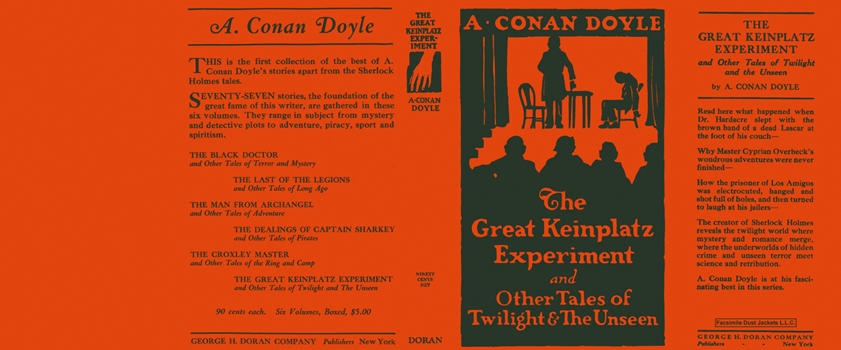
The Great Keinplatz Experiment and Other Tales of Twilight and the Unseen. Gutenberg.
If you want all six volumes in paper, they’re collected in a mammoth volume titled The Conan Doyle Stories, which is currently available dirt cheap in used print form via Amazon UK.

There is also The Man from Archangel, and Other Tales of Adventure, which at the back collects his nine ‘Tales of medical life’.
St. George’s Day
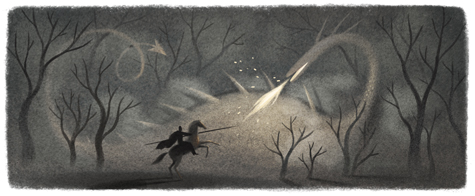
Google Search (UK version) has a ‘Saint George and the Dragon’ Google Doodle today…
Staffordshire’s Great War
Excellent new website for the First World War commemorations in Staffordshire in 2014.
Hindus and the Peak District
An interesting BBC Radio 4 documentary this week looked at the Hindu links with the Peak District.
The Leek silk and dyeing industry proved to have connections with the Indian trade in raw silk and raw dyestuffs, and Thomas Wardle‘s tireless development of the British-India silk trade was rather benificent and is said to have proved very useful to India and the Indian poor.
The other connection was the influence of Hindu spirituality and poetry on the later years of the eccentric poet, anthologist and gay rights pioneer Edward Carpenter. A sort of English Walt Whitman, he lived for many decades in the hamlet of Millthorpe near Holmesfield. He trekked the high moorscape paths east of Holmesfield toward Buxton, one of these apparently being between the village of Hathersage and Burbage Moor. There the ageing Carpenter could dream of a mystical never-to-be socialism set amid a lush anti-industrial primitivism. E.M. Forster’s secret gay novel Maurice was apparently inspired by this idyllic rural retreat of Edward Carpenter and his lover George Merrill in the Peak District.
Carpenter also went to Ceylon and India seeking enlightenment with gurus. For the details on the connections and influences it seems that the recent book A Spiritual Bloomsbury: Hinduism and Homosexuality in the Lives and Writings of Edward Carpenter, E.M. Forster, and Christopher Isherwood (Lexington, 2013) would be the place to start.
Looking around for some more connections I noted a snippet from the book The Discovery of the Peak District: from Hades to Elysium (p.178, I can get no more than a snippet out of Google Books), apparently said of a historical personage…
“he recounted the true story of his own encounter with a wandering Hindu in the vicinity of Bakewell and Monsal Dale”
Not sure who this might be? Perhaps Erasmus Darwin, at a vague guess?
One might also note ‘The Indian Garden, House and Lake’, at Biddulph Grange in the Staffordshire Moorlands of the Peak. The owner and garden designer James Bateman was a major plant collector of Himalayan rhododendrons, interested (along with seemingly the entire British population of Victorian times) in the ferns of British India, and a leading specialist in exotic orchids. I seem to remember reading somewhere that Bateman was also inspired by various currents of mystical thinking when designing his famous garden, and so perhaps one of these currents was Indian?
The noxious Jean Jacques Rousseau had a fleeting Peak District connection, but I don’t know enough to say if he was a strong direct influence on Gandhi or not. Although historians have obviously drawn broad parallels between the two, that much is obvious from a quick Google Books search.
There was also Francis Frith the pioneering travel photographer, although the connection to the Peak is rather loose. Since he was only born in Chesterfield, Derbyshire and then moved away. He was later a photographer of Imperial India, among other places.
The Terror of Blue John Gap
I found a weird mystery tale by Sir Arthur Conan Doyle, set in the Peak District, “The Terror of Blue John Gap” (1910).
T. E. Hulme
“T. E. Hulme: The First Modern Poet?” [link now dead] muses The Huffington Post today. Hulme was from Endon, his father a farmer who later worked in the pottery industry in Stoke. His son went to Newcastle-under-Lyme High School 1894-1902, and died in action in the First World War.
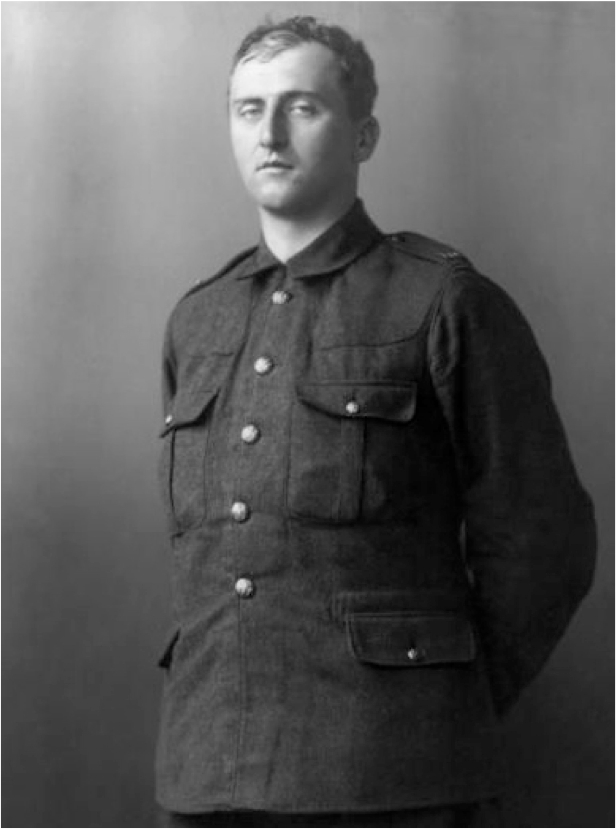
There is also apparently “a memorial window to him in Endon church”. His papers are held at Keele.
A CITY SUNSET (1908, on the back of a hotel bill)
Alluring, Earth seducing, with high conceits
is the sunset that reigns
at the end of westward streets….
A sudden flaring sky
troubling strangely the passer by
with visions, alien to long streets, of Cytherea
or the smooth flesh of Lady Castlemaine….
A frolic of crimson
is the spreading glory of the sky,
heaven’s jocund maid
flaunting a trailed red robe
along the fretted city roofs
about the time of homeward going crowds
—a vain maid, lingering, loth to go….
Update:
His poetry is now most easily found in good form in the back of Canzoni; & Ripostes of Ezra Pound, which is available online. The best biography is The Short Sharp Life of T. E. Hulme (2012), and there is also a 1982 biography which updated an earlier one of 1938.
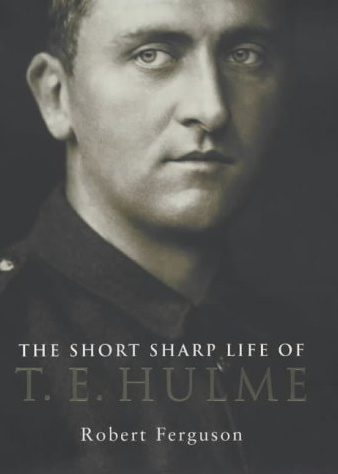
A volume of his Selected Writings appeared in 2003, and the full writings are to be found collected in Speculations (1924) and Further Speculations (1955). There is also what appears to be a recent critical edition for universities, The Collected Writings of T. E. Hulme.
In recent years there have been a spate of book-length studies such as: T.E. Hulme and Modernism; T. E. Hulme and the Ideological Politics of Early Modernism; T.E. Hulme and the Question of Modernism; and T.E. Hulme: A study of his Poetry, Criticism and Influence.