The natural history provinces of North Staffordshire, 1922.
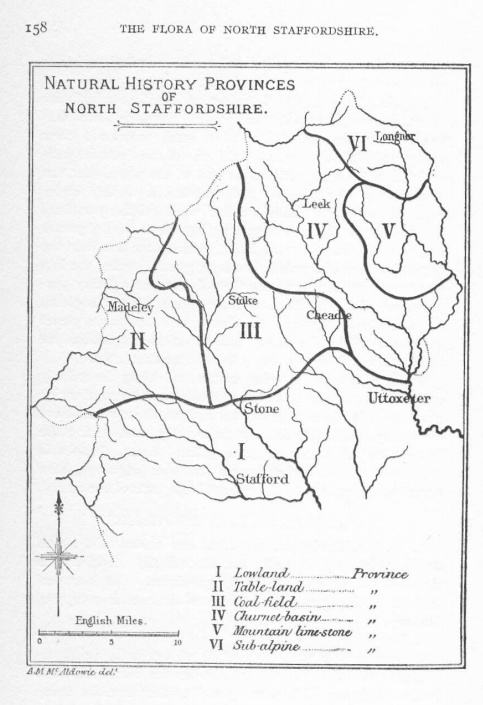
The natural history provinces of North Staffordshire, 1922.
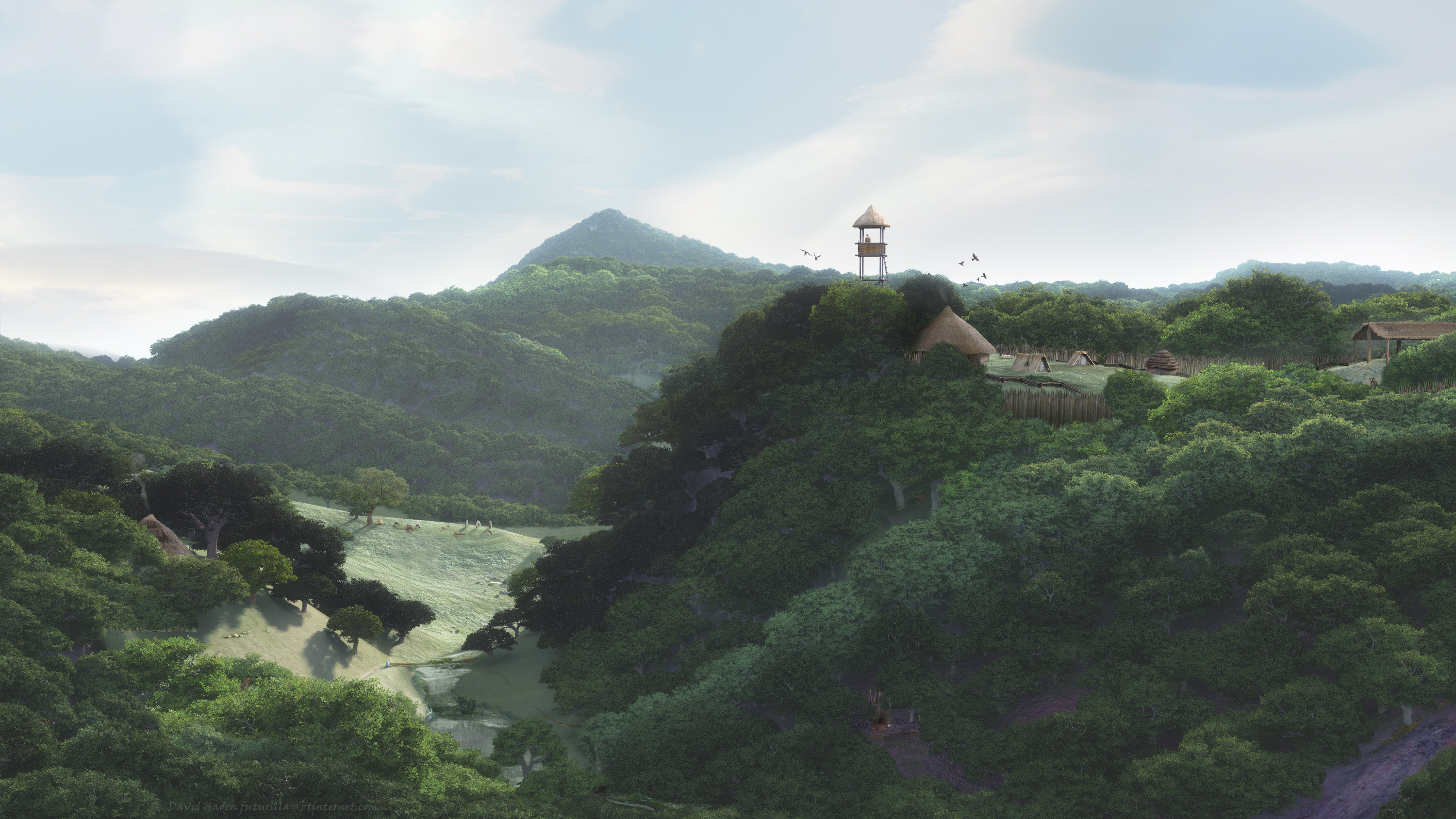
Bradwell Wood, 120 BC (2015, David Haden)
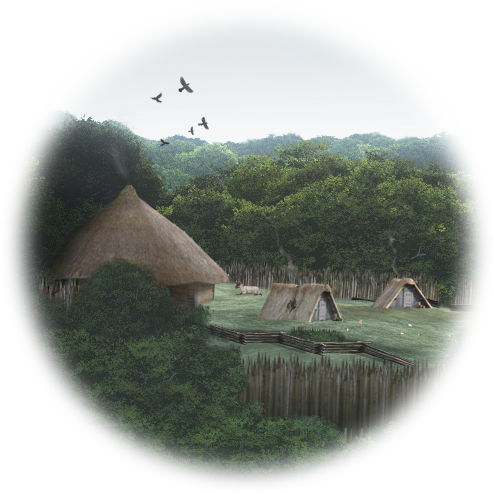
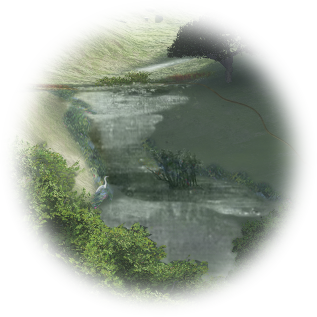
I’m pleased to launch a new paid service, offering affordable archaeological illustration. I’m now able to recreate a historical view of any landscape in the UK, seen from any direction. Showing how it might have looked at any time in the Bronze Age, Iron Age, Roman, Dark Age or Saxon periods. With fine painted in details. Your favourite view, sent back in time — from £500 per picture.

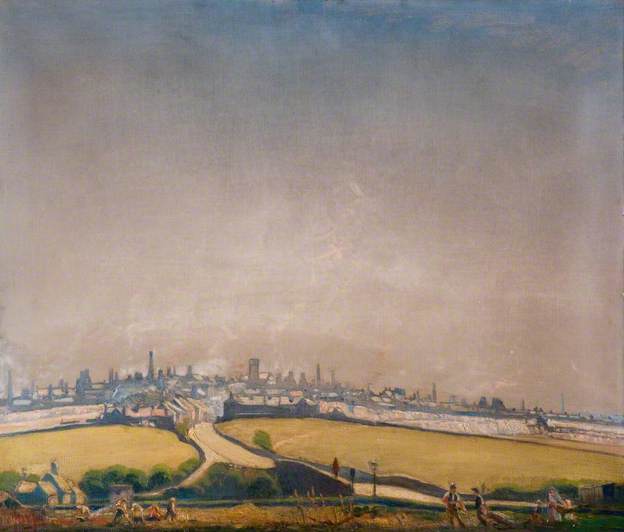
“The Sytch, Burslem” by Gordon Mitchell Forsyth, showing in the middle-distance the ‘cliff’ of clay-tippings along the north western edge of the town centre, falling down to the dusty wasteland of clay shards and finings. In my novel The Spyders of Burslem, Miss Merryweather Craft has her workshops perched on the edge of this in the late 1860s, and the dusty wasteland of the Sytch itself is the setting for a pivotal encounter mid-way through the novel.
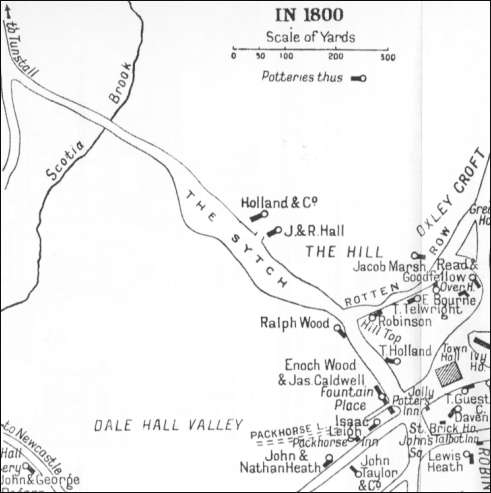
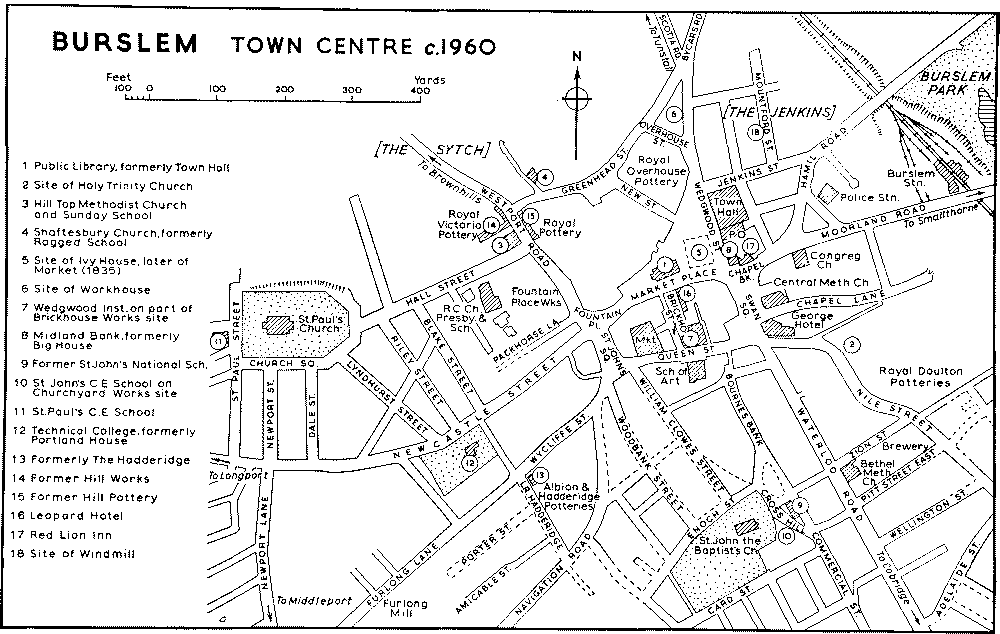
Maps of The Sytch. Much later the upper part with the factories, where it entered the town, became known as Westport Road.

Burslem town centre in 1790, “Maypole” marked at the top being roughly where the Town Hall now stands. “Locket’s Cob” was perhaps the town centre’s muck and fire-ashes heap, as it appears to be drawn as if a muck-heap. Though ‘shoard’ perhaps indicates a tip for pottery shards. Possibly it was both house-fire ashes and shards. Cob meant any thick round mass: as used in a cobble-stone, a cob-nut (hazelnut), a cob-coal (a coal lump smoothed down to a soap shape), or horse dung. Still in use today for a cob loaf of bread.
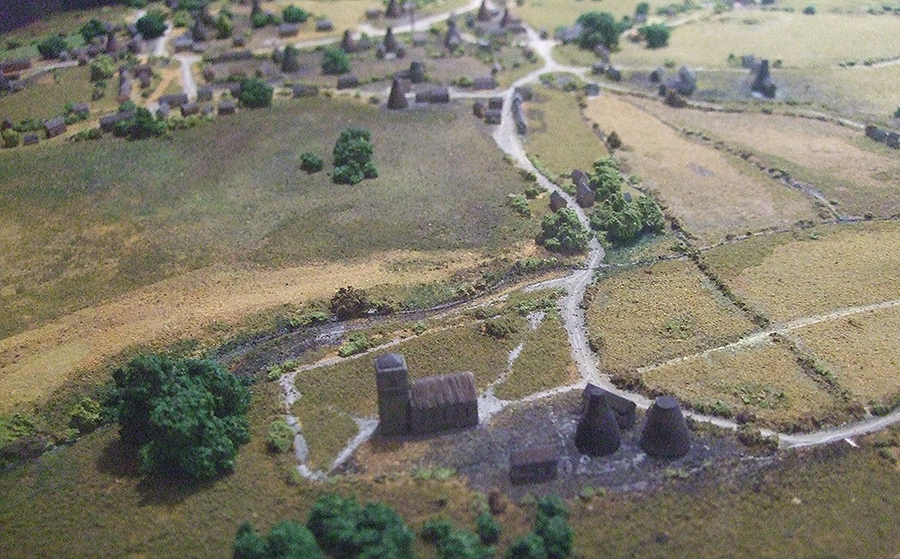
Diorama made from a map of Burslem in the 1730s, showing the location of the pottery in relation to the church. The church still stands today. The view is from south to north.
Sad to hear that Tony Chilton, traditional gent’s barber of Stoke-on-Trent, has passed away. He was my barber for about seven years, at Tony’s Barber Shop, 121 College Road by the University. A real character and a nice bloke, he always had time for you if he liked you, and he has so far proved impossible to replace. Chapter Six of my novel The Spyders of Burslem features a Tony-alike Italian barber in 1860s Burslem, a “Toni Chilterni”.
Below are some pictures that I kept made by Sophie Robinson, a sports photojournalist student studying at the nearby university. She photographed Tony for a course assignment titled “Brief 4: Human Interest” in November 2012. I think that was the last full year he ran the shop. Sadly her blog has long gone, so I’m placing her post and pictures online again in remembrance of Tony. Tony also spoke of a documentary film that students had made of him and the shop, though the Web seems to have no record of it.
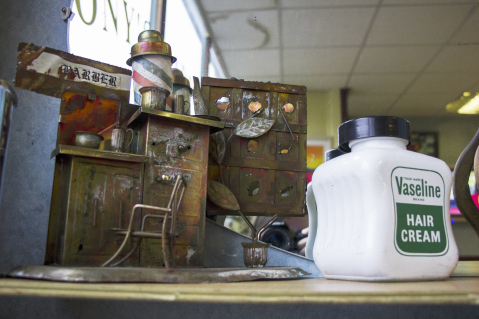
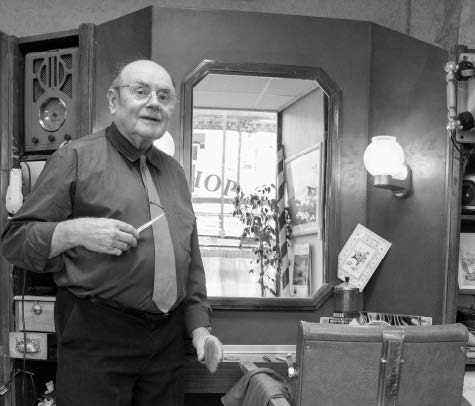
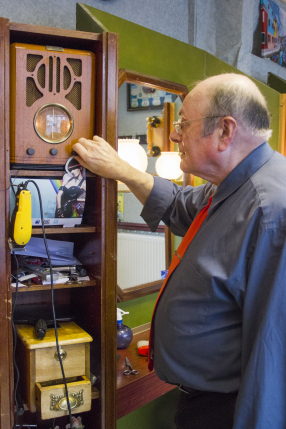
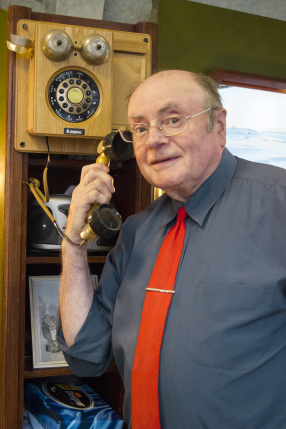
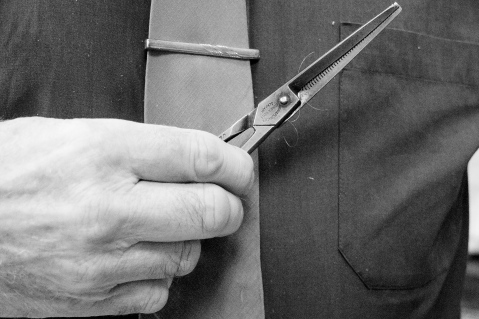
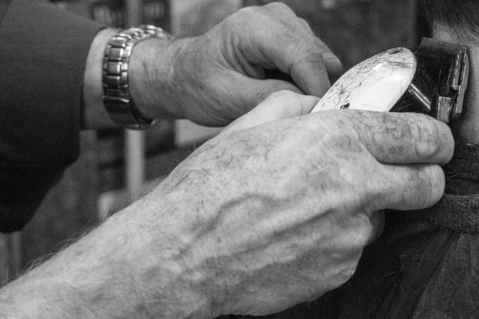
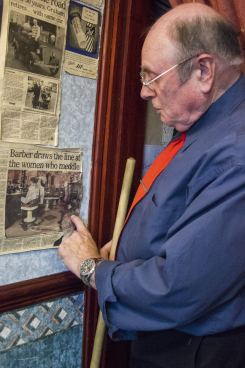
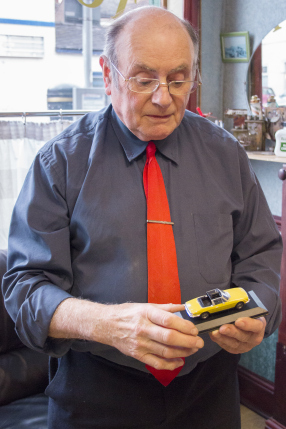
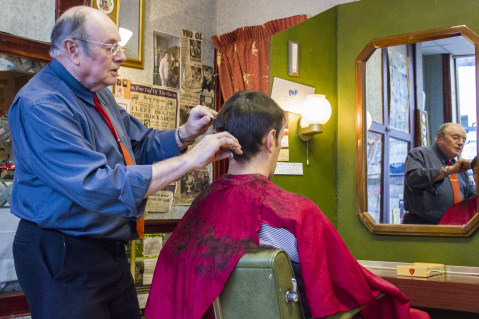
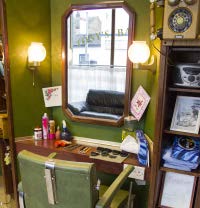
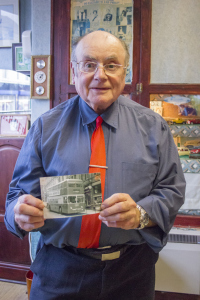
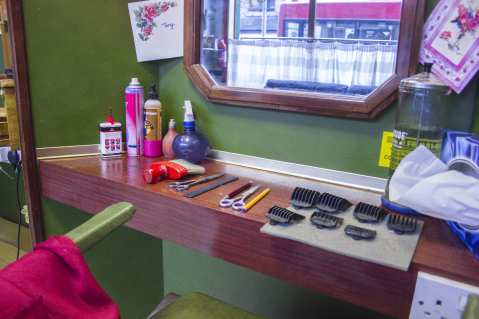
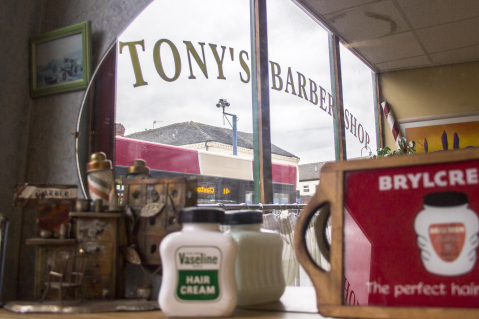
Tony Chilton. Owner of Tony’s Barber Shop in Stoke 1988-2013.
Thomas ‘Tony’ Chilton runs a quaint retro barbershop in Stoke-on-Trent. He has lived in the area all of his life and this weekend celebrated his 75th birthday with family, friends and long-term customers of his shop. His shop is decorated with knick-knacks and memorabilia from the 40’s, 50’s and 60’s. “The shop is exactly the way it was when I first owned it. I have had this same equipment and layout for as long as I’ve been here. The sofa and TV are new, but you need some sort of comfort when you are here all day!” Tony gets all kinds of customers coming into his shop “it can be a slow news day or a fast news day” he says, “we always get a story”.
‘Tony’s Barber Shop’ is situated a moments walk away from Staffordshire University. Tony has met many people in his time in the shop, some, he says, he will remember forever. However the business runs deep into his family’s history, generations of men in his ancestry ran similar shops to Tony’s and Tony remembers how he started in the business to this day: “It was my great grandfather who I can remember having a shop. I did very well to know my great grandfather; they didn’t live very long in his generation. His shop was no bigger than a matchbox; he had one small stool and an old mirror on the wall. He used sheep shears for long hair and long scissors for short hair. He’d have people queuing down the street, he was the only barber in Hanley at the time and he did very well. “After my great grandfather retired through ill health, my father bought another shop in Hanley, around 1944, right down by an old bookstore. I remember he had styled the shop in a very modern way for his time; it was coming to the end of the war. He had big green metal chairs, with footrests; you’d never seen a footrest on a barber chair before, it was always a small wooden stool or a wooden chair. He had these huge mirrors on the benches around the shop, on all four walls, even either side of the window bay. The place looked like it went on forever but it was only tiny. “He fought in the [second world] war so my uncle and my mother had to continue with the shop until he came back. I helped around, sweeping and making drinks and it inspired me. I wanted to continue in my father’s footsteps. After he died I moved to Birches Head, then to Sneyd Green in 1962 where I opened a small shop with my brother and then to Stockton Brook in 1964 where I finally opened my own shop. “It wasn’t much to look at, but I took all of my father’s war memorabilia with me. I displayed it in the shop window and all around the shop. Britain was still very proud of their war heroes at this point and it used to attract customers from all over the city. I thought, “Why are they so interested in my dad?” It turns out; they were interested because it was a little shrine or a little museum to the people who had lost their loved ones in the war. They came to my shop to have their hair cut and they went away with a little satisfaction that they had lost them to honour and pride, I liked that.
“[Then] I wanted something a little bigger. That place was only a few square metres wide and long, so I found a little shop for sale here in Stoke. It was 1988 when I finally got it up and running. It used to be a sweet shop, and that is where I have stayed until today. There are little pieces of every shop I have been a part of in here. I have all my vintage pieces; my phone from my first shop, my wireless and my tools.” Tony’s shop in Stoke is decorated in the exact same style as his first shop in Stockton Brook. He tells how he wanted to keep a little part of his past in every shop he has been in. “Looking around here you would think you were in the 50’s.” It is a literal step back in time, the only tell-tale sign is the flat screen TV on the wall and the new leather sofa for customers where Tony spends most of his day when he isn’t taking appointments. His till is a wooden box with one drawer and he still uses a classic phone. His cabinets in the shop are full of war medals, photographs, paintings and models: “They all tell a story; every time somebody comes in we get talking about something in here.
“I collect cars too; not real ones, model ones, and trains. In my back yard at home I have a massive model railway. I worry someone will jump over the fence and pinch it! But everyone who lives around me keeps neighbourhood watch on my trains when I’m at the shop. The cars in the cabinet are replicas of all the cars I have owned or dreamed of owning.” Tony holds out a small model of a yellow Triumph Stag: “This was my first car. My wife divorced me in ’72 so I went out and got myself a nice new car with the shop takings. I was in my element. I have been on my own since then, never remarried. I channelled my energy into collecting cars and cutting hair. I have kept that ‘free’ feeling in all the shop’s I have owned.”
Years of cutting hair is told through the “only tools you need”, the hands tell the story of a lifetime. Tony worked for some time in the Special Service [Armed Forces], so his fathers’ war memorabilia holds a special place in his heart and his shop. A painting of the Spitfire takes up one part of the far left wall and newspaper cuttings of the ‘First Day of the War’ in the Express from 1939 on the opposite side. Tony has also sponsored ‘Troops Relief’ on numerous occasions and all of this history litters the walls of his shop. “There is one thing about being in the service; you got the girls. We [Tony and his friends] would go out dancing at Victoria on the Square on a Thursday night and then Friday night for ‘Grab a Granny’. We were never short of someone for a little company.”
Tony lives alone after his divorce and says that his shop is the main thing that keeps him in touch with the public: “We are open every day apart from Thursdays, which is when I do my shopping, or go out for a little while or just spruce up my train track. I am here until quite late at night. I prefer to watch the soaps in here and sometimes I’ll get a customer which is nice at that time of the evening. They are usually drunk or going to a wedding the following day.” Tony’s sense of humour shines through in everything he says. He sits in one of the barber chairs doing impressions of comedians and actors and he is extremely in touch with modern culture and events, even though he lives such a classic existence in the shop.
His large outdoor model-railway track he had running around his garden and rockery at home. He mentioned it to me several times.
Beneath Still Water, a film about the local ‘Blakemere Mermaid’ folkore, is now fundraising on Kickstarter.
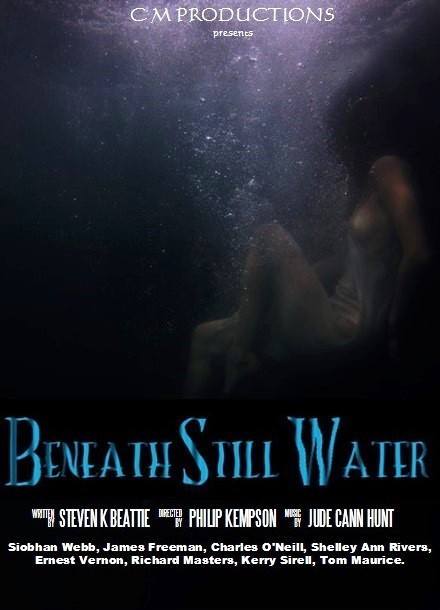
Beneath Still Water on Facebook.
“We have a poor old horse” from Lore and Language journal, no. 09 (July, 1973). Sheffield.
By Rory Greig.
Of the two animal-disguise customs documented in the Sheffield area, “the Old Tup” and “the Old Horse”, the latter appears to have been far less commonly reported. It was all the more pleasing therefore to discover in 1970 an example still being performed in the area. The custom takes the form of a house-visit; a song, ‘ Poor Old Horse” is sung by two men, Chris and Billy, whilst the third member of the team, Reg, operates the horse-figure, following the text of the song and miming appropriate actions.
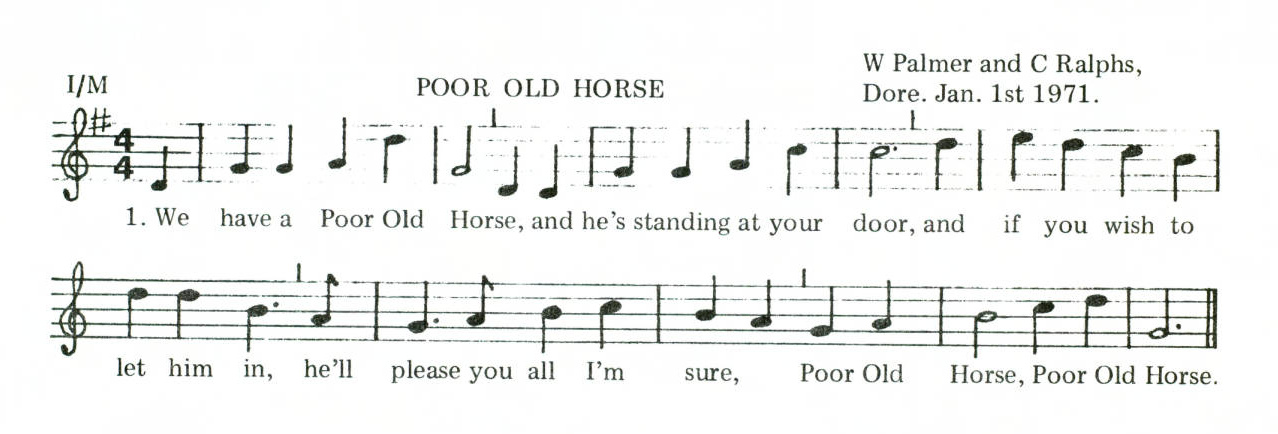
1. We have a poor Old Horse, [Snaps jaws and rears head in rhythm, banging the base of the pole on the ground.]
And he’s standing at your door,
And if you wish to let him in,
He’ll please you all I’m sure.
Poor Old Horse, Poor Old Horse.
2. He once was a young horse, [Snaps jaws and rears head in rhythm, banging the base of the pole on the ground.]
And in his youthful prime,
His master used to ride on him,
And he thought him very fine.
Poor Old Horse, Poor Old Horse.
3. But now he’s getting old, [Head is lowered and eating is mimed.]
And his nature doth decay,
He’s forced to nab yon short grass,
That grows beneath yon way.
Poor Old Horse, Poor Old Horse.
4. He’s eaten all my hay
And he spoiled all my straw,
He’s neither fit to ride upon,
Nor e’en attempt to draw.
Poor Old Horse, Poor Old Horse.
5. We’ll whip him, cut him, slash him, [Horse mimes jumping by raising and lowering head in a circular movement.]
And a-hunting let him go
Over hedges, over ditches,
Over fancy gates and stiles.
Poor Old Horse, Poor Old Horse.
6. I’ll ride him to the huntsman, [Operator bends down, lowering the head to the ground.
So freely I will give
My body to the hounds then,
I’d rather die than live.
Poor Old Horse, Poor Old Horse.
7. Thy poor old bones,
They shall lie beneath yon ground
And never more be thought of
By all the hunting round.
Poor Old Horse, Thou must die.
Spoken: Get up Bob. [Horse gets up.]
According to the performers, the Old Horse custom is in decline. In the past the team has included up to ten men and boys and the number of calling places was considerably larger, including casual door-to-door visits and street performances in a wide area including Coal Aston, Norton, Holmesfield, Dore and Totley as well as in the performers’ home town, Dronfield. In recent years the number of performers has dwindled to the present three, and the number of calling places to the present two private and two public houses in Dore on New Year’s Day. The team travels from Dronfield to Dore, sometimes by car or taxi and sometimes by using the local bus service. The performers commented on the reactions of other people on the bus who were often more than a little surprised to see the strange black creature which accompanied them on their journey!
My wife Alvina and I first recorded the Old Horse at Dore on the 1st January 1971 in the “Devonshire Arms”. The following year, thanks to the courtesy of a Sheffield businessman, we were able to record and photograph the team at his home, one of the private houses which they still visit. The team announced their arrival by singing part of the song outside the front door of the large stone-built house which stands back from the road into the village, and then by knocking at the door. The door was then opened and the three men entered. They did not wear disguises or “dress up” except in so far as they were not wearing working clothes. All three wore normal dress of jacket and trousers, collar and tie, and each wore a raincoat, which they continued to wear throughout the performance. The only disguise is the horse itself; it consists of a pony’s skull about eighteen inches long, painted a shiny black, with convex glass bottle ends for eyes, painted white with red centres. The skull is mounted on a pole by means of a U-shaped iron bracket. A black cloth of heavy cotton is fastened to the back of the skull and covers both the operator and the wooden handle which raises and lowers the hinged upper jaw. The handle is connected to an iron rod in the skull and when it is pulled downwards the upper jaw is raised. The top of the skull is decorated with small multicoloured woollen balls and plaits, and has two “ears” consisting of stuffed cone-shapes made from white cotton.
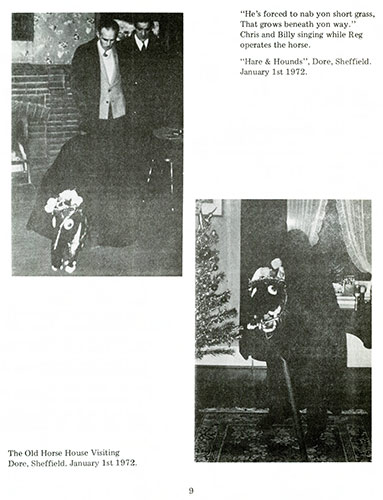
Once in the house, the team were offered drinks, whisky in particular, or beer. After a few minutes of general conversation and polite enquiries about health, work and family from both householders and team, the performance was given. The song was now sung in full whilst the horse performed appropriate dramatic actions as indicated in the song transcription, which require considerable strength and dexterity because of the weight and the cumbersome nature of the horse disguise. The horse finally “dies” by sinking to the ground, to be revived by one of the singers, Chris, with the words “Get up Bob” — (Bob, it was later explained to us, is the horse’s name). The team then made their farewells and left the house, after receiving several pounds from the householder. He has in the past kept teeth from the horse, which fell out during the performance, “for luck” he says.
When both the private houses had been visited, the team moved on to the two public houses in the village centre, the “Devonshire Arms” and the “Hare and Hounds”, where they performed the song and accompanying action in both the public bar and the lounge of each. They collected money in an unpainted rectangular wooden collecting-box with a slot in the top, and a handle projecting from the underside at one end. Amounts given were generally small, ranging from pennies up to 50p. The team’s reception in the public houses has varied considerably. On the first occasion that we recorded them in both public houses, they were subjected to a certain amount of verbal ridicule by some of the younger people in the lounge bar of the first public house in which they performed.
However, the considerable enthusiasm of the new landlady seemed to make their visit on 1st January 1973 much more enjoyable, and the team discussed, for the first time, extending their round to take in another call, a local club. Generally, their visit is regarded with pleasant anticipation by the local people in both public houses. Reactions to the collecting-box vary, from straightforward refusal, to ready and generous contribution. The collectors sometimes encourage gifts by humour, for example by suggesting that the collection is for the Old Horse’s winter feed. They are quick to point out that during the second World War they collected money for charity.
The performance is of some social significance, both to performers and audience. A number of comments have been recorded to the effect that the horse brings good luck. One performer’s wife made a particular remark to this effect, saying that when the team returned home, they would perform at their own homes “for luck”.
There is also some evidence from people’s reactions and comments to suggest that the Old Horse has been to some extent a frightening figure, particularly for children. The most commonly expressed feeling, however, has been that for the local people the visit of the Old Horse forms an integral part of their Christmas and New Year celebrations, and it is this feeling which seems to have contributed most to the survival of this unusual custom. The performers have often said during the many visits we have made to their homes, and to see them at Dore, that the main reason they go is that it is expected of them to make their annual rounds. How long they will continue to do so is a matter for conjecture. One particular family has been the main force in preserving this fascinating old custom on the southern fringe of the city of Sheffield over the years, but there unfortunately seems to be no definite prospect for the continuity of this long-established tradition after the members of the present team cease to make their yearly rounds.
References to the Old Horse in the Sheffield Area:
Addy, G . H., Some Old Customs of Derbyshire, London, 1903.
Addy, S. O., “Guising and Mumming in Derbyshire“, Journal of the Derbyshire Archaeological and Natural History Society, XXIX, Jan 1907, pp.31-42.
Armitage, H, Sorrelsykes, London, 1913.
Armitage, H, Chantreyland, London, 1910.
Cathcart-Smith, E, “Some Further Account of the Old Hoss”, Journal of the English Folk Dance and Song Society, V, No.2, Dec 1947, pp.81-91.
Court, A, Staveley, Sheffield, 1948.
Dransfield, J N, History of the Parish of Penistone, Penistone, 1906.
Mason, M H, Nursery Rhymes and Country Songs, London 1877.
Tomkin, A R, Local Folklore, Barnsley, 1894.
Wilson, J, Verses and Notes, Chorley, 1903.
From Addy, S. O., “Guising and Mumming in Derbyshire“, Journal of the Derbyshire Archaeological and Natural History Society, XXIX, Jan 1907, pp.31-42.
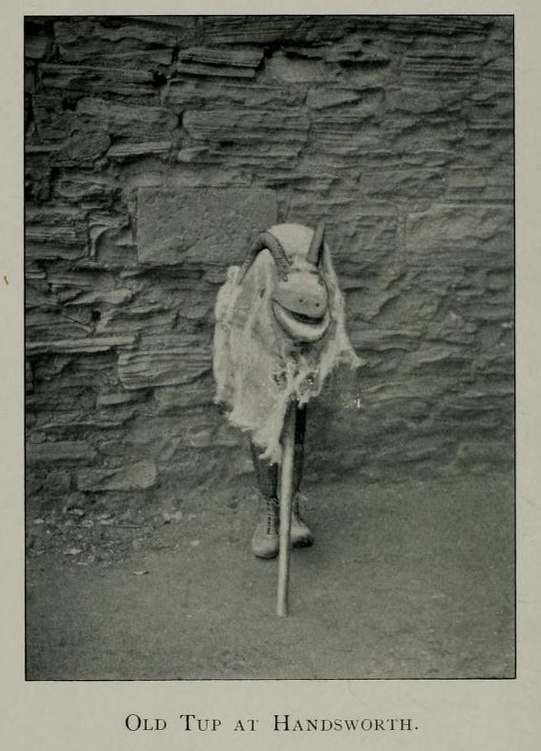 Mummer’s Old Tup performer (a ram, or male sheep) in Derbyshire, from “Guising and Mumming in Derbyshire” (1907).

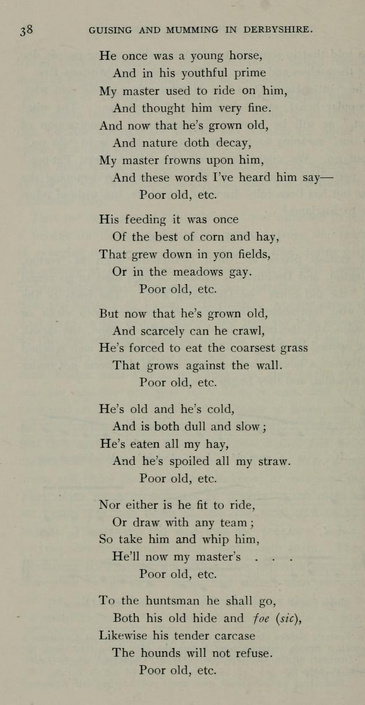
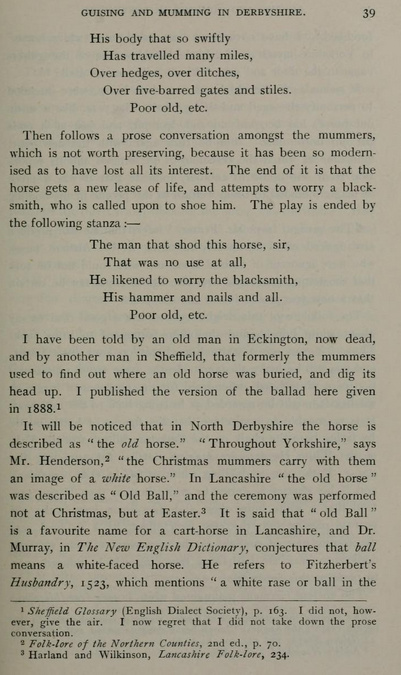
Lore and Language, 1969-1999. From Sheffield, so may interest those looking for Derbyshire Peak and Midlands folklore. Now online for free. Items of specific interest because neighbouring to Staffordshire…
* Lore and Language, no. 03 (August, 1970)
The Cheshire Soul-Caker’s Play.
* Lore and language, no. 05 (July, 1971)
Further notes on Antrobus Soulcakers and other Cheshire souling plays.
* Lore and language, no. 09 (July, 1973)
We have a Poor Horse [Detailed descriptive record of a fading Derbyshire Wassail / Mummers costumed house-visiting, made at New Year 1971. Song and hobby-horse].
* Lore and Language Vol. 02, No. 01, (July, 1974)
Language Butchered: Back-Slang in the Birmingham Meat Trade. [Birmingham, England]
* Lore and Language Vol. 03, No. 02, Part A (January, 1980)
The Reindeer Antlers of the Abbots Bromley Horn Dance: A re-examination.
* Lore and Language Vol. 04, No. 01, (January, 1985)
Solihull: A Note on a Placename Pronunciation.
* Lore and Language Vol. 04, No. 02, (July, 1985)
Just for Fun: Children’s Playground Songs from Derbyshire.
* Lore and Language Vol. 10, No. 02, (July, 1991)
A Bit of Black Country [long detailed article on the dialect, by a trained linguist raised in the Black Country].
I was pleased to be able to attend the Hartshill / Honeywall part of the newly revived Penkhull Wassail tradition on Saturday evening, in Stoke-on-Trent. It joins the existing Wassail procession tradition at Barlaston in the south of the city. About a mile away from the intercity train station in urban Stoke on Saturday, this was happening…
[youtube https://www.youtube.com/watch?v=NIdeSNVeM3s?rel=0&w=640&h=480]
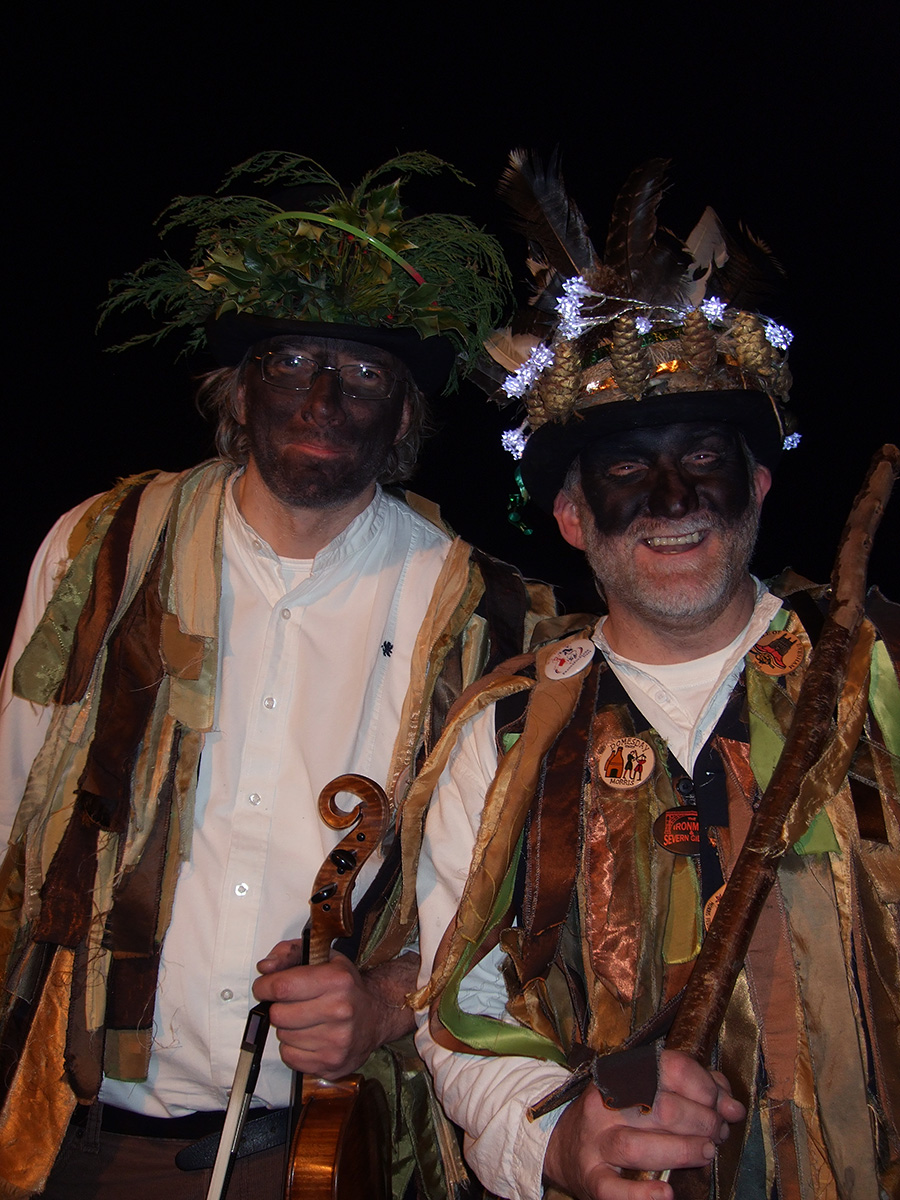
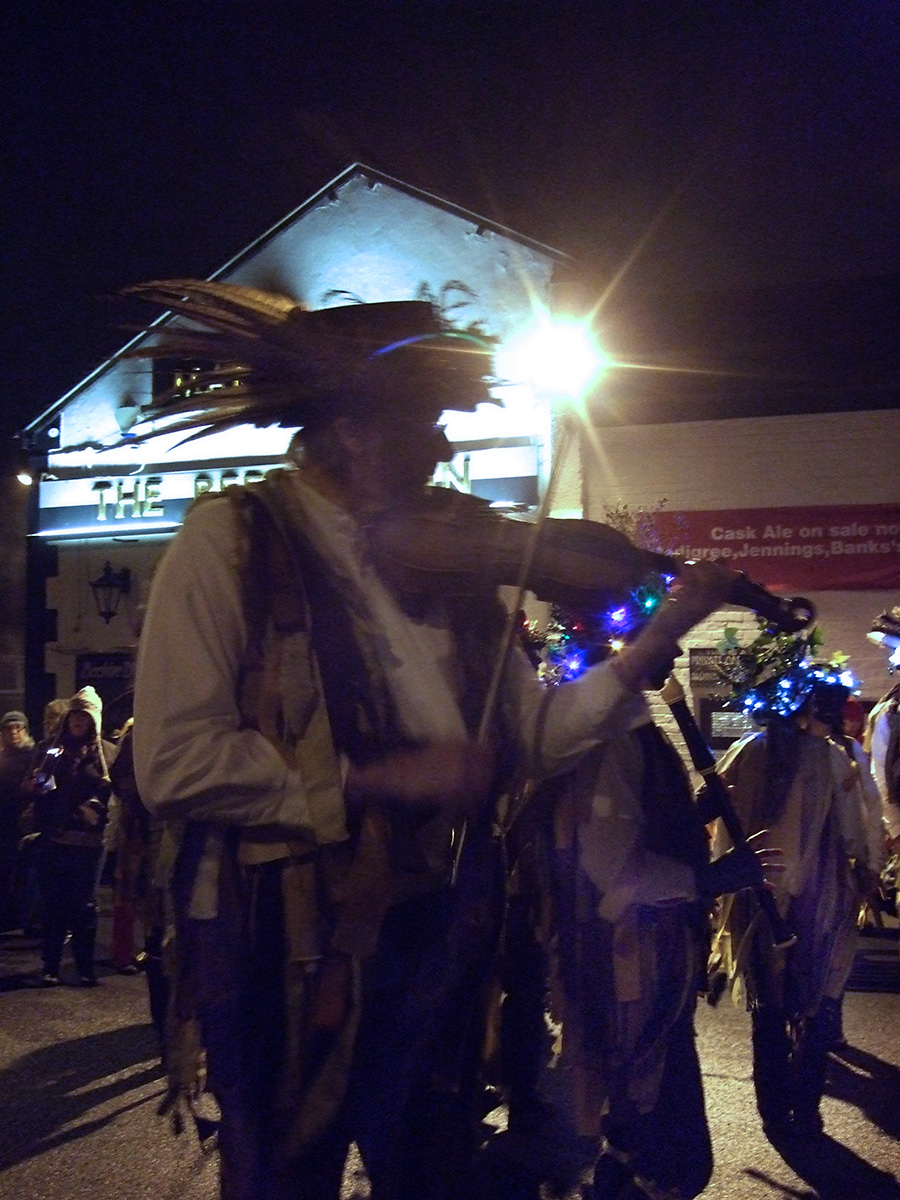
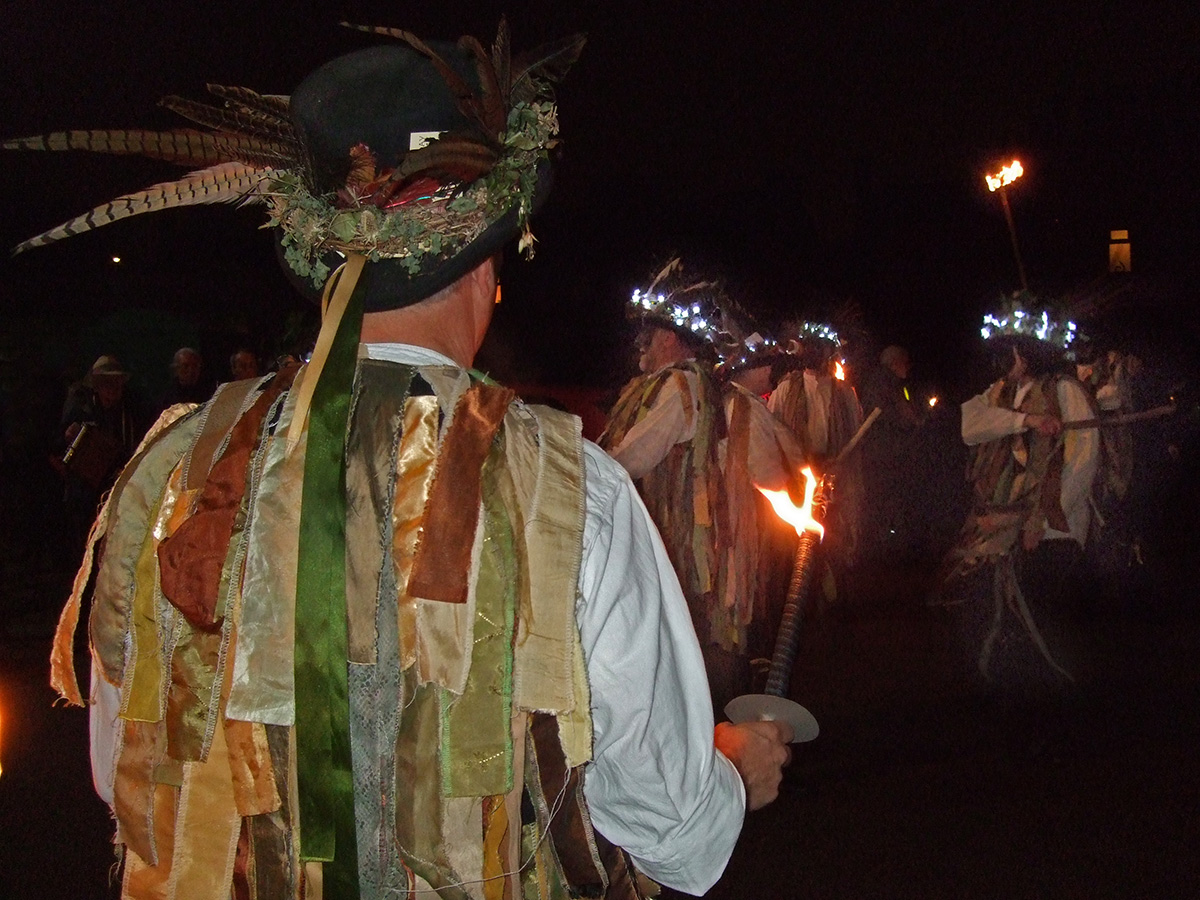
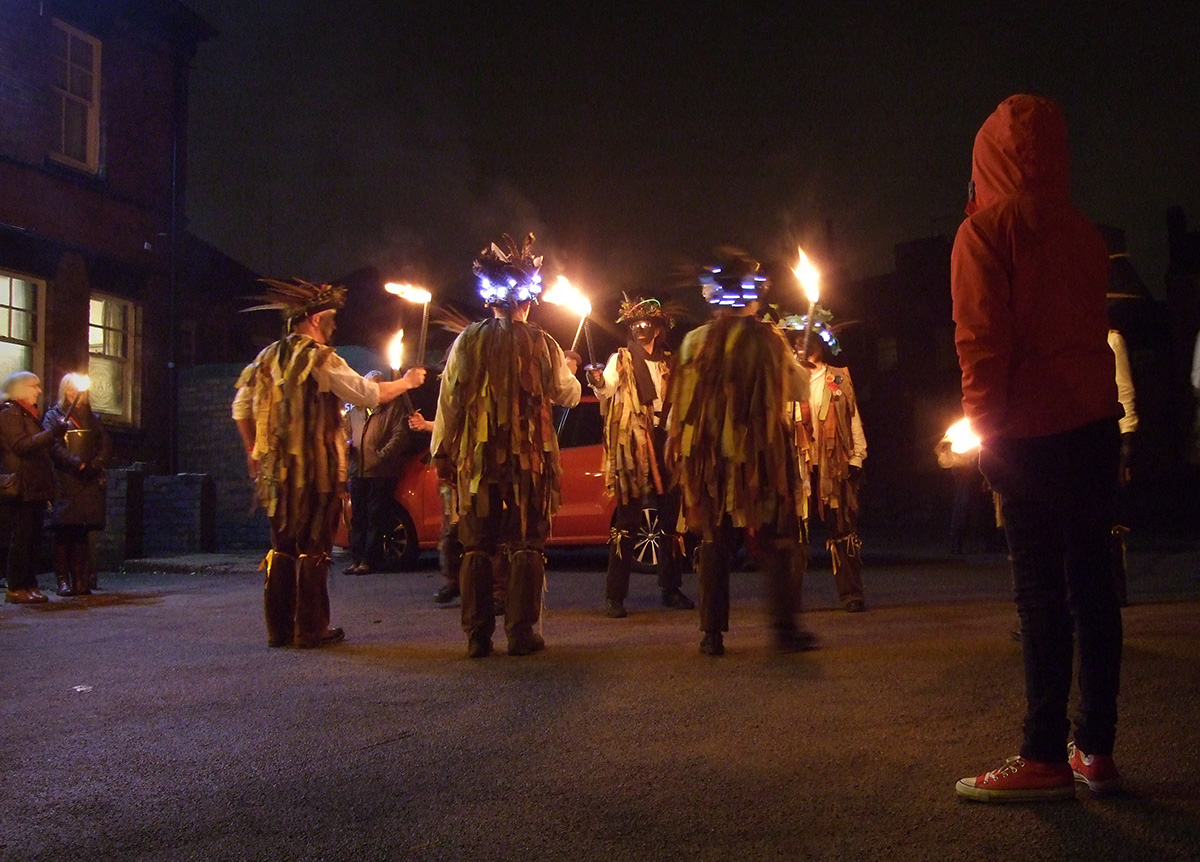
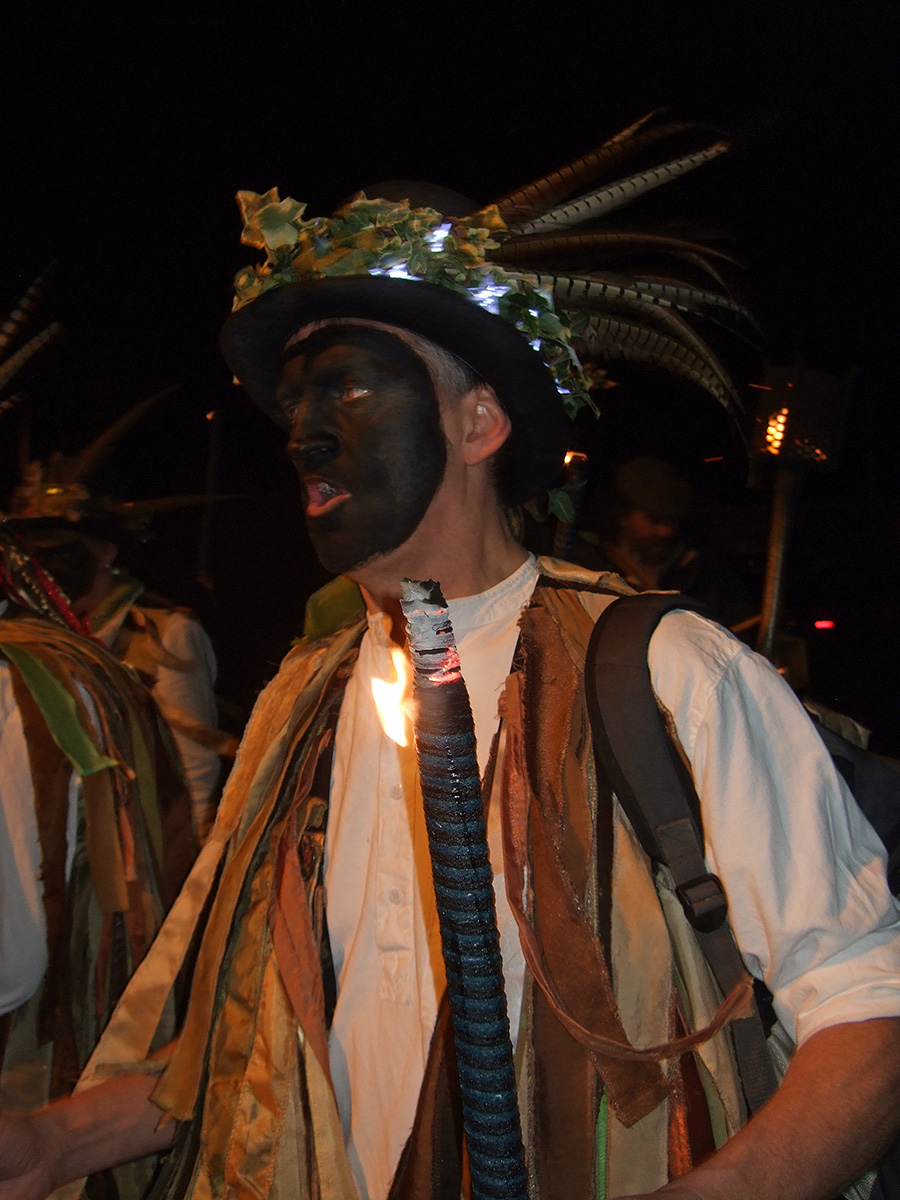
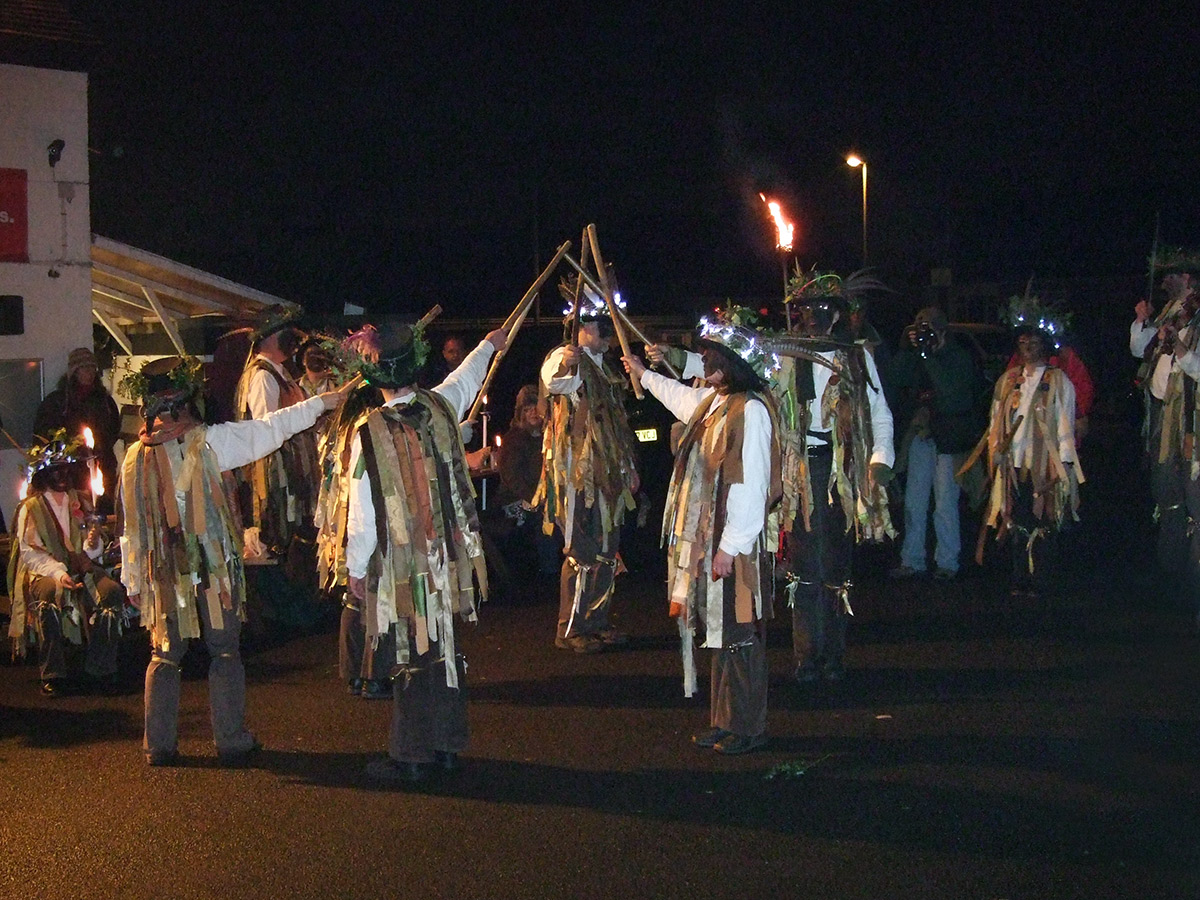
The procession tour took about three hours…
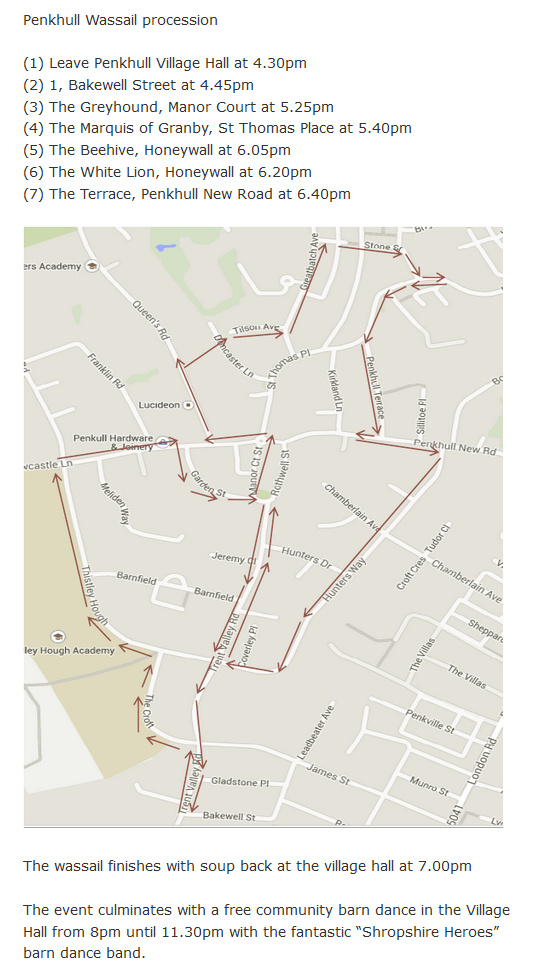
Andy White followed the procession and performances thoughout with his camera, and now has two excellent sets of photos (one and two) online at Facebook.
It was later asked on the Facebook event page if this Wassail was similar in nature to a Mummers’ procession. I did a bit of research and found that:
Mumming has a walking performance of a narrative story, presented more like a play. Done similar to Saturday’s Wassail, though, in a tour of the local pub yards around the boundary of a place. But instead of dancing it would have parts of the mummers’ narrative story performed in masks and costumes. In Ireland and England, the earliest examples of mummers were apparently recorded as happening at Christmastime and New Year. Although — as the fabric of tradition decayed — it seems the mummers would also make appearances at other times.
Locally, an interesting New Year’s Day one was recorded at Dore in Derbyshire, where it sounds like it had once been a full Mumming play in procession. An “‘Owd ‘Oss” song and hobby-horse procession was last recorded there on 1st Jan 1971, with a song which has a similar ‘open your door’ theme as the Wassail song we heard on Saturday…
We’ve got a poor old horse,
And he’s standing at your door,
And if you’ll only let him in
He’ll please you all, I’m sure.
“…in 1970, Ruaridh and Malvina Greig discovered it still being performed around Dore on New Year’s Day, at two private houses and at two pubs, the Devonshire Arms and the Hare and Hounds … Young women pretend to be frightened at the way in which the horse opens his wide jaws … The singers, Billy Palmer and Chris Ralphs, and the horse (Reg —) were from Dronfield, and had in the past been part of a much larger group. A full account appears in Lore and Language (1973)…” [Source]
Lore and Language for summer 1973 is online — although with a dismal display-method that only an academic librarian could love, and with broken links to the PDFs. The full reference is: Rory Greig, “We Have a Poor Old Horse”, Lore and Language 2.9 (July 1973), pp.7-10. So go to Page 7 at that Web link to read the article.
So if the Penkhull Wassail were to expand in future years, then having an additional group able to perform / sing the story of a poor old knackered hobby horse might be a suitable addition.
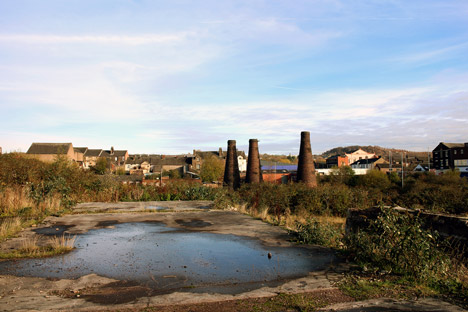
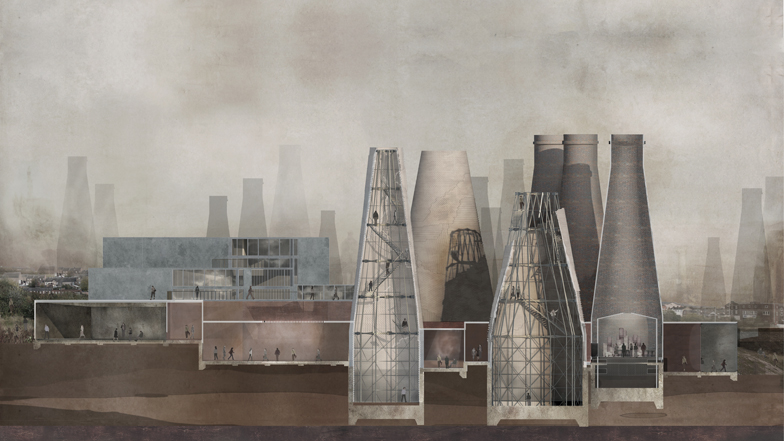
An interesting and well-visualised proposal for a ceramics heritage and preservation centre on the hillside at the back of the Burslem School of Art. I’m told that area is geologically unsound (basicially that whole hillside is slowly slipping downhill), and might not take the weight of new buildings — but it’s great to see some vision for the town…
Can’t afford the 4,000 page The Historical Thesaurus of the Oxford English Dictionary? Historical writers can instead use the Historical Thesaurus of English from Glasgow University, which is online for free and has a search facility.