New on Archive.org, the concise survey English fairy poetry from the origins to the seventeenth century (1912)…
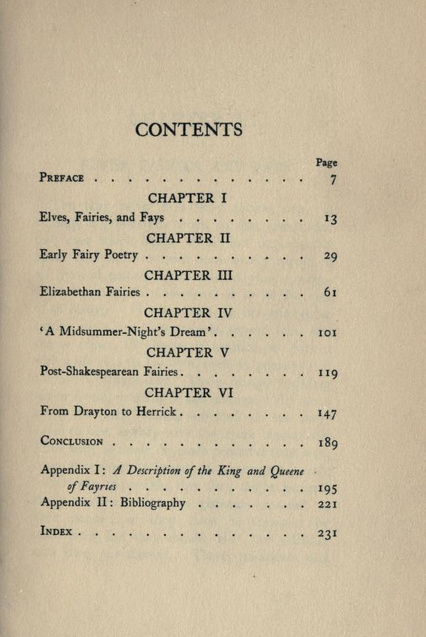
New on Archive.org, the concise survey English fairy poetry from the origins to the seventeenth century (1912)…
William P. Holden’s erudite 1963 edition of Beware The Cat is now available online. An excellent introduction, and then a solid transcription of the Elizabethan English version of the novel. It’s effectively the first novel in English, and certainly the first horror novel. My ‘modern English’ adaptation and abridgement of Beware The Cat is available in my book Tales of Lovecraftian Cats (horrible pun intended). The story has many macabre and fantastical elements, and the main tale opens in North Staffordshire.
Entering the Public Domain on 1st January 2016, by hitting the ’70 years after death’ limit on copyright in the UK and Europe:
It’s a fairly good year for English fantasy…
* Charles Williams, a prolific writer now best known as part of the circle around C.S. Lewis and J.R.R Tolkien. Wrote a string of mystical English adult novels in which the numinous or uncanny enters the ordinary English world. Non-fiction books include learned studies of The English Poetic Mind and Witchcraft.
* Maurice Baring, a wide-ranging British author. He also produced occasional stories of delicate fantasy, macabre travel-adventure, some supernatural fiction, and at least one book of children’s fairy-stories. Should anyone be considering running off a modern volume of his more fantastical stories, note that he also wrote an introduction to a 1949 one-volume Bodley Press edition of Saki which discussed Saki’s “vein of macabre, supernatural fantasy”.
* David Lindsay, the Scottish science-fiction and fantastical novelist, now best known for the early sci-fi novel A Voyage to Arcturus (1920).
* E. R. Eddison, known for the influential 1932 pre-Tolkien fantasy novel The Worm Ouroboros, along with his adaptations of the Norse sagas.
American pulp culture is represented by:
* Achmed Abdullah, a popular pulp-era mystery/adventure writer. Now best known among movie history buffs, for his novelisation of the major movie The Thief of Bagdad (1924) and his Academy Award nomination for The Lives of a Bengal Lancer (1935).
* Malcolm Jameson, Golden Age pulp sci-fi writer for adolescents. Little read today but quite possibly the inventor of the ‘time loop’ sci-fi genre plot, now so popular in contemporary movies. His John Bullard of the Space Patrol series was immensely popular during the Second World War, and Bullard was said to have been the first sci-fi genre character to successfully gain mass recognition in America.
London low-life is well covered, and by those who grew up amid it all:
* Thomas Burke, recorder of low life in the East End and the Limehouse in London. First in Nights in Town: A London Autobiography (1915), then in melodramatic stories a year later in his Limehouse Nights (1916) and later books.
* Arthur Morrison, another author writing “unflinching” realist novels of slum life in the East End of London, including Tales of the Mean Streets and A Child of the Jago. He was later an author of detective stories, featuring the mild-mannered Sherlock-alike character Martin Hewitt in Martin Hewitt, investigator (followed by more Hewitt book collections, Chronicles of, Adventures of, and The Red Triangle). Morrison apparently rose from a childhood in the London slums to become an incredibly wealthy collector of Japanese art.
I also spotted a few artists with a 1945 death date…
* The great American illustrator N. C. Wyeth, creator of some especially vibrant pirate, Arthurian, and wild-western genre illustrations, among many other types of illustration.
* Kathe Kollwitz, a German expressionist artist specialising in intimate views of human suffering.
* Ludwig von Hofmann, Berlin Secessionist and German expressionist artist of light and scale. Became known in America via his huge murals for the Chicago and Saint Louis World’s Fairs.
A podcast on the environmental history of the soughs of the mining areas of the Peak District…
Under the Peak District […] is a subterranean network of drainage tunnels, the so-called soughs that were used to drain the lead mines of the region [and thus] prevent [17th century deep] mines from filling up with water drains or ‘soughs’ were cut through the hills to a neighbouring valley. The construction of soughs changed the hydrological [meaning, water flow] landscape of the Peak District, both below ground and above.”
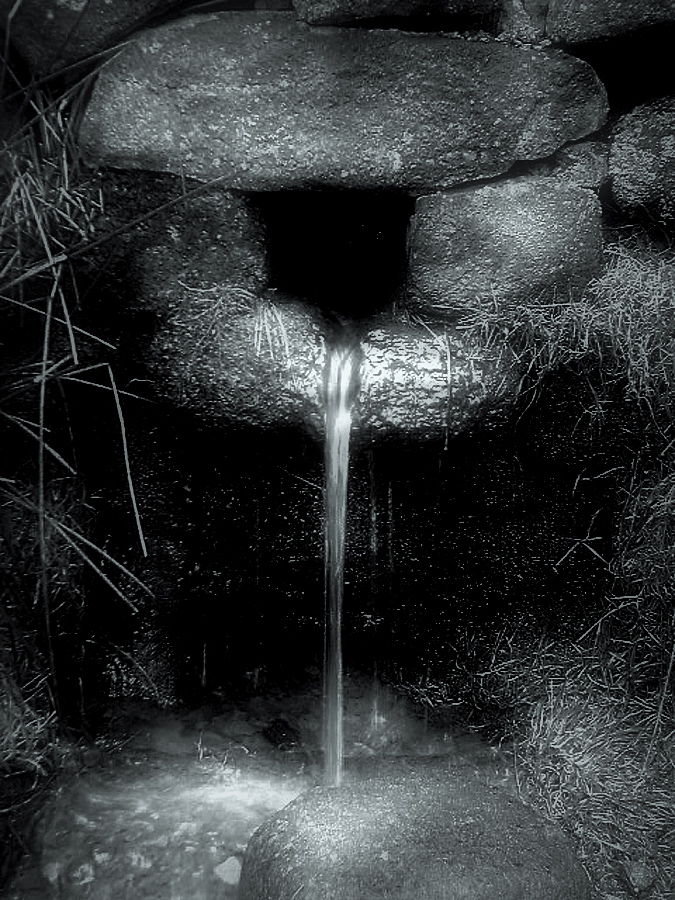
Picture: My photo of a Peak sough in winter.
So if you’re up there walking, and you feel thirsty… it’s probably not a good idea to drink the nice sparkly water that’s draining out of old lead mines.
Just released is Folk Horror Revival: Field Studies, a major new compendium of articles and interviews on the (mostly British) ‘folkloric macabre’ and its re-inventions and adaptations over the last fifty years, 1960-2010.
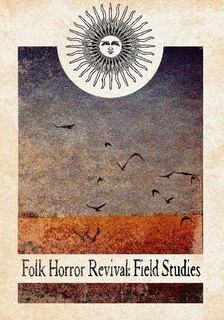
500 pages, at a very reasonable £15 and all profits go to The Wildlife Trusts. There’s also a folkhorrorrevival.com website, though there’s nothing there yet.
John Coulthart.com has the full listing of the book’s table of contents.
A new analysis of the mysterious chalk Folkton Drums has been published in Antiquity journal as “Digital imaging and prehistoric imagery: a new analysis of the Folkton Drums” (though sadly it’s behind a paywall). Here’s the abstract:
“The Folkton ‘Drums’ constitute three of the most remarkable decorated objects from Neolithic Britain. New analysis using Reflectance Transformation Imaging and photogrammetry has revealed evidence for previously unrecorded motifs, erasure and reworking. Hence these chalk drums were not decorated according to a single, pre-ordained scheme, but were successively carved and re-carved over time. Such practices may have been widespread in the making of artefacts in Neolithic Britain. The study of these drums also demonstrates the ability of these new techniques not only to record visible motifs, but to document erased and reworked motifs clearly.”
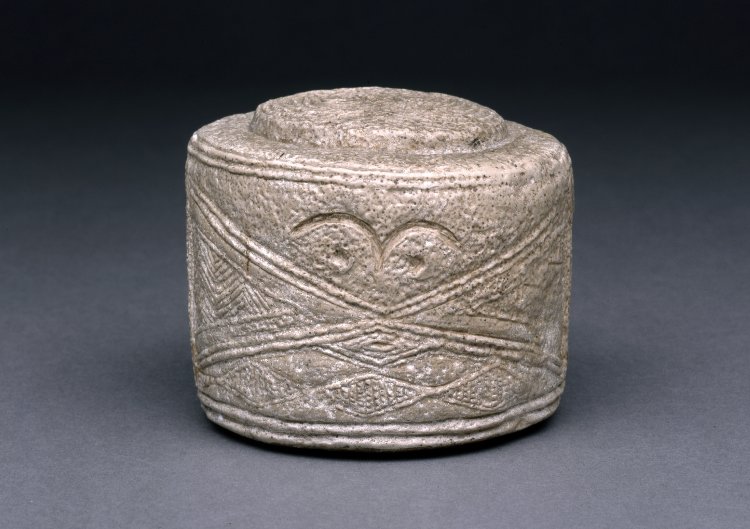
And here’s a British Museum picture of one of the sides of one of the drums. Now… if one knows the complex duality of meaning of Anglo-Saxon symbolism, and also the ancient British regard for a ‘sacred’ trinity occurring within a natural landscape (the meeting of three watercourses, for instance), then one might hazard a ‘reading back’ of such archaic understandings into these more distant Neolithic drums. For instance, just taking one side of a drum, one might read it thus…
Obvious meaning: the human face. The drums were found in a child’s grave.
A possible deeper and simultaneous meaning: The three diamond-shaped “fields” in the lower section suggest that this picture can be read as a landscape view. The notion that this is a symbolic landscape then leads one to see the central symbol as being that of large hawk, swan or sea-bird gliding down a symbolic valley landscape, with the three cultivated fields (or perhaps fish-ponds) situated below the bird. The two ‘eye’ dots might then be understood to symbolise the two full moons that marked out a Neolithic month. The bird would thus be a potent symbol of the fleeting nature of action/life within the eternal cycle of the sky (of course, we already know that birds — especially waterbirds — had a special place in ancient British mythologies). The ‘mouth’ might then be understood as the outlet of a natural spring, and the herringbone patterns either side of it might then symbolise the rainwater stored within the hills, water which fed down into the spring mouth. A landscape trinity of sky / valley hillsides / cultivated lowland is then, in this reading, clearly demarcated by the deep lines that cross in a clearly-incised ‘X’. The picture, understood in this manner, becomes a poignant evocation the fleeting natural cycle within a landscape — and thus a fitting grave item.
The remains of John Dee’s famous library re-assembled…
“A never seen before selection from 100 surviving books once owned by the man known universally as Dr Dee will go on display in ‘Scholar, courtier, magician: The lost library of John Dee’ at the Royal College of Physicians (RCP) in January 2016.”

The British Museum’s crystal scrying ball will be there too. That it was once Dee’s is now apparently questioned by some academics, but it’s undoubtedly of the right age and is very similar to the sort of ball he would have used.
“From the collection of the British Museum comes a crystal ball for researching the occult and conversing with spirits”
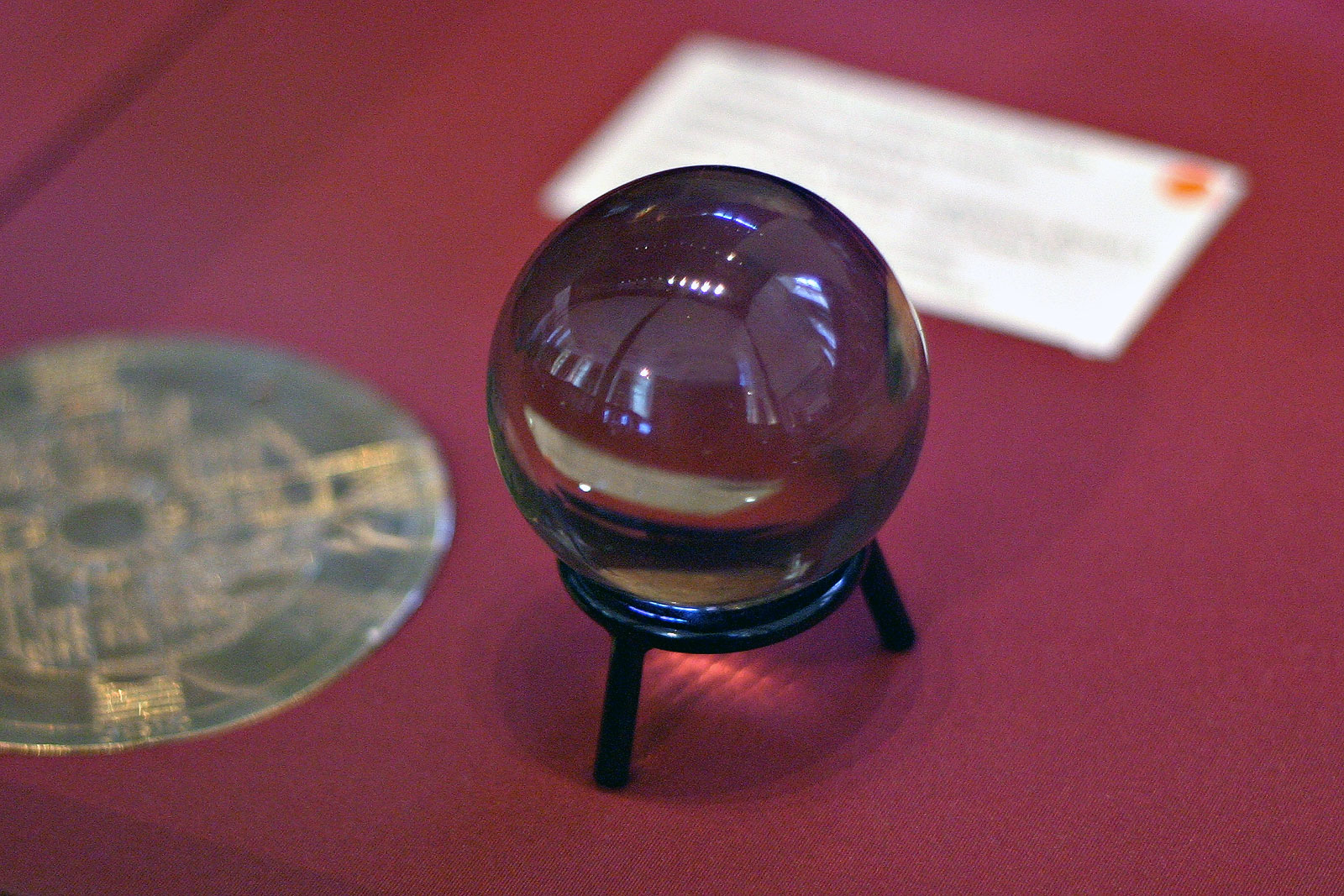
It would be nice if the library could also be reassembled online, in the form of Web links to digitised scanned copies of all the books known to have been in Dee’s library. I’m not aware that anyone has yet done that.
I became interested in the history of Dee’s library through researching a commissioned scholarly essay in 2012, which is available in my book Lovecraft in Historical Context: a Third Collection of Essays and Notes as “What could Lovecraft and his circle have known of Doctor John Dee?”
A fantastic regular blog from the Buxton Museum & Art Gallery, Collections in the Landscape shows how items in the collection relate to the landscapes of the local area.
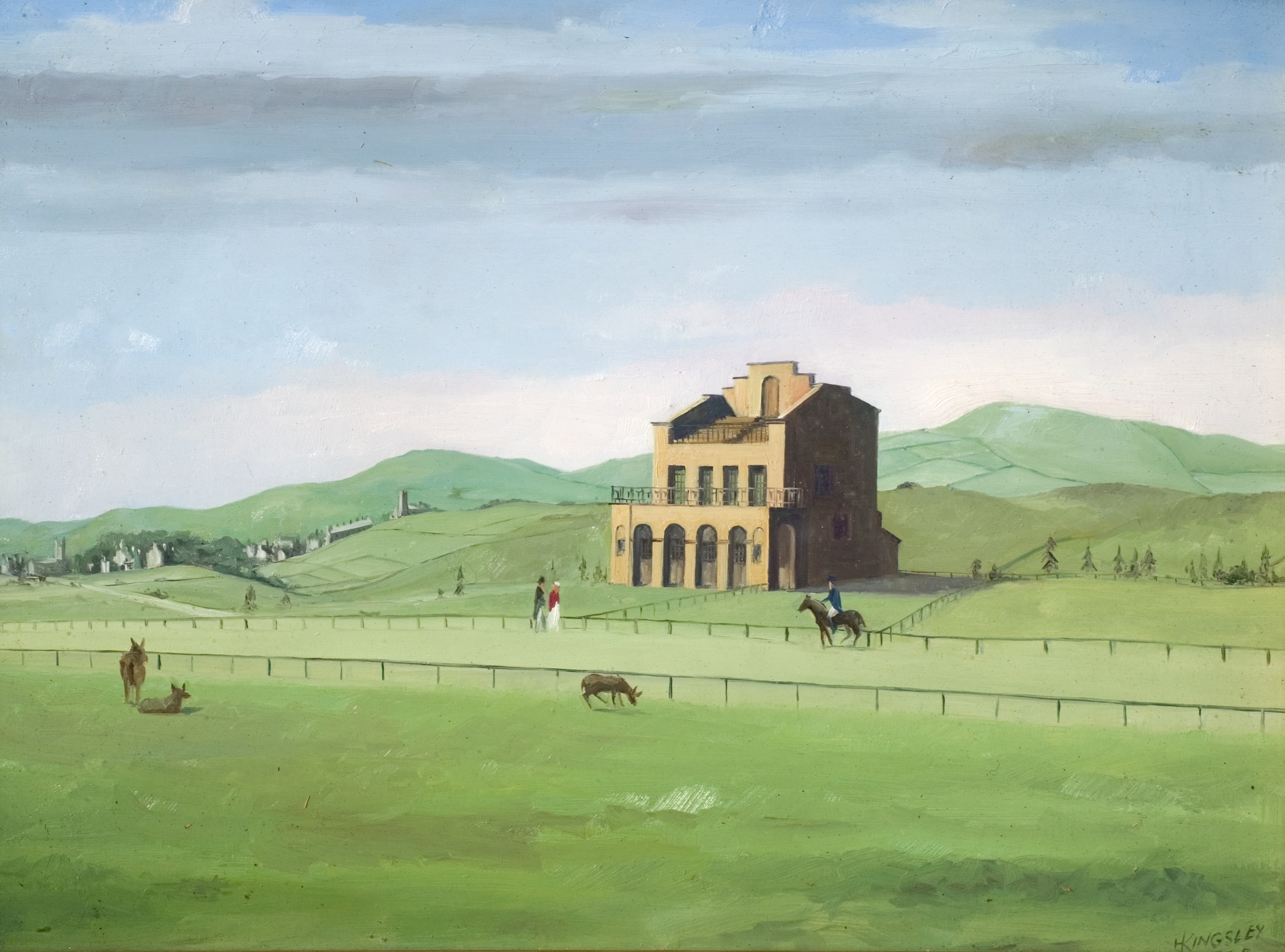 Picture: “Fairfield Race Course” (1825) by H. Kingsley.
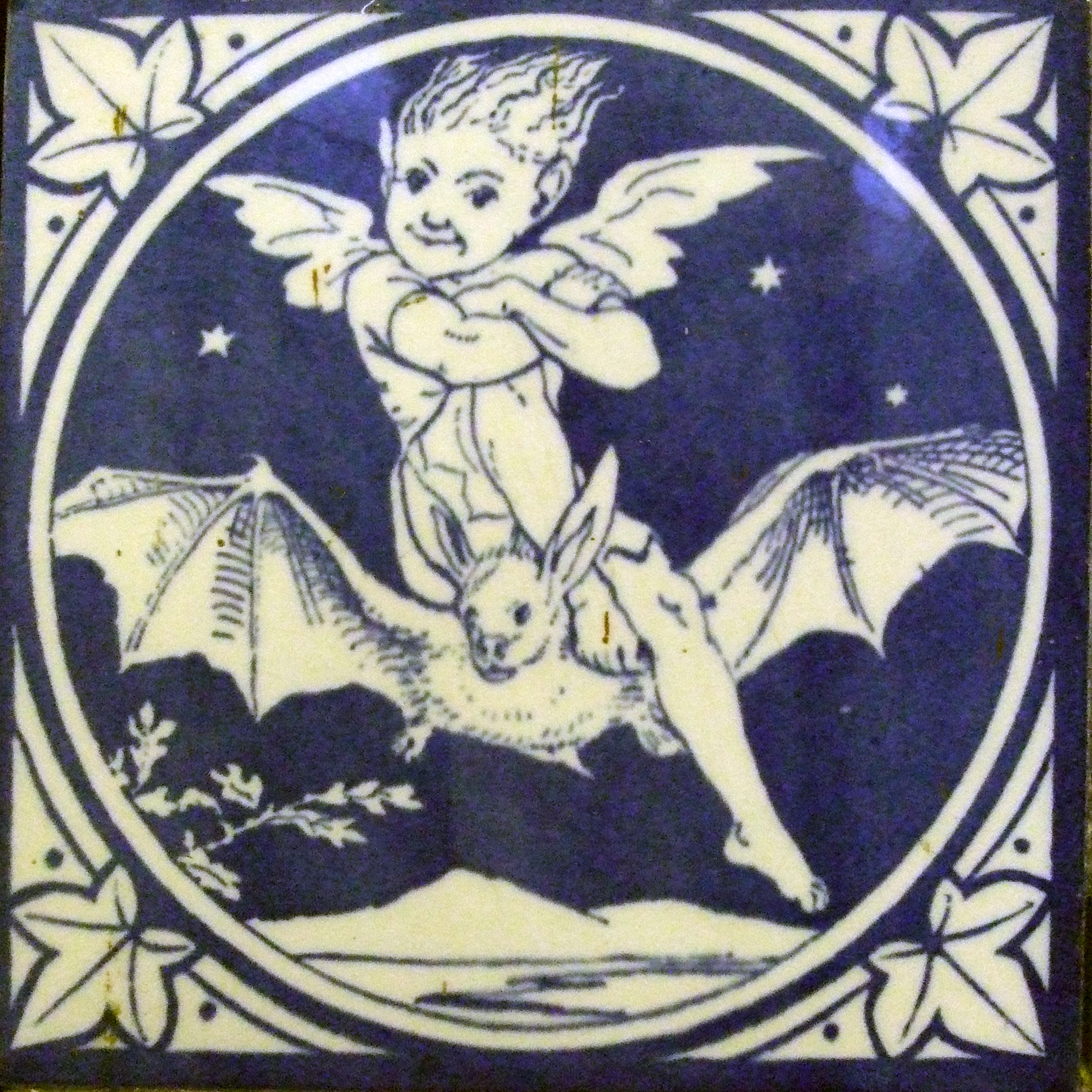
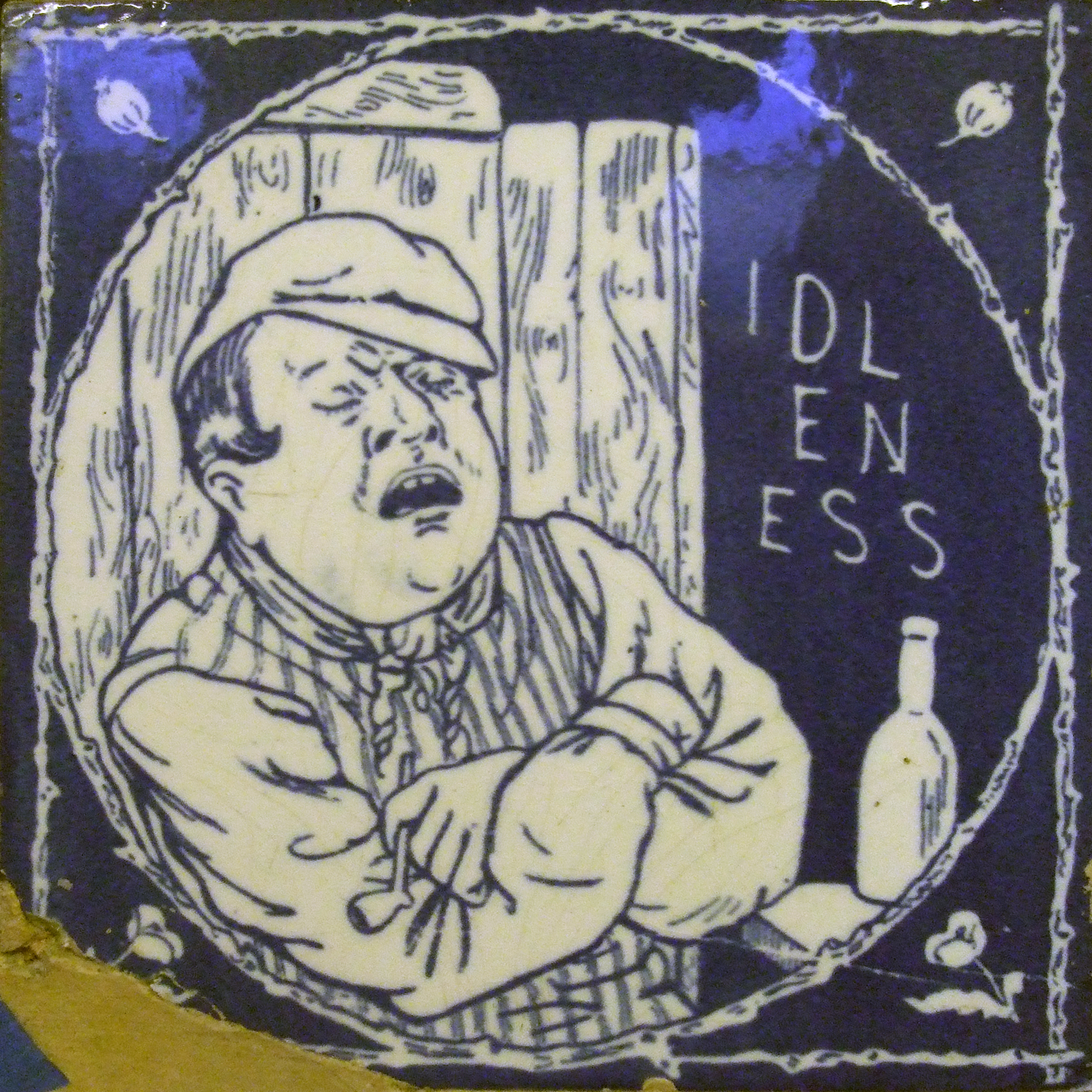
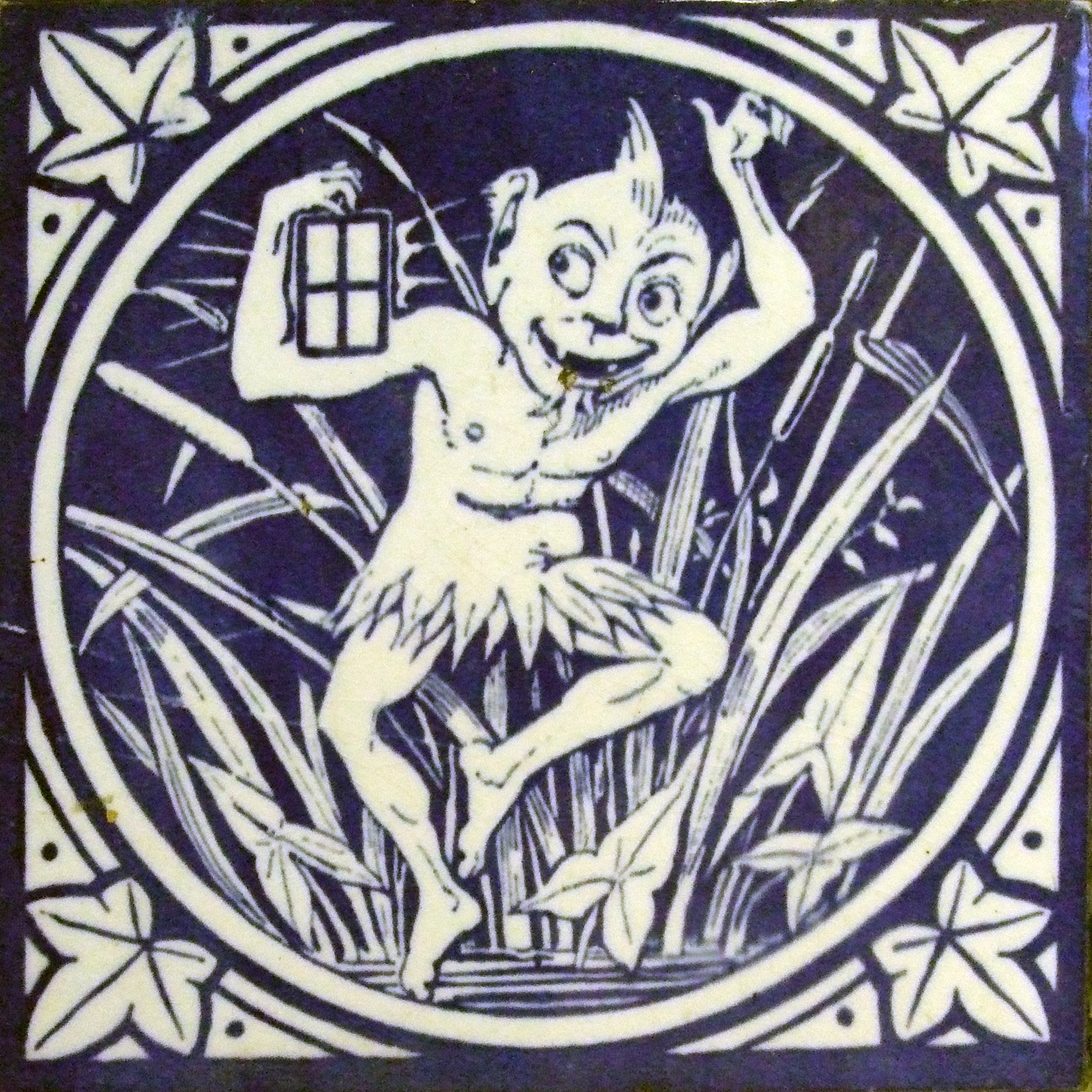
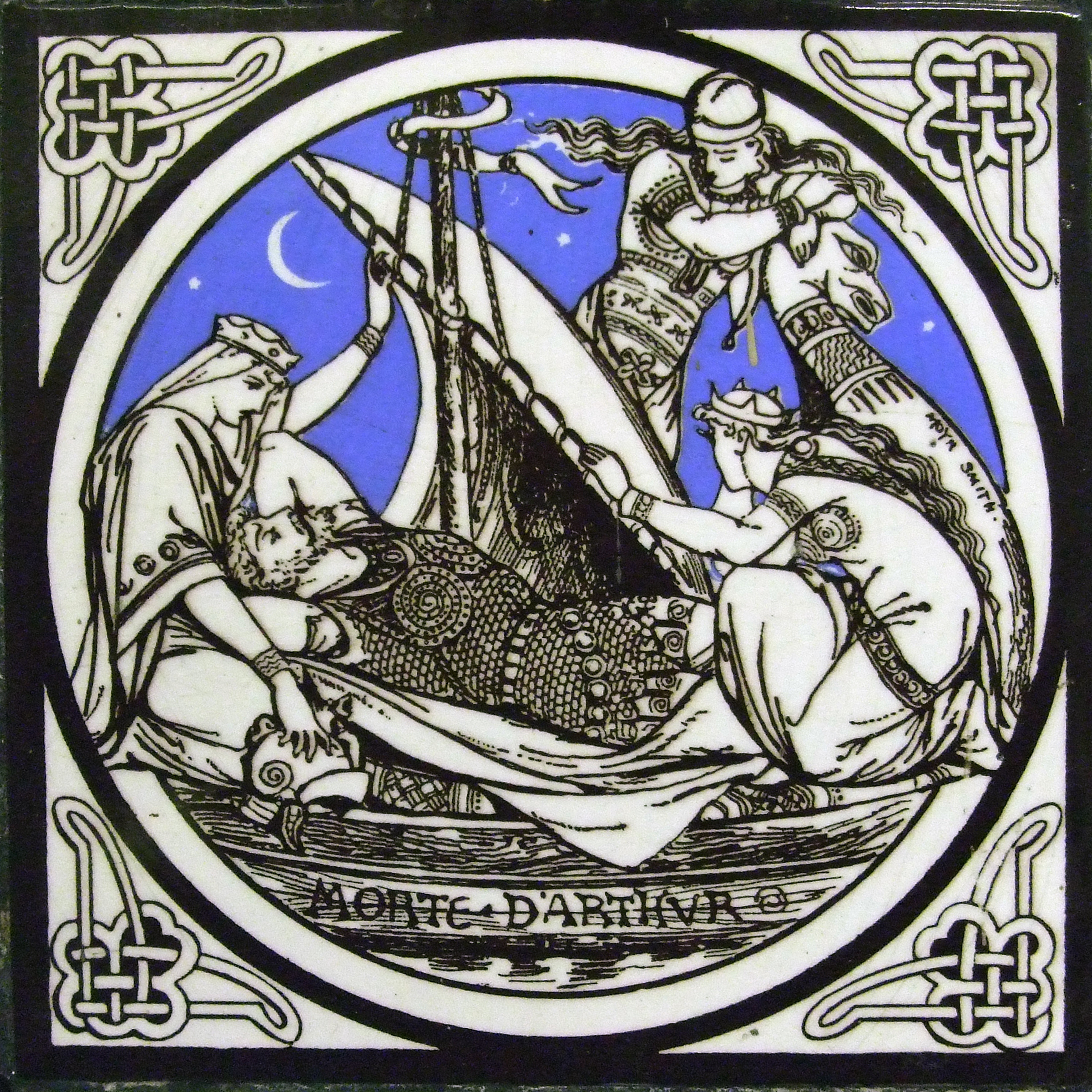
Some of the scenes from British legend and folklore/folk-life, as seen in the many Minton tiles in the basement of the former Stoke town public library, Stoke-on-Trent. Presumably it was once a children’s activity room in the Library? Creative Commons Attribution, although the designs are of an age to be in the public domain.
I recently had the opportunity to take a look around the naff wasteland that is Google Play’s mobile phone app store for Android, while specifically looking for local apps. There’s not much available, but here are the results: a quick 2015/16 North Staffordshire / Stoke-on-Trent ‘App Survival Kit’ for visitors.
Free wi-fi access:
I assume that all UK based visitors will arrive in the area already having installed at least one of the UK’s main “free wi-fi access” apps. Of these, O2 seems the best choice for short-stay and overseas visitors…
* O2 Wifi (in Stoke: McDonalds, Subway, Argos, Homebase, B&Q etc) which is open to all after a simple registration. 10Gb download limit per month.
* BT Wi-fi (in Stoke: larger Tesco supermarkets, HSBCs, Starbucks, GAME shops, Job Centres etc) is for BT broadband subscribers only (note that the app’s maps don’t show BT home routers that share, so for detecting those use the excellent Wifi Tracker app. Note that Tesco limits BT Wi-fi users to 15 minutes every 24 hours.
* FastConnect (The Cloud free wi-fi, mostly offered in bars and pubs). Showed a nasty initial “you have a virus” spoof advert, during our test.
Note that our local public libraries and buses are laggards in offering free wi-fi, though some of the privately run libraries such as the Burslem School of Art do offer it and there’s apparently also a Stoke Train Station — Keele University bus that offers it. But in terms of free wi-fi Stoke-on-Trent is certainly not yet one of the coming wave of ‘SuperConnected cities’ that exist elsewhere the UK.
Stoke does have excellent UK-leading mobile network connections and speeds, though, so long as you can pay for the data. That speed may well decrease as you go into the adjacent Moorlands and the Peak District National Park.
Local news:
There’s no local app for BBC Radio Stoke news and traffic, though their web page will give you ad-free local headlines and they have an excellent BBC Radio Stoke daily coverage timeline. The latter would make a great app. Sadly neither page has an RSS feed.
The Sentinel newspaper has a pleasantly slick app but it only gives you the paper’s main evening news story, and the app doesn’t include the Saturday edition. The best option for a visitor is thus an RSS reader app, the paper’s RSS feed, and (to view the news stories) a mobile Web browser running a good ad-blocker.
The community radio station 6 Towns Radio has an app.
BBC Weather is excellent for reliable(ish) hourly and five-day local weather. Note that “Sideway” (alongside the main A500 road) is a good central valley-bottom weather station, and may be a better option than more elevated weather stations such as Hanley (the city centre).
I assume that any football / sports related visitors will already have their phones crammed to the rim with specialist sports news and team fanzine apps.
Transport:
All the UK train apps seems to use the same live information and timetable feeds, and they’re all fairly similar. You probably have one already, but if you’re an overseas visitor just arrived at Birmingham International or Manchester Airport then you might try installing the Virgin Trains app, which is robust and well designed. Virgin Trains also offer cycle hire from Stoke train station, although I seem to remember it’s a service confined to first class ticket holders only. Sadly the basic app doesn’t allow one to book a bike from the station, though I guess it might if you were fully logged in with them and you had a ticket number. Update: Virgin lost the franchise to a (rather shoddy) low-bidder, Avanti.
First Bus is likely to be your choice of bus travel app in Stoke, the Potteries, and north Staffordshire. The app is useful, offering geo-located bus stops and related timetables. It’s not perfect, though: routes should have direction-of-travel arrows; the ‘final destination’ place-names are shoddily labelled; and there is no geo-filter on route numbers (if the app knows the user is in the Potteries, then it shouldn’t even offer namesake bus routes from other cities).
With more than 100 miles of off-road cycle network in the city, and a new cycle-path connecting Stoke to the Peak District, cycling maps may be useful. The older SUSTRANS app has long since given way to their recommended commercial app, CycleStreets. Note there are two app downloads for this, the route finder and the maps pack.
Google Navigation is an alternative that many will have preloaded, but in tests it proved to “know nuurthing” of our city’s green cyclepaths and towpaths, and sent us down an ugly main road despite being switched through to the Cycling / Walking tabs. Seeing Stoke via the main grotty roads is certainly not ideal when there are so many back-paths, greenways and canals to walk and cycle on.
Canals / wildlife / litter:
Tens of thousands of canal boat holiday makers pass through Stoke on the Trent & Mersey canal each year, and also go up to the Moorlands town of Leek on the Cauldon Canal. Those visitors have a couple of useful official apps from the Canal & River Trust, as well as their more general UK canal apps. Canal & River Places to Visit and Canal & River eNatureWatch. The eNatureWatch is rather nicely made and will be fun for kids and young teens, and it also allows spotter photo-reports to be sent, but it is not meant for real naturalists.
Sadly there is no spotter/report app from the Staffordshire Wildlife Trust. There are wildlife apps for the Moorlands and Peak District National Park, and even a Peak MoorPLANTS and MoorMOSS app for spotting the moss and plant types found there.
There’s a total lack of litter / dumping reporting apps, even from Stoke-on-Trent City Council (which doesn’t seem to ‘do’ apps at all), though you might get the FixMyStreet reporting app to install — it refused to install on our slightly-old android smartphone.
Arts and visitor attractions:
There is a surprising lack of apps from the city’s now-thriving pottery firms, ranging from the industrial giant Steelite through to must-see heritage potteries such as Middleport Pottery. All we could find was an app for Moorland Pottery. Nothing from big tourist draws such as the Potteries Museum & Art Gallery or the new Wedgwood Museum, either.
No app from Trentham Gardens, which was a surprise, since it’s one of Europe’s biggest outdoor upmarket attractions. Nor Uttoxeter Racecourse, another surprise. But the huge theme park Alton Towers has an official app for the whole resort and also a Halloween Alton Towers Scarefest app.
To hook into where the local creatives are going, simply install the Facebook Groups app and point it at the Creative Stoke Facebook group. Over 2,000 members and tight curation/moderation ensures a usefully informative news group aimed at local creatives. Update: Creative Stoke is now at The Potteries Post.
Keele University has a campus guide app n’ map, something Staffordshire University appears to lack.
That’s it!
A few of my still life pictures from inside the old Spode factory, Stoke-on-Trent, 26th September 2015.