Folklorist Charlotte S. Burne’s paper “What Folkore is, and how it is to be collected” was published in North Staffordshire Naturalists’ Field Club, Annual Report and Transactions, 1896. She had lived at Eccleshall and been active with Miss Keary of Stoke in collecting local folklore, until Burne’s move to Cheltenham in 1894.
Items of note in her paper…
i) “Cricker” was a Wrekin word for the driver of a packhorse. Possibly one packhorse, rather than a team.
ii) “Aqualate Mere, a sheet of water on the Shropshire border of the county, nearly two hundred acres in extent, is said to be inhabited by a mermaid. On some occasion there was an idea of draining it, but the mermaid put her head out of the water and exclaimed:— “If this mere you do let dry, Newport and Meretown I will destroy,” and the plan was abandoned. A similar tradition attached, I believe, to the Black Mere near Leek, where the mermaid threatened to “destroy all Leek and Leek Frith” if her abode was disturbed.”
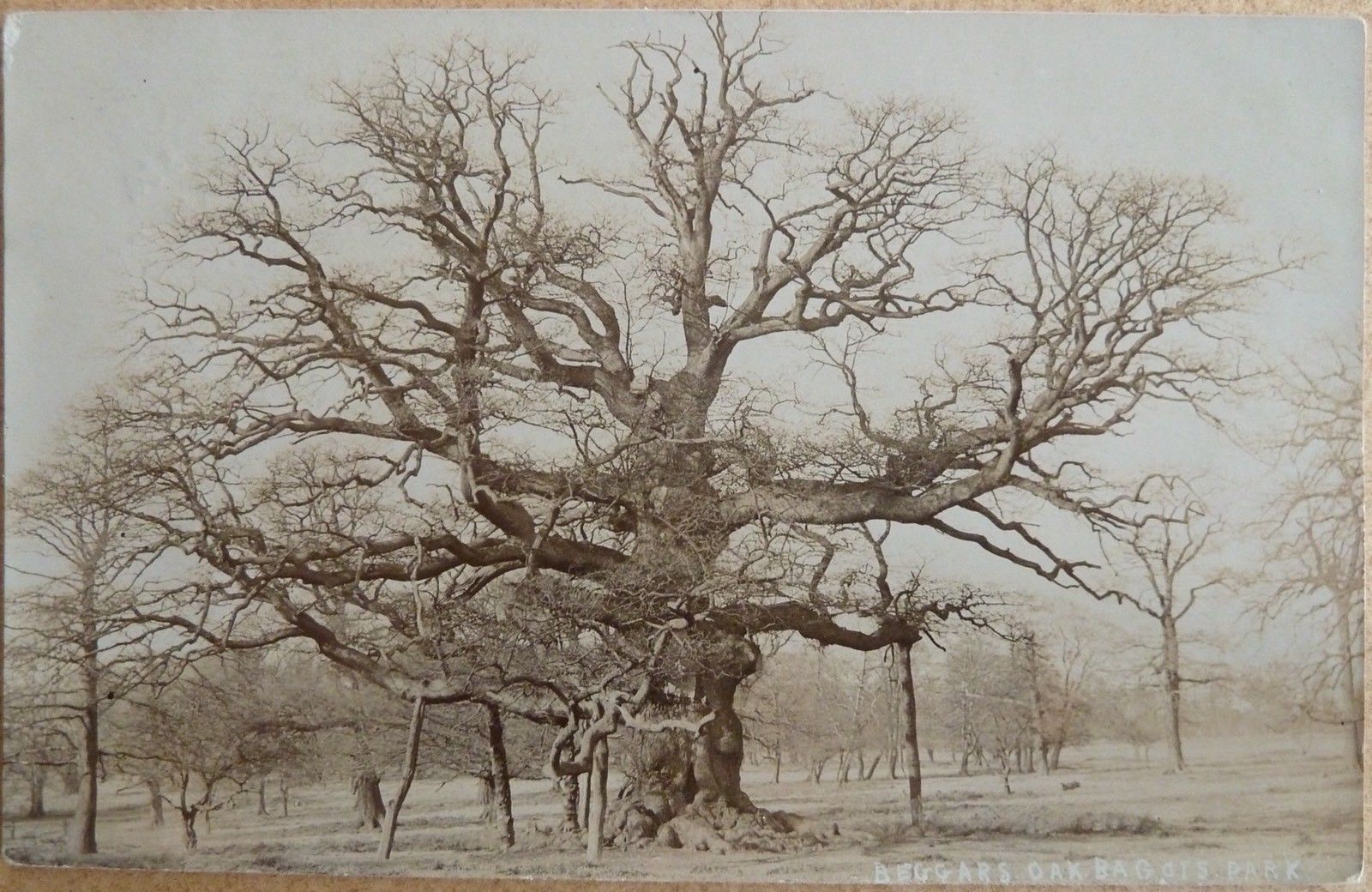
iii) Tradition at Bagot’s Park of an especially large… “Beggar’s Oak, beneath whose branches, so the popular belief has it, any wayfarer has the right to a night’s lodging. [seems to indicate] some prehistoric common right, disregarded at the time of the enclosure, but still existing in the popular imagination”.
I hadn’t heard that before from other sources. Presumably then, the various “Beggar’s Bush” pub names of the Midlands arise from this forgotten ‘sanctuary’ tradition, e.g. the pub on what is now the edge of Sutton Park and on the old Roman road?
iv) “while the agricultural hiring-time in North Staffordshire is Christmas, the potters’ ancient hiring-time is Martinmas.”
Martinmas is 11th November, which was also the Derbyshire farm hiring time in the 19th century. Perhaps this indicates that the majority of the early pottery workforce were drawn in from the countryside on the Derbyshire side of the Potteries?
v) The character of the men of the mid and north parts of the West Midlands, in general: “The racy humorous speech, the shrewd sense, the genial hospitable temper, are found everywhere.”
That rings true, although there’s a distinct strain of grumpiness running alongside that in some places.
When her paper was read at the Cheadle meeting of the N. Staffs Field Club in 1895, the vicar, the Rev. G. T. Ryves…
“mentioned that when he first came to Tean the ‘guisers’ were in full force, and that he had got together as much as possible of the text of the dialogue. On piecing the fragments together, he obtained an interesting play, which had undoubtedly been handed down by tradition and memory for hundreds of years.” [and the paper also provoked comment that a belief in witches was still alive and spoken about in the district…] “within the last four years he met with a young farmer who positively declared that he knew a man who had bewitched all the cattle on the farm in order to spite the dairymaid.”
[…] North Staffordshire’s local moor-monster Jenny Green-teeth, said to be resident under Doxey Pool in the Staffordshire Moorlands in modern times, is not recorded in the historical books and articles on Staffordshire folklore. Yet one does find the name attested in Victorian books and earlier sources, and as close as South Cheshire — where her kind presumably haunted the abundant meres and pool-strung “mosses”. There was also a late mermaid tale from Black Mere near Leek. […]