The journal Nature: “6th October 1886, The Hovis bread brand dates from the patent granted on this date to Richard Smith, miller, of Stoke-on-Trent.”
“Be it known that I, RICHARD SMITH, a subject of the Queen of Great Britain, residing at Stoke-on-Trent, in the county of Stafford, England, have invented a certain new and Improved Treatment of the Wheat-Germ and Broken Wheat … The objects of this invention are to produce a wheat-flour having the nutritive qualities and nutty flavor of the wheat-germ without the danger of discoloration and rancidity usually incident to the presence of the germ of the wheat.” — from his slightly later U.S. patent of 1887.
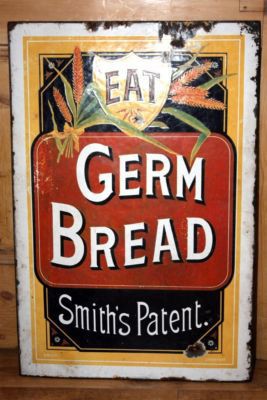
In the early years of public sale his new healthy loaf was said to have been sold as “Smith’s Patent Germ Bread” or “Smith’s Old Patent Germ Bread” and the flour as “Smith’s Patent Germ Flour”, germ here referring to the inclusion of the nutritious wheatgerm that had previously been discarded. A great example of someone taking a discarded ‘worthless’ by-product, building a great product from it, and making a fortune with it in a free market.
At that time there was seen to be a need to make brown bread enticing to the public in Britain, to improve the nation’s overall nutrition. This led to a Bread Reform League, which from 1881 championed the cause of brown bread over refined white bread, and called for nutritional/ingredient labelling of bread and other basic foods. It seems that brown bread was at that time associated with poverty and state-dependence. If they had money, people preferred to have refined white bread of the type eaten by the gentry and made with imported flour.
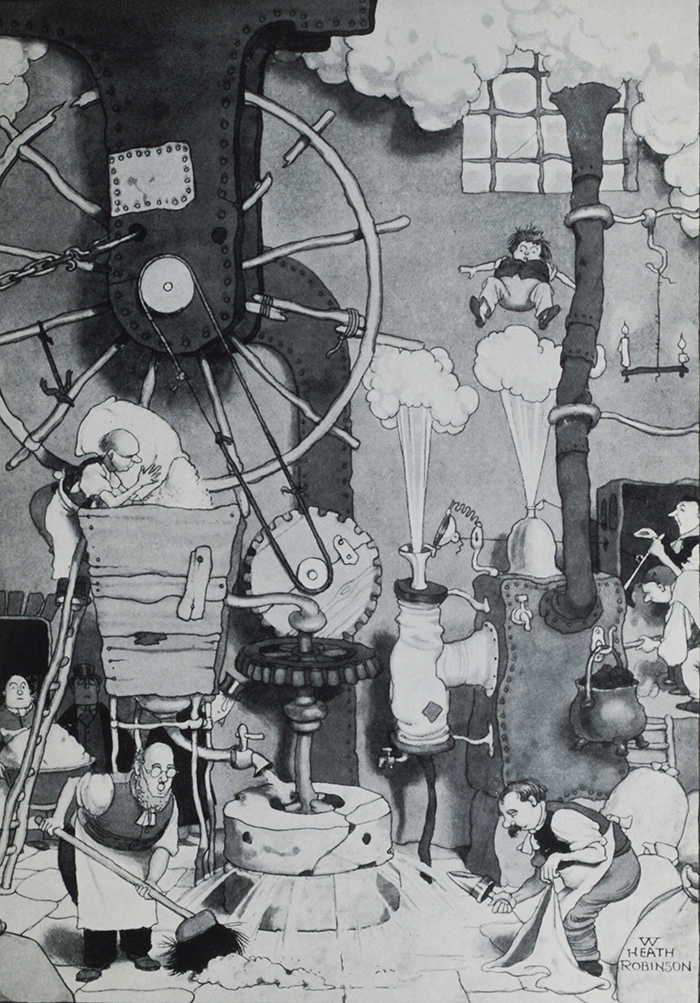 Picture: Heath Robinson’s version of the early years of Hovis production, from his Unconventional History of Hovis (1926).
Having proved his product among the hard-working people of North Staffordshire, Smith secured funding and the services of the Fitton & Son flour mills in nearby Macclesfield. The patent flour for his loaf was in production there from October 1887, but the product was still sold with the old name. It was not until 1890 that the loaf was re-launched with a more enticing new name, “Hovis”, this being derived from the Latin for ‘strength of man’ (hominis vis). National distribution only seems to have begun in 1893…
“By an arrangement with its Proprietor and Inventor, Mr. Richard Smith, it was taken up by Messrs. Fitton & Son, and introduced on an extended scale in 1893, since which date “Hovis” Flour and Bread have become widely known, and the produce of Messrs Fitton & Son’s Mills is to be found in nearly every home.” — Saturday Review of Politics, Literature, Science and Art, 1898.
“Smith’s Patent Hovis Bread” proved to be reliably healthy and tasty, the British population was booming, and by 1895 over one million loaves were being sold every week. There were 1lb and 2lb loaves, alongside 8 oz. “junior” loaves and even tiny “penny” loaves. There was also a line of biscuits in the 1890s, made from Hovis flour by Scottish biscuit makers Middlemass.
“The name of Mr. Richard Smith is intimately associated with the first successful attempt to treat the germ on a commercial basis, and since the advent of his patents numerous other methods have been invented. Hovis Bread is manufactured from a special meal made by mixing one part of germ prepared according to Mr. Richard Smith’s process, with three parts of flour by weight, and adding sufficient salt to obviate the necessity of the baker adding the latter ingredient. The bread is highly nutritious, and when properly made, possesses a delicious flavour. It possesses aperient [promotes digestion] qualities, without the slightest danger of irritation, the cellulose being of a very fine nature and evenly distributed through the meal.” — Elementary Principles of Breadmaking, 1896.
The Hovis flour was made between stone millstones, rather then the metal iron rollers that made white flour on the continent. Presumably millstones were thus important to the “very fine” grinding of the cellulose, and my guess is that it was probably very handy that the best-quality millstones in Europe were to be quarried very near at hand at Mow Cop. His emphasis on the use of stone in the process may have been why Smith was popularly referred to as ‘Stoney’ Smith. Or it could have been because he was born into the trade, being the third-generation son of a water-mill based milling family of the town of Stone (a few miles south of Stoke along the River Trent). Smith was aged about 50, and evidently living in Stoke-on-Trent, when he perfected and patented the Hovis method. This was then a good age for a man, on the edge of ‘old age’ even — something we often forget today, when a man’s life-expectancy has been substantially extended by many decades.
Like Josiah Wedgwood before him — who invented many aspects of the modern factory and marketing system here in Stoke — Smith and his local partners similarly helped introduce the development of modern franchising and marketing in food retail. Such efforts helped Smith’s loaf reach many corners of the British Isles. There was no retail sale of flour bags to the public, but only sale to bakers who would then use it locally in combination with national marketing…
“Bakers wanting to produce Hovis bread had to buy stamped tins, paper bags and the flour from Messrs Fitton, who insisted that only bread made from their flour could be baked in the tins and sold as Hovis, an insistence they were always prepared to back with court actions. Its advantage for the baker was that he did not have to bother with advertising or publicity as that was all handled by the company.” — The Agrarian History of England and Wales, page 1089.
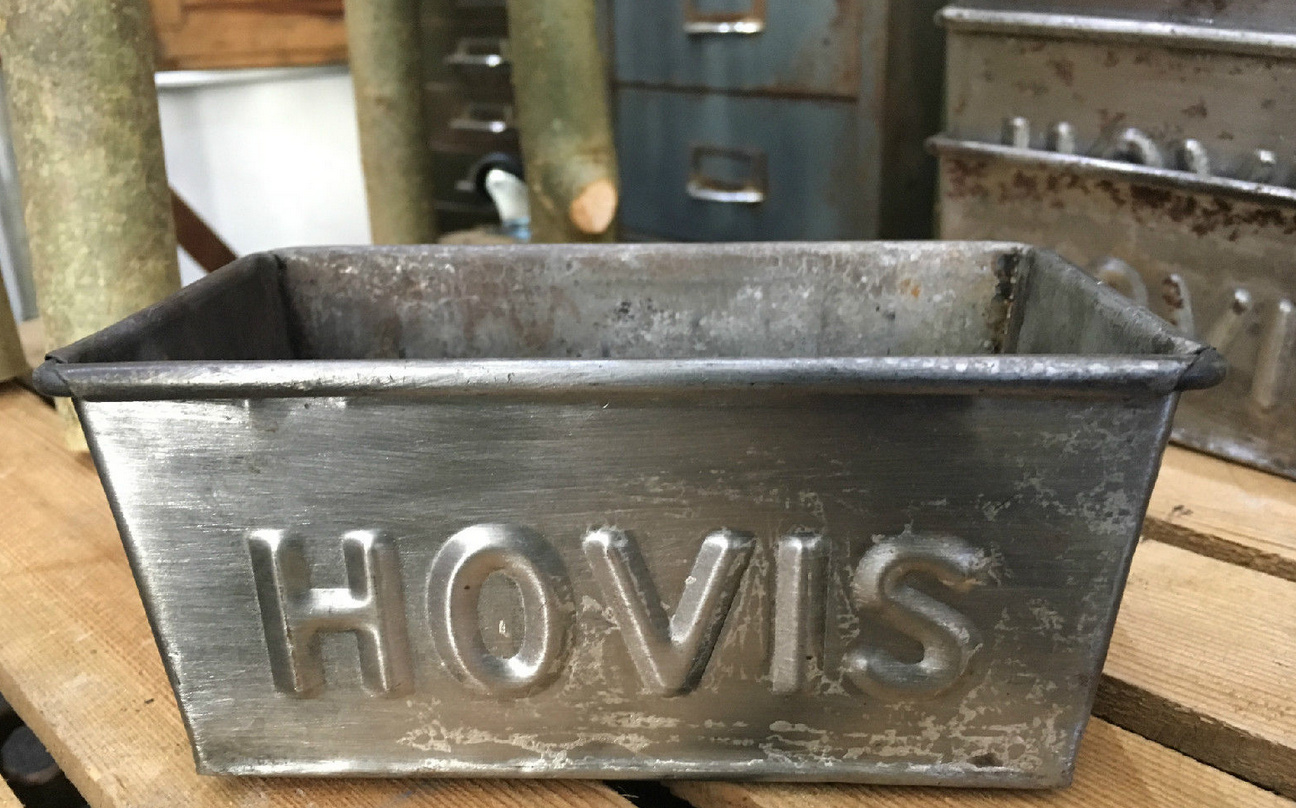
The baking tins were stamped “HOVIS” and the capital letter “H” at each end of each loaf, thus ensuring strong and persistent in-home branding even before the era of wrapped bread and printed wrappers.
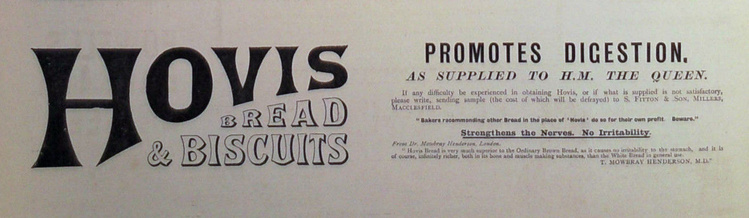
Sales were helped along by health claims, with Smith evidently roping local Stoke doctors into his advertising, the latter picture being 1894…
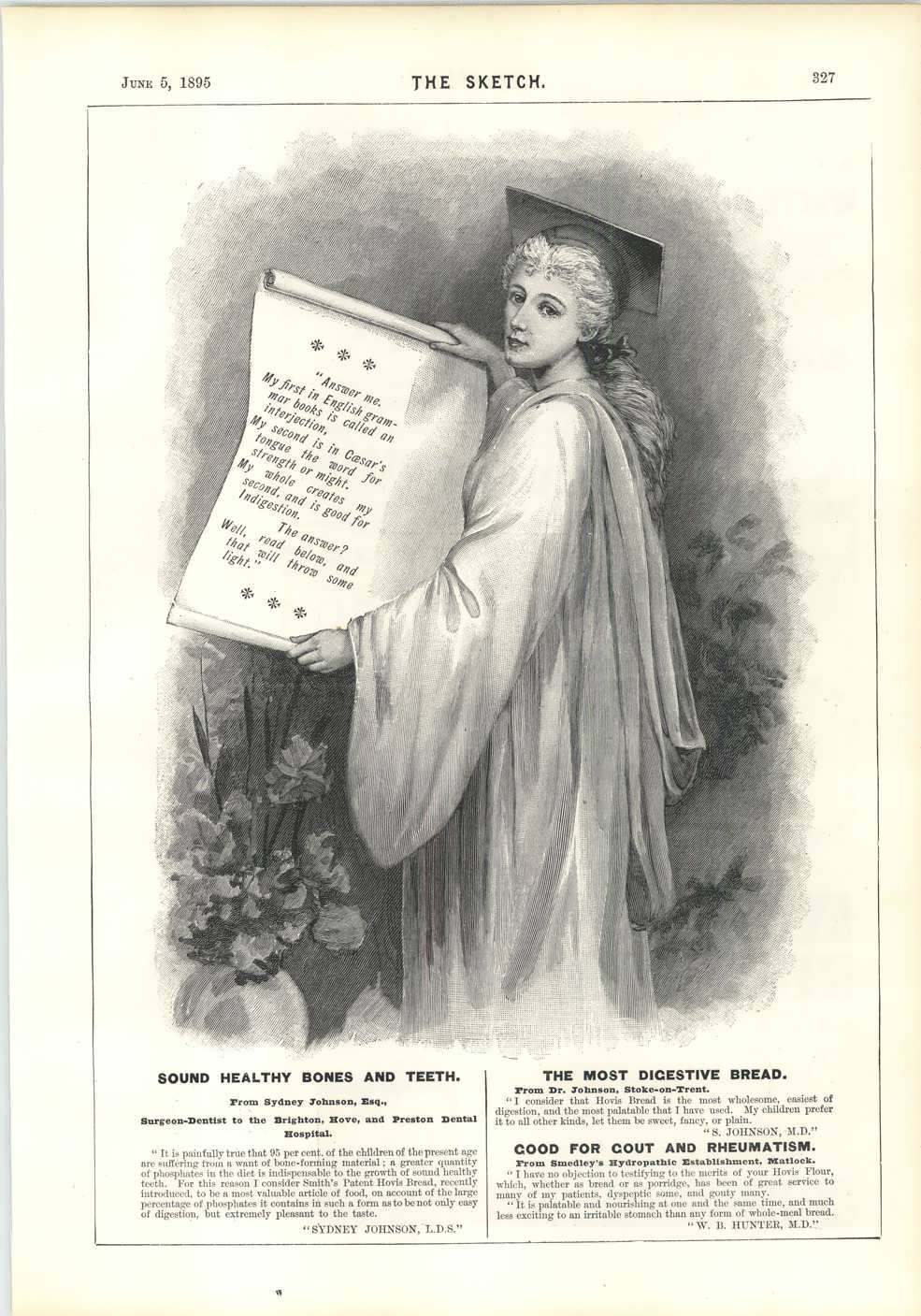
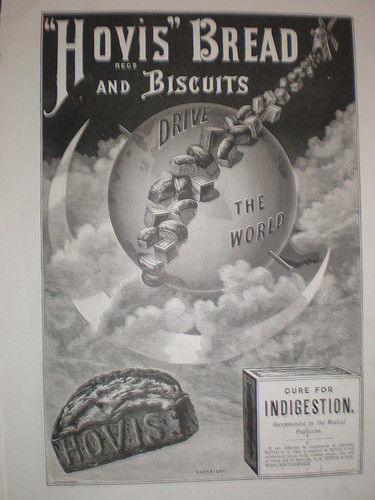
Smith also helped apply the new science of micro-photography to the wheat grain. Robert W. Dunham’s book The Structure of Wheat: Shown in a Series of Photo-micrographs (1892) states…
“I must not conclude this brief introduction without expressing my sincerest thanks to Mr. Richard Smith, the well known miller and inventor of Hovis bread, without whose aid this collection of photographs might never have been brought into existence”.
According to his gravestone Smith appears to have lived his last years in London, where he died in 1900. There appears to be no photograph of him, and no obituary to be found online. But his Hovis Bread Flour, Limited company (est. 1898) survived his passing and by 1914 the famous brand was firmly established in the public mind, its lesser competitors vanquished. It made enough for 50 million loaves a year, and had manufactories in London, Manchester and South Africa.
Thus Hovis was born in Stoke-on-Trent. Not that you’d know it. The famous Hovis TV ad was filmed in Gold Hill in Shaftesbury, Dorset — even though there are many North Staffordshire / Peak District villages that could serve as its double. Over the years the owners of the Hovis brand have obviously been assiduous in preventing the horrid name of Stoke-on-Trent from tarnishing the origin of the Hovis ‘brand story’. If Smith’s home place is mentioned at all, it’s just a vague “Staffordshire”.
Just learned that the area still has bread making. “Allied Bakeries make the top bread brands Kingsmill, Allinson’s and Sunblest.” In Newcastle-under-Lyme, on the west side of Wolstanton Golf Course.