Insense: a word which survived in use in Staffordshire until at least the late 1820s. Seeming to mean: to inform or briefly instruct a group of people about information useful to them, thus helping them to make sense of a situation.
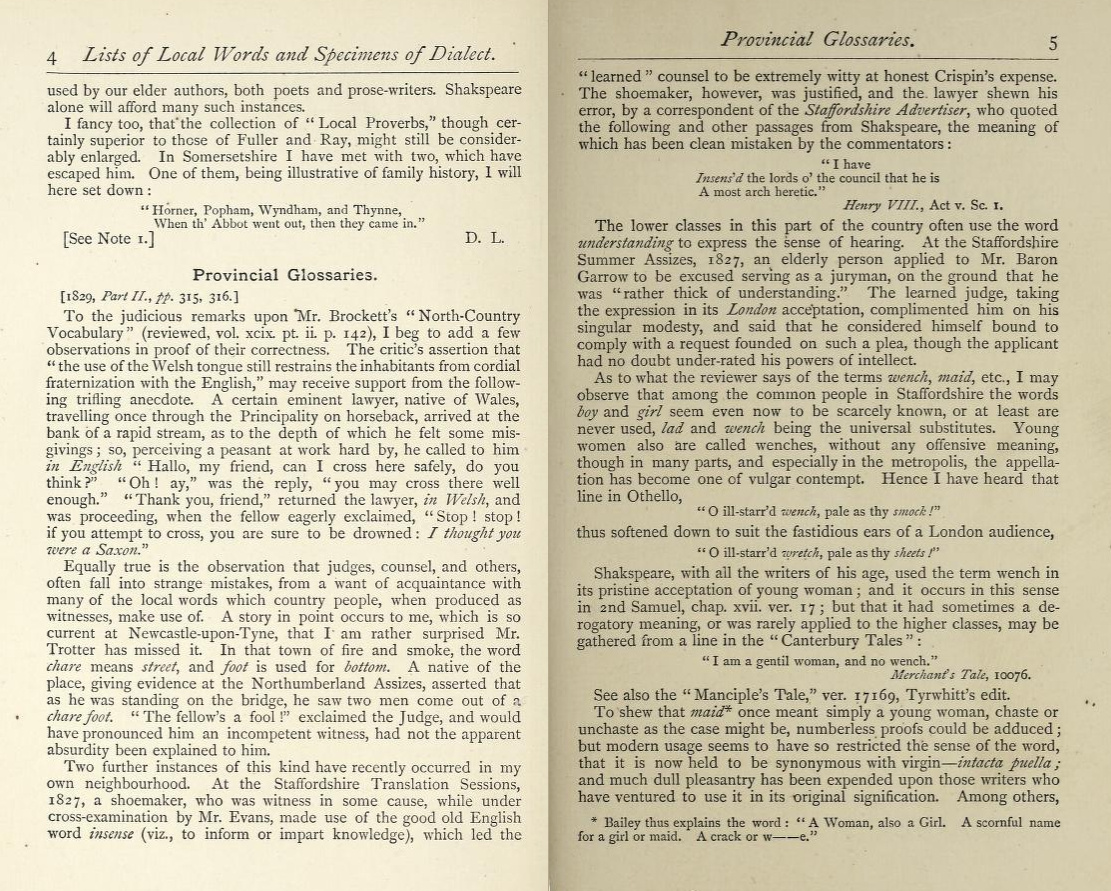
Source: The Gentleman’s Magazine Library: being a classified collection.
The Monthly Magazine of 1806 talks of…
“insense, to instruct, or put in the head of any one: as for instance, the judge is said to insense the jury how to bring in their verdict”
The Atheneum of 1827 referred to it as Scottish and/or Scots-Irish…
“to unravel those mysteries which the people want taste and leisure to study for themselves, and to insense the multitude (I like that Hibernicism) on their dearest interests”
It is referred to as “a north country expression” in a memoir of 1869 (A Memoir of H. Hoare), so was at that time either dying out or had never existed in the south of England.
But, since Shakespeare used it, it may once have been present as far south as south Warwickshire.